

Industrial Court Cannot Create New Rights Under Execution Jurisdiction: Bombay High Court
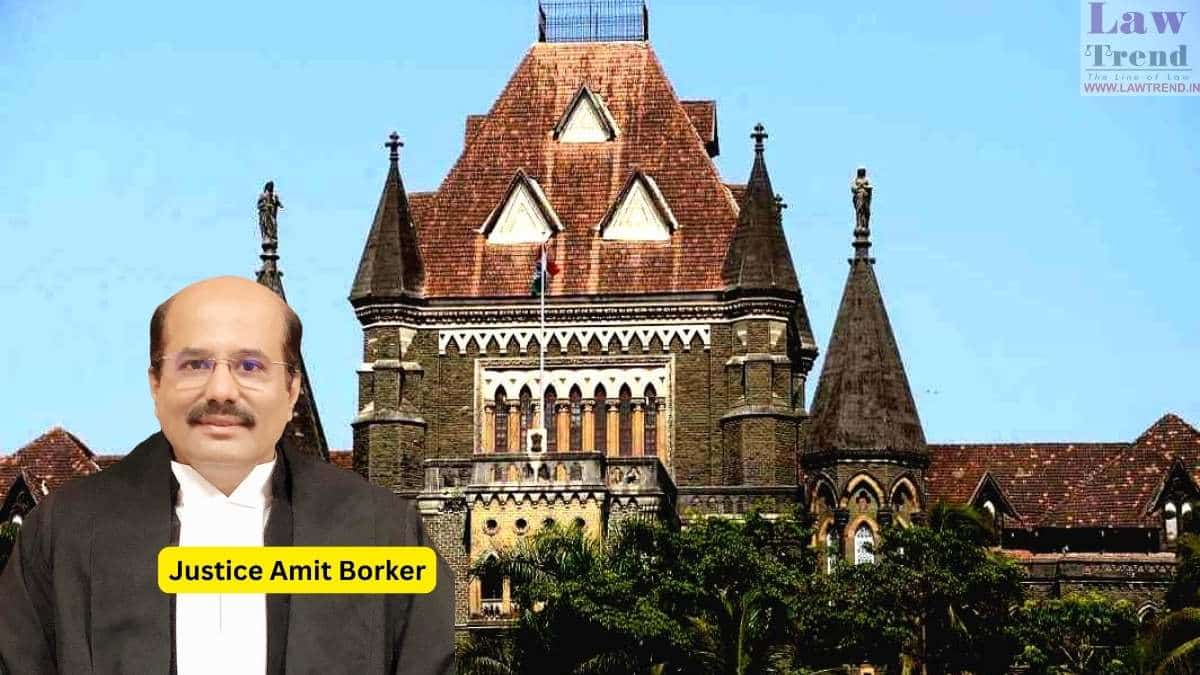
The Bombay High Court has ruled that the Industrial Court, while exercising jurisdiction under the Maharashtra Recognition of Trade Union and Prevention of Unfair Labour Practices (MRTU & PULP) Act, 1971, cannot create new substantive rights that require independent adjudication. Justice Amit Borkar dismissed a writ petition filed by a former employee of Tata Iron & Steel Company, holding that claims for benefits like shares and debentures—which are not specifically crystallized in a prior award or settlement—must be adjudicated in an appropriate forum.

Background

The petitioner, Adil Patel, joined the service of Tata Iron & Steel Company (Respondent No. 1) on July 16, 1979, as an Accountant Assistant. His services were terminated on March 10, 1986, leading to multiple rounds of litigation. Following a 1994 High Court order in a previous writ petition, the petitioner was reinstated with effect from June 1994 and received 50% back wages amounting to ₹2,20,706.

While the petitioner received certain cash benefits such as food coupons and medical reimbursements, he alleged that he was not placed in the proper seniority list despite directions for continuity of service. Furthermore, he claimed he did not receive shares and debentures issued on a preferential basis from the employees’ quota during the period of his forced unemployment.

He subsequently filed Complaint (ULP) No. 246 of 2003 before the Industrial Court, Mumbai. The Industrial Court partly allowed the complaint, directing the respondents to fix his seniority, but held that the petitioner was at liberty to approach an appropriate forum for the claim regarding shares and debentures. The petitioner challenged this refusal in the present writ petition.

Arguments of the Parties

Petitioner’s Submissions: The petitioner argued that under Section 9 of the Act, the Industrial Court acts like an executing court and possesses wide powers to execute orders passed by itself or the High Court. It was submitted that “consequential benefits” is a broad term including all benefits an employee receives during employment that can be calculated in monetary terms. The petitioner contended that no “new right” was being claimed, but rather the execution of an existing right arising from the order of continuity of service.

READ ALSO  Allahabad High Court Clarifies Timing and Evidence Rules for Section 319 Cr.P.C. Invocation

Respondents’ Submissions: The respondents argued that the allotment of shares and debentures was not covered by any court order, award, or settlement. They pointed out that a primary condition for the issue of shares was that the applicant had to be in active employment at the time. During cross-examination, the petitioner admitted he was not in employment when the allotment occurred. The respondents maintained that the Industrial Court cannot create new rights or interpret High Court orders beyond their literal scope under Item 9 of Schedule IV.

Court’s Analysis

Justice Amit Borkar examined the scope of Item 9 of Schedule IV of the 1971 Act. The Court observed that while the Act empowers the Industrial Court to decide issues of non-implementation of awards or settlements, this power is limited to the enforcement of “existing rights.”

READ ALSO  Centre Notifies Appointment of Judges in Andhra Pradesh and Bombay High Court

The Court noted:

“The Industrial Court is not, however, a forum to create fresh rights which require full evidence, detailed contractual interpretation and independent adjudication beyond the record. Where entitlement to a benefit turns on contractual terms, documentary proof or facts that are not already crystallised in an award, settlement or prior order, the Industrial Court should not grant relief that effectively creates a new substantive right without hearing the full dispute in an appropriate forum.”

Regarding the shares and debentures, the Court found that the petitioner’s claim depended on proving that such allotment formed part of his service conditions. The Court observed that the petitioner’s correspondence seeking application forms showed an intent to participate but did not establish an “antecedent right to allotment.”

The Court further addressed the claim for compound interest, noting that the petitioner failed to produce a clear legal basis showing that such interest formed part of any prior award or direction.

READ ALSO  पॉश एक्ट के तहत वैधानिक अपील उपलब्ध होने पर रिट याचिका सुनवाई योग्य नहीं: बॉम्बे हाईकोर्ट

Decision

The High Court concluded that the Industrial Court correctly held that the claims for shares, debentures, and compound interest required adjudication in a forum where contractual or statutory conditions could be fully examined. The Court held:

“Granting shares on the present record would amount to creating a new right. That is outside the proper scope of Item 9 on these facts.”

Consequently, the High Court dismissed the writ petition. No order was made as to costs.

Case Details:

  • Case Title: Adil Patel vs. Tata Iron & Steel Company and Anr.
  • Case Number: Writ Petition No. 5787 of 2008
  • Coram: Justice Amit Borkar

Law Trend
Law Trendhttps://lawtrend.in/
Legal News Website Providing Latest Judgments of Supreme Court and High Court

Related Articles

Latest Articles


