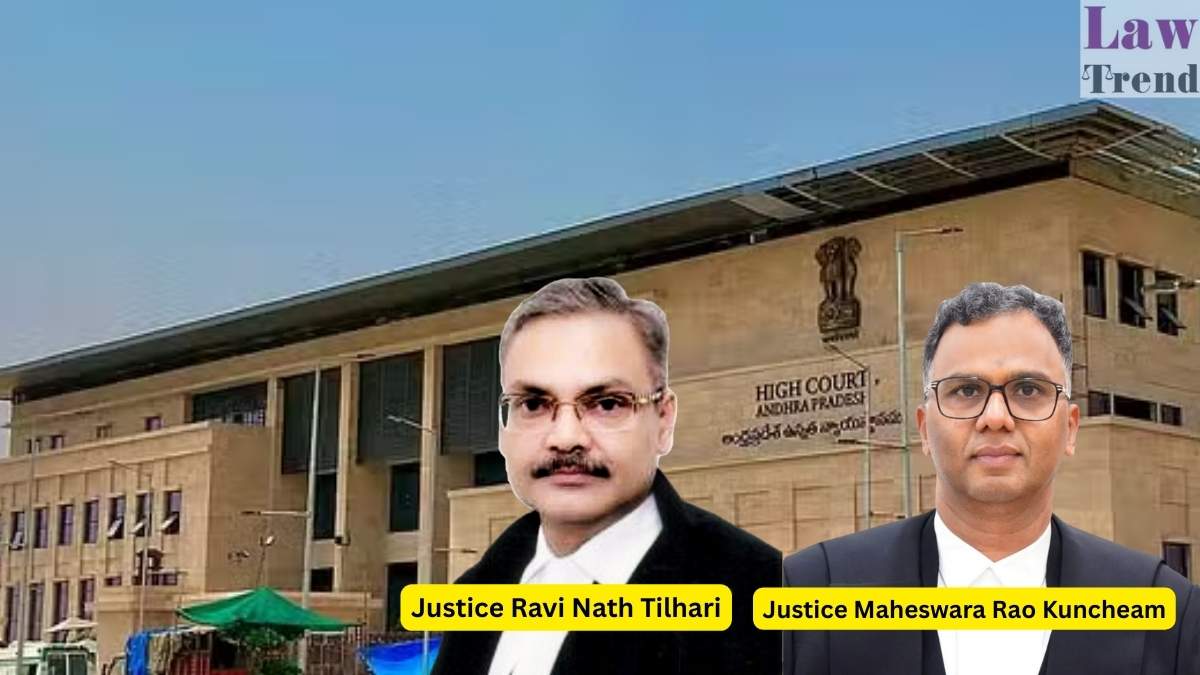
The High Court of Andhra Pradesh has set aside an ad-interim order passed by the Special Judge for Trial and Disposal of Commercial Disputes, Visakhapatnam, which had directed the Visakhapatnam Port Authority to maintain “status quo ante” in a lease dispute. The Division Bench, comprising Justice Ravi Nath Tilhari and Justice Maheswara Rao Kuncheam, ruled that an interim mandatory injunction cannot be granted lightly without assigning justifiable reasons.
Background of the Case
The dispute arose from a lease agreement dated February 2, 2024, granted by the Visakhapatnam Port Authority (Appellants) to M/s. Vishwanadh Avenues (India) Private Limited (Respondent) for a period of ten years. The lease concerned the “VPA’s Kalvani A/c Auditorium” and built-up area in the Nehru Sports and Cultural Complex at Salagrampuram.
Following alleged violations of lease terms, the Port Authority issued show-cause notices and subsequently invoked the bank guarantee furnished by the Respondent. The Port Authority issued a termination notice on September 10/11, 2025, demanding the Respondent vacate the property by December 11, 2025, exercising the right of re-entry.
The Respondent filed Commercial Arbitration Original Petitions (C.A.O.P. Nos. 37 & 38 of 2025) under Section 9 of the Arbitration and Conciliation Act, 1996, before the Special Judge, seeking interim measures. While these petitions were pending, the Special Judge passed an order on December 19, 2025, directing: “Parties shall maintain status quo ante as on the date of filing of this petition till 22.12.2025.” This order was subsequently extended.
Aggrieved by this direction, the Visakhapatnam Port Authority approached the High Court.
Arguments of the Parties
Sri Ravi Teja Padiri, counsel for the Appellants, argued that the order directing “status quo ante” could not be passed at the ad-interim stage without assigning any reasons. He contended that possession of the subject property had already been taken by the Port Authority on December 15, 2025, prior to the passing of the impugned order.
Sri Dammalapati Srinivas, Advocate General appearing for the Respondent, defended the Special Judge’s order. He submitted that on December 10, 2025, the Special Judge had directed parties to act in accordance with the lease terms. He argued that the Appellants took possession contrary to the lease terms and without following the procedure under the Public Premises (Eviction of Unauthorised Occupants) Act, 1971. He claimed that following the status quo ante order, the Respondent had regained possession.
Court’s Analysis and Observations
The High Court confined its scrutiny to the legality of the ad-interim order dated December 19, 2025. The Bench observed that the order failed to assign any reasons for granting such a significant relief.
Referring to the concept of “Status Quo Ante,” the Court noted that it implies disturbing the existing state of things to restore a previous state. The Bench relied on the Supreme Court judgment in Kishore Kumar Khaitan v. Praveen Kumar Singh (2006), observing:
“An interim mandatory injunction is not a remedy that is easily granted. It is an order that is passed only in circumstances which are clear and the prima facie materials clearly justify a finding that the status quo has been altered by one of the parties to the litigation and the interests of justice demanded that the status quo ante be restored…”
The Court emphasized the necessity of reasoned orders, citing Assistant Commissioner, Commercial Tax Department v. Shukla and Brothers (2010), stating: “Reason is the very life of law. When the reason of a law ceases, the law itself generally ceases… A non-speaking order or an order without justifiable reasons cannot be sustained.”
The Bench rejected the Respondent’s attempt to justify the order based on alleged violations of lease terms or statutory procedures, noting that the impugned order itself did not cite these as reasons. Relying on Mohinder Singh Gill v. The Chief Election Commissioner (1978), the Court held that the validity of an order must be judged by the reasons mentioned therein and cannot be supplemented by fresh reasons in the shape of an affidavit.
The Court observed:
“We are satisfied that the learned Special Judge is not justified in passing the order ‘to maintain status quo ante’ as on the date of the petition under Section 9 of the Act, 1996, as an ad-interim mandatory injunction… no reason has been assigned justifying the circumstances nor any finding has been recorded, prima facie, to restore status quo ante.”
Decision
The High Court allowed the appeals (COMCA Nos. 29 & 30 of 2025) and set aside the impugned order.
The Bench directed the Special Judge, Visakhapatnam, to decide the main petitions (CAOP Nos. 37 & 38 of 2025) pending before it under Section 9 of the Arbitration and Conciliation Act, 1996, positively on the fixed date (January 27, 2026) in accordance with law. The Court clarified that it had not entered into the merits of whether a case for interim measures was made out, leaving that determination to the Special Judge.
Case Details:
- Case Title: The Visakhapatnam Port Authority & Anr. v. M/s. Vishwanadh Avenues (India) Private Limited / M/s. Vishwanadh Sports and Convention Private Limited
- Case Numbers: COMCA Nos. 29 & 30 of 2025
- Coram: Justice Ravi Nath Tilhari and Justice Maheswara Rao Kuncheam
- Counsel for Appellants: Sri Ravi Teja Padiri
- Counsel for Respondents: Sri Dammalapati Srinivas, Advocate General, assisted by Sri S.V.S.S. Siva Ram