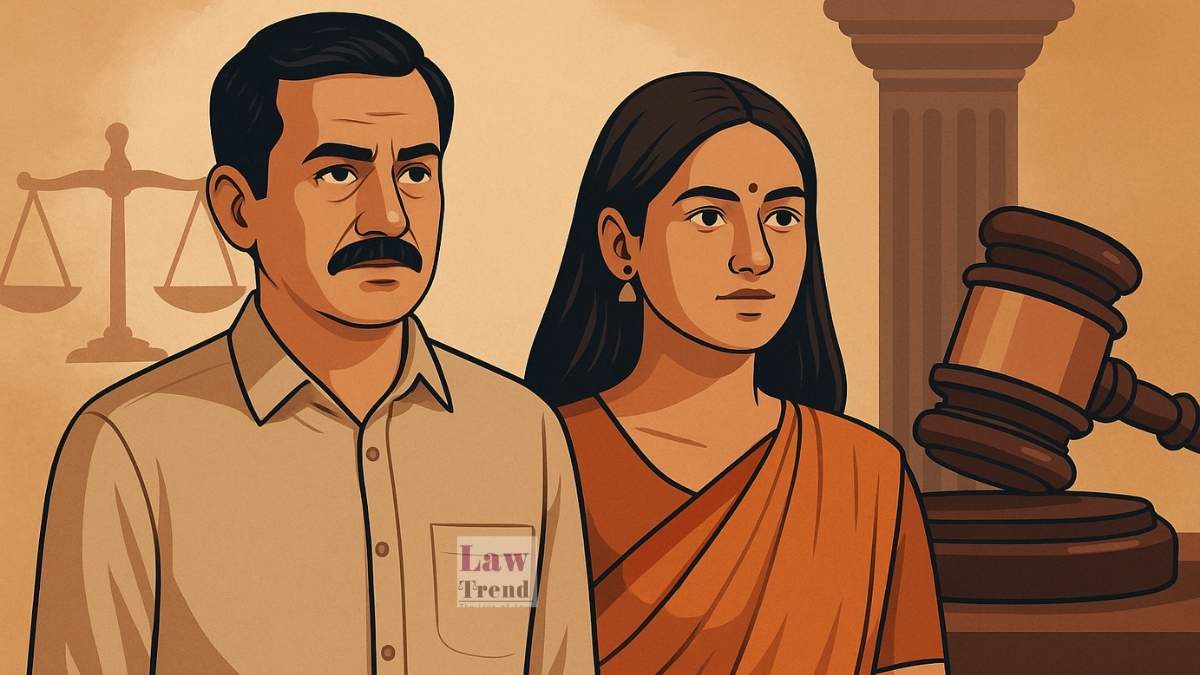
The Madhya Pradesh High Court has ruled that a “virginity test” or “two-finger test” is neither relevant nor conclusive for the purposes of a divorce petition. Dismissing a husband’s plea for a medical examination of his wife to ascertain her sexual history, the Single Bench of Justice Vivek Jain held that such an examination constitutes an invasion of privacy and is violative of the right to dignity under Article 21 of the Constitution.
Background of the Case
The petitioner (husband) had filed a divorce petition against the respondent (wife) on the ground of cruelty. In his petition, the husband pleaded that the wife had refused to enter into a physical relationship with him, citing this refusal as a specific factor of cruelty.
In her written statement, the wife denied the allegations, countering that she was being harassed on account of dowry demands and subjected to physical and mental cruelty. Furthermore, she alleged that she was subjected to acts of sodomy by the husband.
Based on these pleadings, the husband filed an application before the Family Court seeking a medical examination of the wife. He argued that since there had been no physical relationship between them, and given her counter-allegation of sodomy, she should be examined to ascertain “whether she has ever entered into sexual relationship with anybody and whether she has been subjected to sodomy/anal intercourse, at any point of time.”
The Family Court rejected this application on December 5, 2025. Aggrieved by this rejection, the husband filed a Miscellaneous Petition before the High Court.
Arguments
Mr. Mohd. Aadil Usmani, appearing for the petitioner, vehemently relied on the Supreme Court judgment in the case of Sharda vs. Dharmpal (2003). He submitted that the Apex Court has held that in matrimonial matters, the right to privacy cannot be claimed by the other party if a medical examination is sought on matters which are grounds for divorce. The counsel contended that the Family Court’s order ran contrary to settled law and that the medical examination ought to have been ordered.
Court’s Observations and Analysis
Justice Vivek Jain heard the submissions and perused the record. The Court noted that the petitioner was essentially seeking a medical examination to establish whether the wife had ever had sexual relations or been subjected to anal intercourse.
Distinction from Sharda vs. Dharmpal
The High Court distinguished the facts of the present case from the decision in Sharda vs. Dharmpal. The Court observed that in Sharda, the Supreme Court held that medical examination is necessary where divorce is sought on grounds like “impotency” or “schizophrenia,” which can only be established by medical evidence.
However, in the present case, the divorce is sought on the ground of “cruelty” due to the refusal of sexual intercourse. The Court clarified:
“The parties entering into sexual relationship or not, is not a ground of divorce and the fact may be relevant only for the limited purpose in the present case that whether the wife has committed cruelty upon the husband by refusing to enter into sexual relationship. Otherwise, it is neither a ground for declaring the marriage as void nor voidable under Sections 11 and 12 of the Hindu Marriage Act, 1955, nor a ground of divorce under Section 13.”
On the Allegation of Sodomy
Regarding the husband’s request to check for evidence of sodomy, the Court observed that if the alleged act occurred much prior to the examination, it cannot be ascertained in a medical examination conducted many years later. The Court stated that such a test would amount to “nothing but invasion of privacy of the person and her humiliation.”
Virginity Test and Right to Privacy
The Court firmly held that the husband’s request to ascertain if the wife ever had sexual relationships was “nothing but seeking virginity test of the wife in different words.”
The Bench referred to the Supreme Court’s decision in State of Jharkhand vs. Shailendra Kumar Rai (2022), which heavily deprecated the practice of conducting virginity tests. The Court noted that the Ministry of Health and Family Welfare guidelines state that the status of the hymen is irrelevant because it can be torn due to reasons other than sexual intercourse, such as sports or physical activity.
The High Court also relied on the Delhi High Court’s judgment in SR. Sephy vs. CBI (2023), which declared virginity tests on female detainees or accused persons as unconstitutional and a violation of Article 21. Quoting the Delhi High Court, the judgment reiterated that the virginity test is “sexist” and violative of the human right to dignity.
Decision
Dismissing the petition, Justice Vivek Jain concluded that the medical examination sought by the husband was an invasion of privacy. The Court ruled that the refusal to enter into sexual intercourse is not a standalone ground for divorce but constitutes cruelty, which can be proved by other evidence.
The Court held:
“This Court does not find any substance in the plea made by the petitioner/husband to subject the respondent/wife to medical examination as the said examination would be nothing but a virginity test which would be an invasion of privacy of the individual and is not relevant for the purpose of divorce… and virginity test or ‘two-finger test’ of the wife would neither be relevant nor be conclusive for the purposes of the divorce petition.”