

Candidates Cannot Claim Indefeasible Right to PG Medical Seats Post-Admission if Rules are Amended to Comply with Law: Chhattisgarh High Court
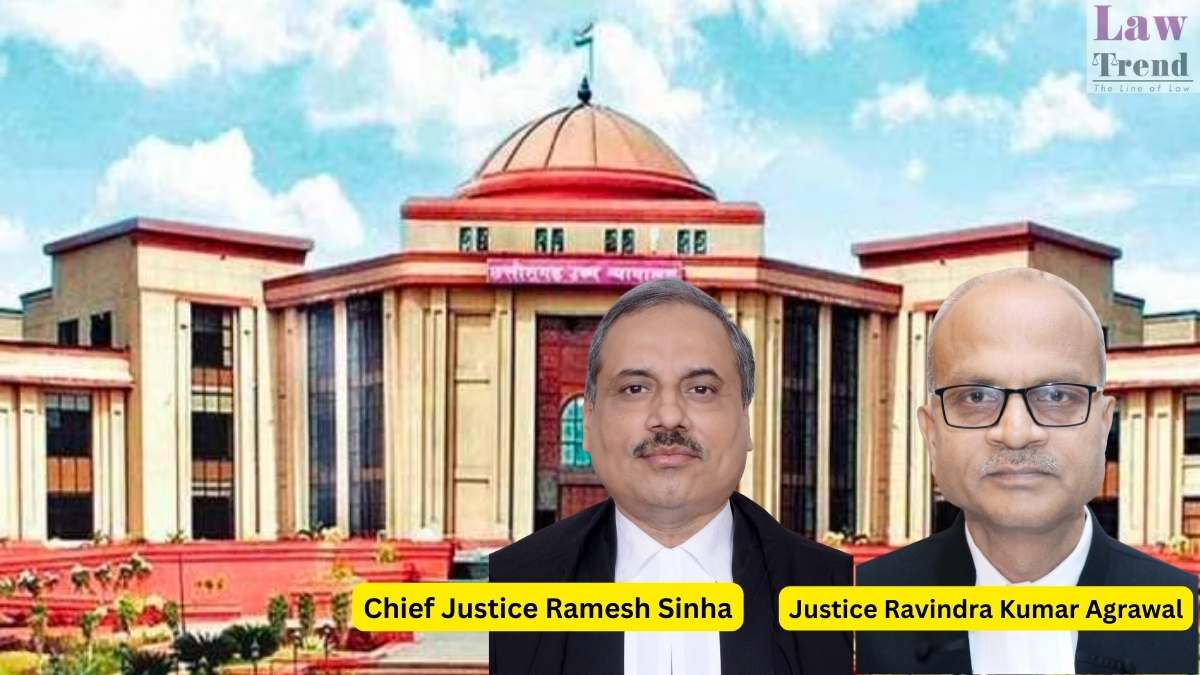

The High Court of Chhattisgarh has dismissed a writ petition challenging the cancellation of the first and second rounds of counselling for Post Graduate (PG) Medical courses for the academic year 2025. The Division Bench, comprising Chief Justice Ramesh Sinha and Justice Ravindra Kumar Agrawal, held that candidates do not possess a “vested or indefeasible right” to a seat merely because they have completed admission formalities, especially when such processes are subject to judicial scrutiny and statutory corrections.

The primary legal question before the Court was whether the State could validly cancel a completed counselling process and admissions already secured to retrospectively apply amended Rule 11 of the Chhattisgarh Medical Post Graduate Admission Rules, 2025. The petitioner argued that the cancellation was arbitrary and violative of Articles 14, 19, and 21 of the Constitution, while the State contended it was a necessary corrective measure to comply with Supreme Court mandates.

Background of the Case

The petitioner, Anushka Yadav, qualified the NEET (PG) 2025 and was initially allotted a seat in Bhopal under the All India Quota. Subsequently, she participated in the Chhattisgarh State NEET (PG) Counselling. Under the then-prevailing rules, she was allotted an M.D. (Radio Diagnosis) seat at Shri Shankaracharya Institute of Medical Sciences, Bhilai. She completed the admission process on January 9, 2026, deposited substantial fees (Rs. 10.79 lakhs), and submitted a bank guarantee of Rs. 10 lakhs.

However, on January 22, 2026, the State issued a notification amending Rule 11 of the Admission Rules and simultaneously cancelled the first and second rounds of counselling. This action followed a series of litigations, including Dr. Samriddhi Dubey v. State of Chhattisgarh (WPC No. 5937 of 2025), where the High Court had quashed the original Rule 11 for being discriminatory.

Arguments of the Parties

Petitioner’s Submissions: Counsel for the petitioner argued that the admission was concluded and a “vested right” had accrued. It was contended that:

  • The amendment to Rule 11 should only operate prospectively.
  • The petitioner resigned from her All India Quota seat, leading to forfeiture of security deposits and causing “irreparable financial and academic loss.”
  • The State had no jurisdiction to cancel a concluded process without a specific judicial mandate for retrospective application.
READ ALSO  Imprisonment of Judgment Debtor a Drastic Step, Requires Proof of Willful Disobedience: Supreme Court

State’s Submissions: The Additional Advocate General, appearing for the State, argued that the petition was misconceived. He maintained that:

  • The State was under a constitutional obligation to implement the ratio laid down by the Supreme Court in Dr. Tanvi Behl v. Shrey Goel & Others (2025).
  • No indefeasible right is created by “provisional allotment or admission” when the process is subject to the final outcome of pending litigation.
  • The cancellation was a “bona fide exercise” to ensure transparency and fairness in medical admissions.
READ ALSO  Chhattisgarh High Court Expresses Concern Over Conditions in Sarangarh Sub-Jail

Court’s Analysis and Observations

The Court examined the evolution of Rule 11. Initially, Rule 11(a) provided preference to candidates who obtained MBBS degrees from universities within Chhattisgarh or were in-service candidates. This was quashed in the Samriddhi Dubey case as violative of Article 14.

The Court referred to the Supreme Court’s decision in Dr. Tanvi Behl, which observed:

“But considering the importance of specialists doctors’ in PG Medical Course, reservation at the higher level on the basis of ‘residence’ would be violative of Article 14 of the Constitution of India… residence-based reservations are not permissible in PG medical courses.”

The Bench noted that the State amended Rule 11 to create a 50% “Institutional Reservation” for candidates from Chhattisgarh medical colleges and a 50% “Open Category” for all eligible candidates based on merit.

Regarding the “vested right” claim, the Court observed:

READ ALSO  Can Regular Bail be Granted With Effect from Future Date? SC to Consider

“It is well settled that no vested or indefeasible right accrues merely on the basis of provisional allotment or admission, particularly when such admissions are subject to judicial scrutiny and correction.”

The Court further noted that since the coordinate Bench had already quashed the earlier discriminatory rules, the petitioner could not claim benefit from a process conducted under those invalidated rules.

Decision

The High Court found no merit in the petition and dismissed it. The Court held that the State’s orders were issued in “faithful compliance” with Supreme Court mandates and earlier High Court clarifications.

To prevent further litigation, the Court issued an “in rem” direction:

“It is further directed that this order shall have the effect ‘in rem’ and shall apply uniformly to all similarly situated candidates. The issues adjudicated herein stand conclusively settled, and no separate or successive petitions raising identical grounds shall be entertained by this Court.”

Law Trend
Law Trendhttps://lawtrend.in/
Legal News Website Providing Latest Judgments of Supreme Court and High Court

Related Articles

Latest Articles

