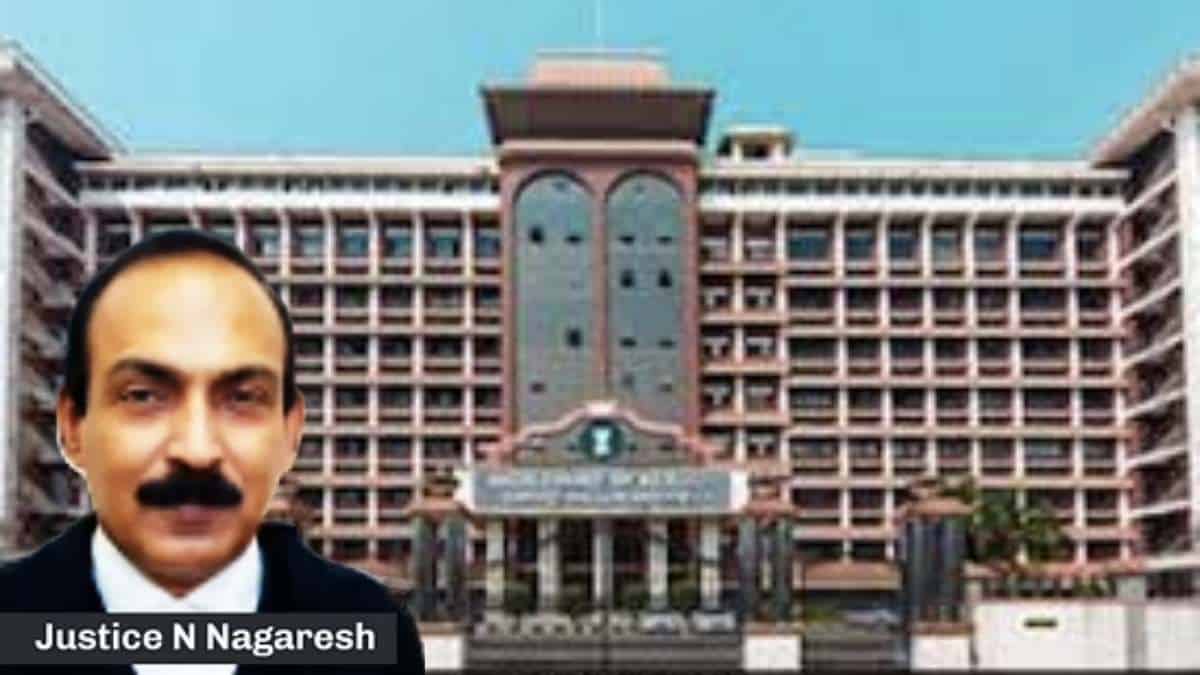
The High Court of Kerala has set aside the State Government’s orders denying compensatory leave to Gazetted Officers of the High Court, declaring the action “illegal, arbitrary and violative of Article 229 of the Constitution of India.”
In a judgment delivered on Wednesday, Justice N. Nagaresh allowed a writ petition filed by the Kerala High Court Gazetted Officers’ Association, directing the State Government to reconsider the proposal for exemption in strict conformity with the constitutional scheme and the recommendations of the Chief Justice.
Case Background
The legal dispute originated from a Government Order dated October 7, 2022 (GO(P) No.123/2022/Fin), which amended Appendix VII of Part I of the Kerala Service Rules (KSR). The amendment inserted “Gazetted Officers” alongside “Heads of Offices” as a category of employees ineligible for compensatory leave. Previously, compensation leave was available to officers irrespective of rank, serving as a measure to ensure rest for those working on public holidays.
The petitioners contended that while the High Court staff are governed by the Kerala High Court Service Rules, 2007, Rule 37(2) stipulates that KSR provisions apply in matters concerning leave. Following the amendment, the High Court issued an Official Memorandum revoking the practice of granting compensatory leave to Gazetted Officers.
Recognizing the specific nature of duties in the judiciary, the Chief Justice of the Kerala High Court directed the Registrar General to seek an exemption from the Government. The Registrar General sent a letter on December 6, 2022, requesting that High Court Gazetted Officers be exempted from the restriction. The Government rejected this request via a letter dated May 18, 2023. A subsequent request by the High Court in August 2024 was similarly rejected by the Government on December 19, 2024.
Arguments of the Parties
The Petitioner Association argued that the amendment ignored the extended working hours and duties performed by Gazetted Officers of the High Court. They submitted that even during vacations like Onam and Christmas, officers are required to supervise filing, scrutiny, case allocation, and urgent orders connected to vacation sittings. They highlighted that while the Government granted exemptions to the Health Sector, it unjustifiably refused the High Court’s request despite the recommendation of the Chief Justice.
The State Government (Respondents 1-3) defended the decision, filing a counter-affidavit stating that compensation leave is an “additional benefit” and not a right. Relying on Rule 14 of Part-I KSR, the State argued that the “whole time of an officer is at the disposal of the Government.” The State maintained that the discontinuation of compensatory leave for Gazetted Officers was a policy decision. It was further submitted that exemptions were granted only to the Health Sector due to its status as an emergency service, while requests from other departments, including the State Planning Board and Food Safety Department, were rejected.
Court’s Observations and Analysis
Justice N. Nagaresh analyzed the functional realities of the High Court, noting that they are “materially different from other Government Departments.” The Court observed:
“Administrative and judicial work continues even during major holidays such as Onam and Christmas. Even during holidays, vacation sittings are held, which require the full process of filing, scrutiny, allocation of cases, issue of orders and even clearing of pendency… The Gazetted Officers of the High Court are required to supervise, coordinate and ensure completion of all such duties.”
The Court placed significant reliance on Article 229 of the Constitution of India, which is designed to secure the independence of the High Court by giving the Chief Justice absolute control over its staff.
Referring to the Supreme Court judgments in High Court Employees Welfare Association v. State of W.B. [(2004) 1 SCC 334] and Union of India v. S B Vohra [(2004) 2 SCC 150], the Court reiterated that the Government should normally accept the suggestions of the Chief Justice and should differ only for “cogent and sufficient” reasons.
Critiquing the Government’s rejection letters (Exts.P4 and P6), the Court stated:
“The Government did not advert to the specific concerns highlighted by the High Court… Ext.P6 also did not contain any reasons for rejecting the request.”
The Court held that the recommendations emanating from a constitutional authority exercising control under Article 229 “cannot be disregarded by the Executive” without strong and adequate reasons.
Decision
The High Court allowed the writ petition, holding that the respondents were not justified in rejecting the request made at the instance of the Chief Justice.
The Court ordered:
“Exts.P4 and P6 communications are set aside. It is declared that denial of compensatory leave to the Gazetted Officers of the High Court under Ext.P1 is illegal, arbitrary and violative of Article 229 of the Constitution of India.”
Respondents 1 to 3 were directed to reconsider the proposal of the High Court establishment within three months.
Case Details:
- Case Title: Kerala High Court Gazetted Officers’ Association v. State of Kerala & Others
- Case No: WP (C) No. 45866 of 2025
- Coram: Justice N. Nagaresh
- Counsel for Petitioner: Shri. Mathews K. Nelluvely, Reji Mathew M., Mathew Varghese, Joel Reji Mathew, Andrew Mathews
- Counsel for Respondents: Sri. P.K. Babu, Special Government Pleader (Finance); Sri. Aneesh James (for High Court)