

‘Marriage Exists Only in Law’: Delhi HC Waives One-Year Statutory Bar for Mutual Consent Divorce for Couple Separated Since Wedding Day
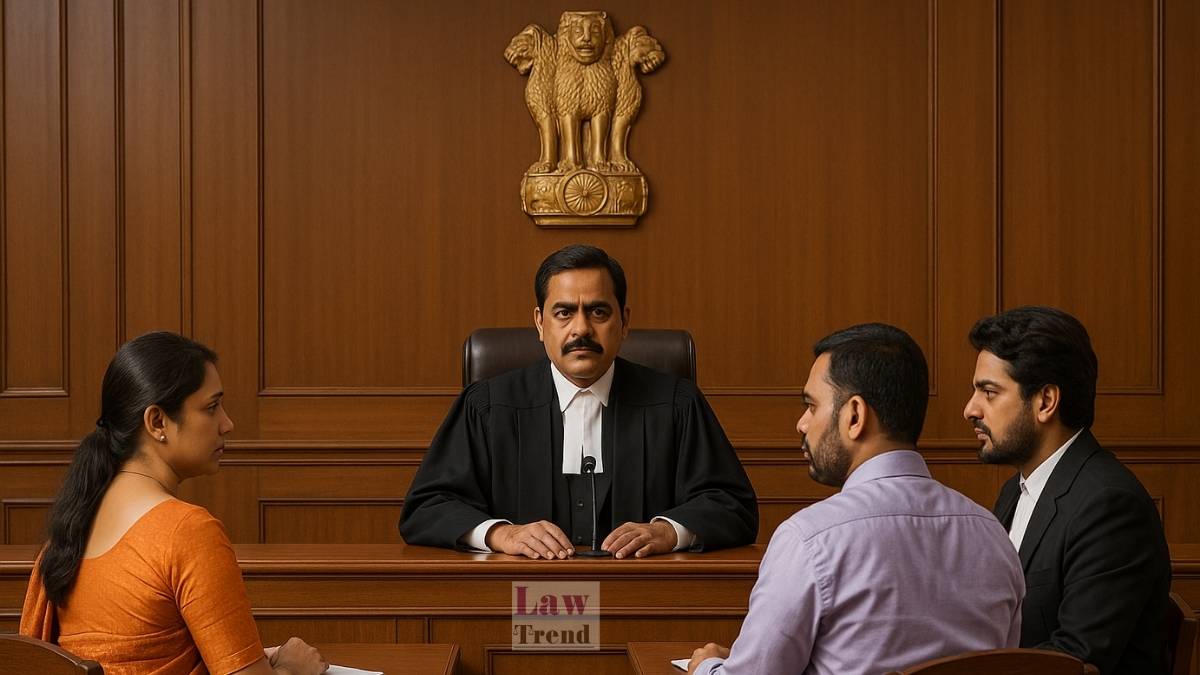

The Delhi High Court has set aside a Family Court order that refused to waive the mandatory one-year cooling-off period for filing a mutual consent divorce petition. The Division Bench, comprising Justice Vivek Chaudhary and Justice Renu Bhatnagar, held that insisting on the continuation of a marriage that has not been consummated and where parties have lived separately since inception would amount to compelling them to endure a relationship devoid of any matrimonial foundation.

Background of the Case

The appeal, filed under Section 19 of the Family Courts Act, 1984, read with Section 28 of the Hindu Marriage Act, 1955 (HMA), challenged the Order dated December 9, 2025, passed by the Principal Judge, Family Court-02, South District, Saket Courts, Delhi.

The parties solemnized their marriage on March 30, 2025, at an Arya Samaj Mandir, followed by registration on April 2, 2025. It was an admitted position that the parties never cohabited, the marriage was never consummated, and they continued to reside separately at their respective parental homes immediately after the marriage.

Due to irreconcilable differences, the parties filed a joint petition for divorce under Section 13-B(1) of the HMA within seven months of the marriage. Along with the petition, they filed an application under Section 14 of the HMA seeking leave to present the petition before the expiry of one year from the date of marriage.

The Family Court dismissed the application, holding that the parties failed to establish a case of “exceptional hardship.” The lower court observed that sufficient efforts were not made to save the marriage and that the registration of the marriage shortly after solemnization diluted the claim of exceptional hardship.

READ ALSO  विदेशी विधि स्नातकों को भारत में प्रैक्टिस करने के लिए BCI परीक्षा उत्तीर्ण करनी होगी, भले ही उन्होंने ब्रिज कोर्स पूरा कर लिया हो: दिल्ली हाईकोर्ट

Arguments of the Parties

Learned counsel for the appellant submitted that the Respondent is currently residing in Canada, while the Appellant resides in India. It was argued that the Appellant is obligated to care for her aged parents and is unable to relocate, while the Respondent is similarly unable to move to India.

The counsel contended that these circumstances, though unfortunate, were unavoidable and resulted in continued separation with “no realistic or practical possibility of resumption of matrimonial life,” thereby giving rise to exceptional hardship.

Court’s Analysis and Observations

The High Court examined Section 13-B(1) and Section 14 of the HMA. The Bench referred to the Full Bench judgment of the Delhi High Court in Shiksha Kumari v. Santosh Kumar (Decided on 17.12.2025), which clarified that the one-year statutory period under Section 13-B(1) can be waived under the proviso to Section 14(1) if the court is satisfied that the case involves “exceptional hardship to the petitioner” or “exceptional depravity on the part of the respondent.”

Addressing the facts of the case, the Court observed:

READ ALSO  Revision under Section 115 of CPC is not maintainable against the dismissal of an application filed under Order IX Rule 13 of the CPC to set aside an ex-parte decree: SC

“In the present case, the admitted facts demonstrate that the parties never cohabited, the marriage was never consummated, and they have lived separately since the very inception of the marriage. There are no children from the wedlock, nor is there any reasonable probability of their living together in future. These facts are not in dispute and strike at the very foundation of a subsisting matrimonial relationship.”

The Bench rejected the reasoning of the Family Court regarding the registration of the marriage. The Court stated:

“Registration of marriage is merely a statutory mandate, and by itself, cannot be determinative of matrimonial harmony, intention to cohabit, or the viability of the marital relationship.”

Furthermore, regarding the Family Court’s view on saving the marriage, the High Court noted that since the marriage was never acted upon through cohabitation, “the question of saving such a marriage does not meaningfully arise.”

The Court held that the specific circumstances—non-consummation, immediate separation, residence in different countries, and the inability to relocate—constituted exceptional hardship. The Bench remarked:

“Insisting upon continuation of a marriage which exists only in law, and not in substance, would amount to compelling the parties to endure a relationship devoid of any matrimonial foundation, thereby causing avoidable hardship rather than advancing the object of the statute.”

Decision

The High Court allowed the appeal and set aside the impugned order dated December 9, 2025. The application under Section 14 of the HMA was allowed, granting leave to the parties to present their joint petition for divorce by mutual consent under Section 13-B(1) HMA forthwith, without waiting for the expiry of one year from the date of marriage.

The matter was remanded to the Family Court to proceed with the petition in accordance with the law expeditiously.

READ ALSO  There is Difference Between “Public Order” and “Law and Order”- Later Cannot be Ground of Detention: SC
Ad 20- WhatsApp Banner

Law Trend
Law Trendhttps://lawtrend.in/
Legal News Website Providing Latest Judgments of Supreme Court and High Court

Related Articles

Latest Articles

