

Interest of State Cannot Suffer for Acts of Omission/Commission of Officers; SC Condones Delay in Review Petition Regarding Public Land
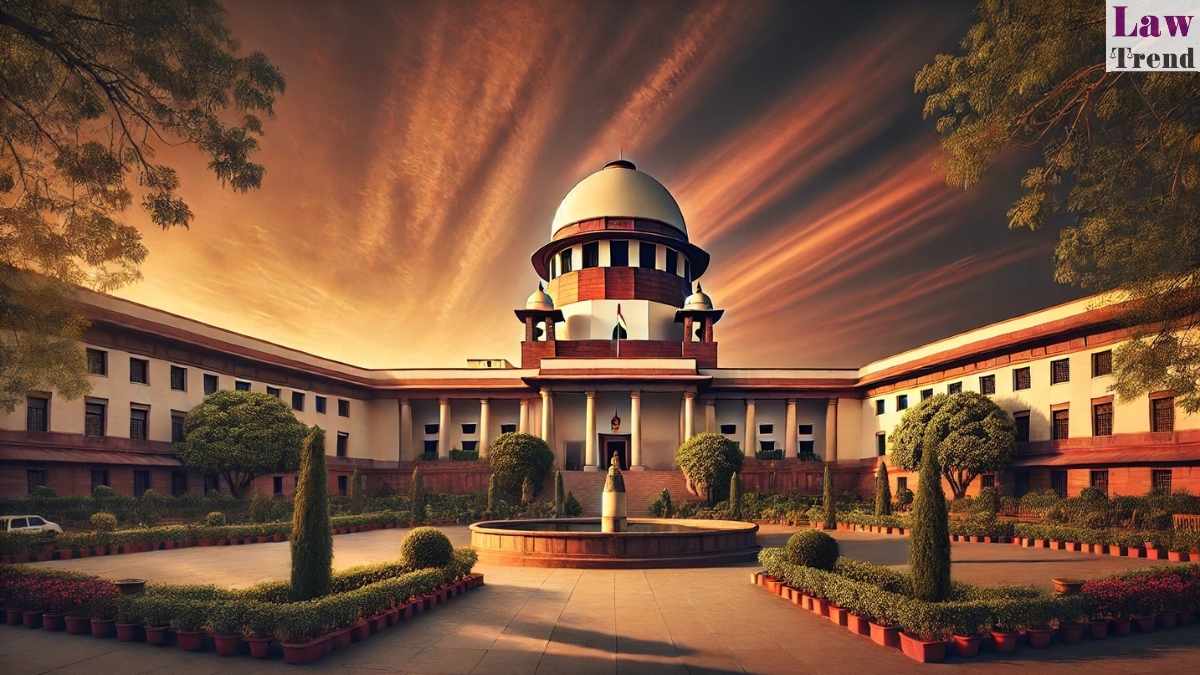

The Supreme Court of India has held that the “interest of State cannot suffer for the acts of omission/commission of its officers,” while refusing to interfere with a Madras High Court order that condoned a significant delay in the filing of a review petition by the District Collector, Madurai.

A Division Bench comprising Justice Ahsanuddin Amanullah and Justice R. Mahadevan observed that in matters involving State land and public interest, the Court must take a “pragmatic view” regarding the condonation of delay.

Case Background

The case, Vinod Gandhi v. The District Collector, Madurai & Ors. (SLP (C) No. 4337/2025), arose from a dispute over land which the petitioner claimed was settled with the predecessor-in-interest of his vendor in the year 1950.

According to the petitioner, a Patta was denied in 2008, leading to a Writ Petition where the High Court directed the issuance of the Patta. Subsequently, a suit for declaration of title and permanent injunction was filed by the petitioner’s vendor, which was decreed by the Trial Court. The First Appeal and Second Appeal filed against this decree were dismissed by the High Court. The Second Appeal (S.A. (MD) No. 417 of 2006) was disposed of on August 24, 2007.

The Respondent (District Collector) filed a review petition against the 2007 order. A fresh review petition was filed on August 31, 2012, along with an application for condonation of delay. The High Court, vide the impugned order dated January 24, 2025, condoned the delay, which the petitioner challenged before the Supreme Court.

READ ALSO  Bombay High Court Orders Stay on Execution of Arbitral Award, Mandates Deposit of Awarded Amount

Arguments of the Parties

Mr. Shyam Divan, Senior Advocate appearing for the petitioner, argued that the High Court’s order was passed “absolutely without any application of mind.” He submitted that there was an “inordinate and unexplained delay” of almost 17 years.

Mr. Divan contended that:

  • Concurrent findings from three Courts were in favor of the petitioner/predecessor-in-interest.
  • Third-party rights had been created, and there was no objection from any private person.
  • The State did not have records regarding the original settlement of 1950.
  • The petitioner was not made a party in the review petition and was thus denied the opportunity to contest the condonation of delay, causing serious prejudice to his rights.

Counsel for the Respondent-State submitted that in the records of the State, the land was never settled in favor of the original person in 1950, as no records are available. The State argued that the land is “State land, that too, a water body,” and it is in the general interest of the State and the public that the issue be “finally thrashed out.” The State also contended that the matter was not properly handled by the then Collector and did not come to the notice of the concerned authorities in time.

Court’s Observations and Analysis

The Supreme Court acknowledged the petitioner’s submission regarding the “inordinate and unexplained delay.” However, the Bench emphasized that the delay must be weighed against the consequences on the lis (dispute) concerned.

READ ALSO  अदालतों को वादीगण को वर्चुअल रूप से उपस्थित होने की अनुमति देनी चाहिए यदि उपस्थिति आवश्यक है: सुप्रीम कोर्ट

The Court observed:

“We feel that delay and condonation thereof is a matter on which there cannot be too much of an explanation or justification given the fact that the dates are not in dispute with regard to the sequence of events and only a pragmatic view is to be taken by the Court as to whether in the facts and circumstances of the case and the consequences it would ultimately have on the lis concerned, such condonation is required.”

Reiterating the principle regarding State litigation, the Court stated:

“Moreover, it is trite law that the interest of State cannot suffer for the acts of omission/commission of its officers.”

The Bench noted the categorical stand taken by the District Collector that the matter was not properly handled earlier and did not come to the notice of the authorities.

Decision

The Supreme Court declined to go into the finer details of the sequence of events and took a “holistic and overall view.” The Court disposed of the Special Leave Petition without interfering with the High Court’s order condoning the delay.

READ ALSO  पुराने वाहनों पर पूर्ण प्रतिबंध के खिलाफ सुप्रीम कोर्ट पहुंची दिल्ली सरकार, उत्सर्जन आधारित नीति की मांग

However, to protect the petitioner’s rights, the Court issued the following directions:

  1. Impleadment: The petitioner shall be made a party in the review petition pending before the High Court.
  2. Hearing on Merits: The petitioner shall be heard on merits by the High Court.
  3. Timeline: Considering the matter is old, the Supreme Court requested the High Court to conclude the hearing within six months.

The Registry was directed to communicate the order to the Registrar General of the Madras High Court for listing before an appropriate Bench.

Case Details:

  • Case Title: Vinod Gandhi v. The District Collector, Madurai & Ors.
  • Case Number: SLP (C) No. 4337/2025
  • Coram: Justice Ahsanuddin Amanullah and Justice R. Mahadevan

Law Trend
Law Trendhttps://lawtrend.in/
Legal News Website Providing Latest Judgments of Supreme Court and High Court

Related Articles

Latest Articles

