

Registry Cannot Question Joinder of Parties; Rejection of Writ Petition for “Multiple Reliefs in Single Prayer” Unprecedented: Supreme Court
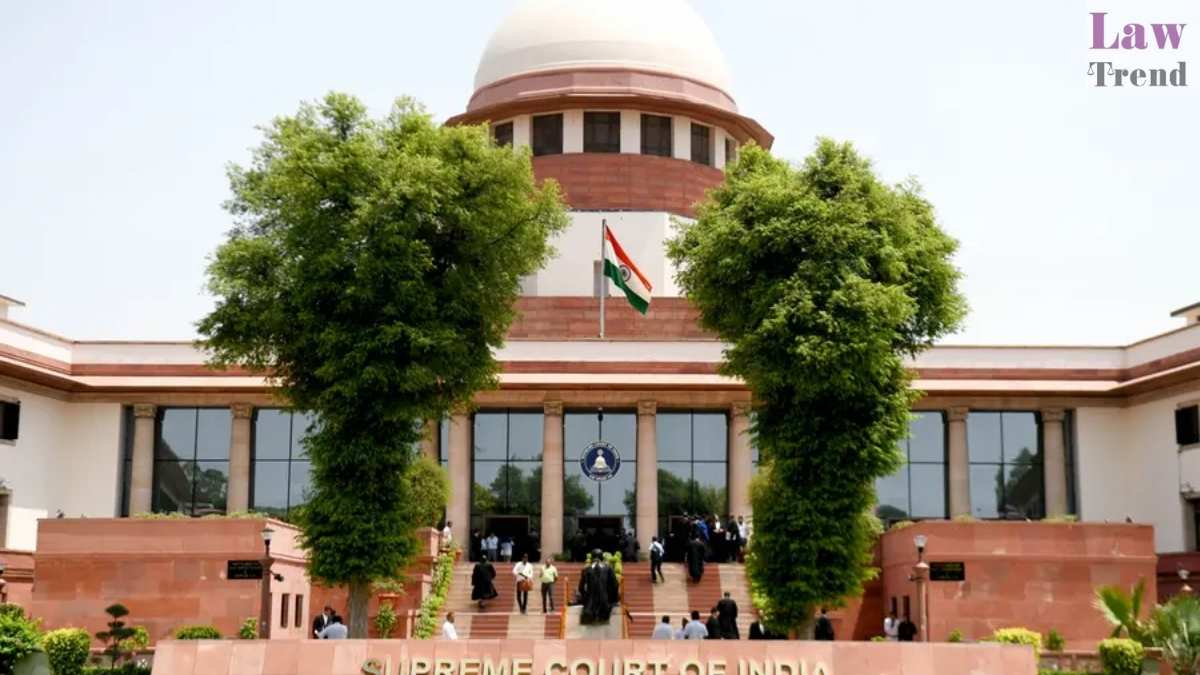

The Supreme Court has ruled that a High Court Registry cannot raise objections seeking clarification on why specific parties have been joined in a petition, nor can a Writ Petition be rejected at the threshold merely because multiple reliefs are claimed in a single prayer clause.

The Division Bench comprising Justice Dipankar Datta and Justice Satish Chandra Sharma, in the case of Sri Mukund Maheswar & Anr. v. Axis Bank Ltd. & Ors. (2026 INSC 84), observed that sustaining such technical objections amounted to an “abandonment of its judicial role” by the High Court.

The Supreme Court allowed the appeal against an order of the High Court of Telangana, which had rejected a Writ Petition based on office objections raised by the Registry. The Apex Court held that the Registry cannot intrude into the domain of the litigant regarding the joinder of parties and that technical objections regarding prayer clauses should be cured by amendment rather than rejection, especially when fraud is alleged.

Background of the Case

The appellants, classified as “borrowers” under Section 2(1)(f) of the Securitisation and Reconstruction of Financial Assets and Enforcement of Security Interest Act, 2002 (SARFAESI Act), had approached the High Court of Telangana filing a Writ Petition under Article 226 of the Constitution.

In their petition, the appellants alleged that an Advocate Commissioner, appointed by the relevant magistrate under Section 14 of the Act to take possession of the secured asset, had acted in a “fraudulent manner and/or in collusion with the secured creditor.” They contended that possession was taken without adhering to the provisions of the Act and the rules framed thereunder.

READ ALSO  PMLA | Supreme Court Upholds Twin Condition For Bail & Power of ED to Arrest, Attach, Search and Seizure

The Registry’s Objections

Upon presentation of the petition, the Registry of the High Court of Telangana raised the following objections:

  1. The prayer in the writ petition needs revision.
  2. It needs to be clarified as to why:
    • (a) multiple reliefs have been claimed in a single prayer; and
    • (b) respondents 3, 4, and 9 were arrayed as respondents.
  3. Since the petition arises out of the SARFAESI Act, “DB set is to be filed in IA Petition”.

On July 2, 2025, the Writ Petition was placed before a Division Bench of the High Court with these objections. The High Court agreed with the office objections, rejected the writ petition, and directed the Registry to return the papers to the counsel.

The Supreme Court’s Analysis and Observations

The Supreme Court set aside the High Court’s order, providing detailed observations on the procedural and substantive errors committed in rejecting the petition.

1. Allegations of Fraud: Fraus Omnia Corrumpit

The Court emphasized the seriousness of the allegations made by the appellants regarding the fraudulent conduct of the Advocate Commissioner. Citing the maxim fraus omnia corrumpit (“fraud unravels everything”), the Bench noted:

“To nip a proceeding, where fraud and collusion are alleged, in the bud on a mere technicality is unjust as it allows such allegations to be buried without an examination of its merits.”

2. Multiple Reliefs in a Single Prayer

The Court found the rejection of a writ petition on the ground of claiming multiple reliefs in a single prayer to be “perhaps, unprecedented.”

READ ALSO  कोविड-19 के दौरान सीमा अवधि बढ़ाने के आदेश उस अवधि पर भी लागू होते हैं, जब तक देरी माफ की जा सकती है: सुप्रीम कोर्ट

Referring to Order VII Rule 7 of the Code of Civil Procedure, 1908 (CPC), the Court explained that the requirement is for the relief to be specifically stated to enable the court to comprehend what is being urged.

“It is, therefore, all about comprehension as to what relief the petitioner/plaintiffs urges the court to grant to him… Whether or not they are entitled thereto is altogether a different matter.”

The Court further clarified the legal position on granting relief:

  • A court cannot dismiss a claim merely because a suitor claims a larger or wider relief than entitled.
  • A court can grant a lesser relief if the suitor is found entitled to it.
  • A court cannot grant a larger relief than what is claimed.

The Bench observed that if the High Court believed reliefs should be claimed separately or that the prayer clause was defective, it should have granted liberty to correct the prayer clause or permitted an amendment under the norms envisaged in Order VI Rule 17, CPC.

“Even, moulding of relief without insisting on amendment of the prayer clause, should a case be set up therefor, is not unknown to writ jurisprudence.”

3. Joinder of Parties: Dominus Litis

The Supreme Court took strong exception to the Registry’s objection seeking clarification on why respondents 3, 4, and 9 were joined. The Court asserted that the appellant is dominus litis (master of the suit).

“It is for him to decide who is to be joined as a party and who is not to be joined. Registry cannot make inroads into areas within the exclusive domain of the judiciary and seek clarification as to why a particular party has been joined as a respondent.”

The Court noted that unnecessary parties could be deleted by the High Court referring to principles under Order I Rule 10, CPC, or if a party is joined mischievously to harass, the High Court could deal with the situation on the judicial side.

READ ALSO  Government Orders Requiring Filing of Complaints on Affidavit are Directory Not Mandatory: Allahabad HC

Decision

The Supreme Court expressed pain at the High Court’s approach, stating:

“We are pained to observe that there has been an abandonment of its judicial role by the High Court.”

The Court passed the following directions:

  1. Appeal Allowed: The appeal was allowed, and the impugned order dated July 2, 2025, was set aside.
  2. Objections Overruled: The objections raised by the Registry were overruled.
  3. Revival of Petition: The Writ Petition was revived and directed to be registered and marked as “defect-free.”
  4. Fresh Consideration: The Registry of the High Court was directed to place the Writ Petition before the Chief Justice, to be assigned to a Division Bench other than the one which passed the impugned order.

Case Details

  • Case Title: Sri Mukund Maheswar & Anr. v. Axis Bank Ltd. & Ors.
  • Case Number: Civil Appeal arising out of SLP (C) Diary No. 63316 of 2025
  • Coram: Justice Dipankar Datta and Justice Satish Chandra Sharma

Law Trend
Law Trendhttps://lawtrend.in/
Legal News Website Providing Latest Judgments of Supreme Court and High Court

Related Articles

Latest Articles

