

Emotional Distress or Omnibus Allegations Insufficient for Conviction Under Section 498A IPC: Calcutta High Court Acquits Husband
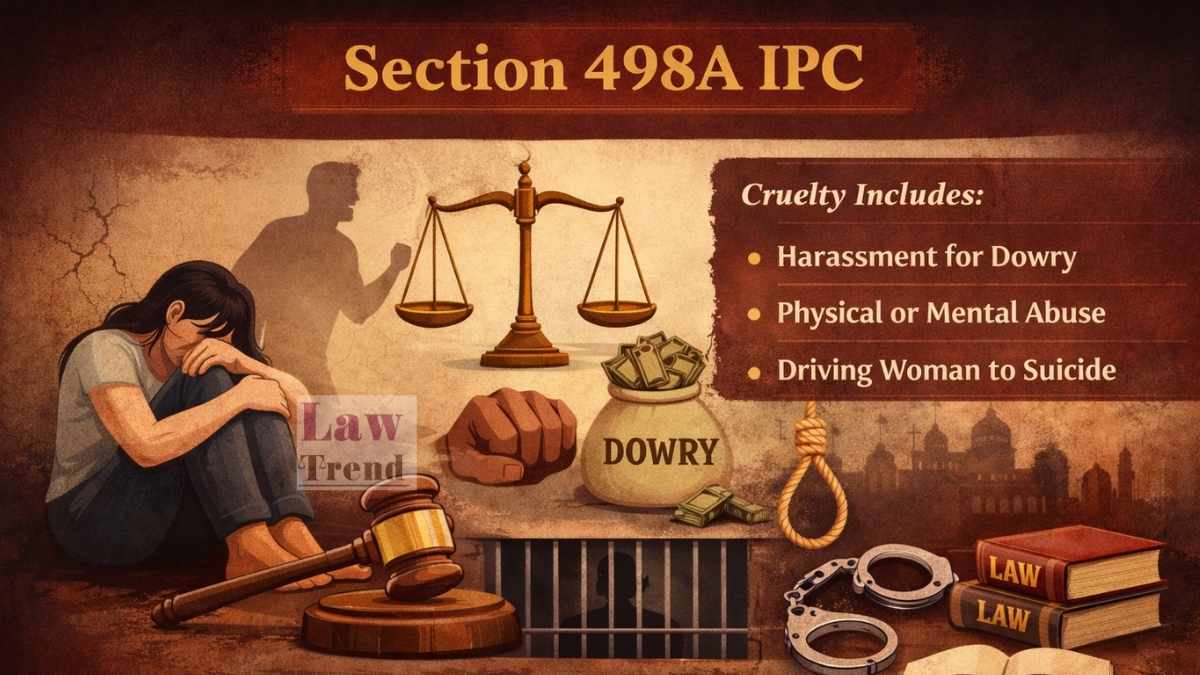

The Calcutta High Court has set aside a conviction under Section 498A of the Indian Penal Code (IPC), ruling that the prosecution failed to establish cruelty beyond a reasonable doubt. The Court observed that mere matrimonial unhappiness or omnibus allegations without specific instances of torture do not constitute an offence under Section 498A.

The Single Bench of Justice Chaitali Chatterjee Das allowed the criminal appeal filed by Jagadish Mishra, setting aside the judgment of the Additional Sessions Judge, Alipore. The trial court had previously convicted the appellant and his mother (who died during the pendency of the appeal) for the offence punishable under Section 498A IPC, sentencing them to three years of rigorous imprisonment. The High Court acquitted the appellant, noting that the prosecution could not prove that the deceased was subjected to cruelty that compelled her to commit suicide.

Background of the Case

The case originated from a complaint lodged on March 19, 2002, by Sushil Kumar Sarkar, the father of the deceased, Uma Mishra. He alleged that his daughter, who married the present appellant on March 6, 1997, according to Hindu rites and customs, was subjected to physical and mental torture by her husband and in-laws over demands for money and dissatisfaction with marriage articles.

According to the prosecution, on April 15, 2002, at 4:30 hours, the de-facto complainant was informed that his daughter was lying in a burnt condition at her matrimonial home. Upon reaching the spot, they found her with severe burn injuries. She was taken to S.S.K.M. Hospital but subsequently expired. A case was registered under Sections 498A/304B/420 B of the IPC.

The Trial Court, by an order dated January 9, 2014, convicted the husband and his mother under Section 498A IPC but acquitted all accused of charges under Section 304B (Dowry Death) read with Section 34 IPC. The present appeal challenged this conviction.

READ ALSO  Civil Dispute Can’t be Given Criminal Colour, Supreme Court Quashes Criminal Case- Know More

Arguments of the Parties

For the Appellants: The defense argued that the marriage was a registered “love marriage” which was initially not well accepted by the families, and the couple lived separately for some time. It was submitted that there was no question of dowry demand as the families did not participate in the marriage.

Dr. Achin Jana, appearing for the appellant, highlighted the significant delay in lodging the complaint. The incident occurred on April 15, 2002, but the complaint was lodged on March 19, 2003—almost one year later—without a plausible explanation, suggesting it was an afterthought. The defense further argued that the deceased was unhappy because her husband, a private tutor, returned home late at night, which caused disputes, but this did not amount to cruelty under the law.

For the State: The prosecution submitted that the evidence of witnesses and documents proved the case beyond reasonable doubt and that the trial court’s finding required no interference.

Court’s Analysis

The High Court meticulously examined the evidence and the definition of cruelty. Justice Das observed that while there was evidence of trouble between the couple, specifically regarding the husband returning late at night, this did not equate to cruelty as defined under the IPC.

READ ALSO  कलकत्ता हाई कोर्ट ने कोविड प्रतिबंधों के साथ गंगासागर मेला आयोजित करने की अनुमति दी

The Court referred to a letter written by the deceased (Exhibit 5) four months prior to her death. The Judge noted:

“On careful perusal of the said letter and the contents thereof nowhere anything can be found regarding any physical torture inflicted upon her either by the present appellant/husband, or his parents or sister-in-law.”

The Court further observed that the letter revealed the deceased’s mental unhappiness regarding family dynamics and lack of attention but did not substantiate allegations of torture.

Regarding the nature of allegations, the Court stated:

“Most of the witnesses, family members or near relatives made omnibus allegations about the torture inflicted upon the victim by the husband and in-laws without giving any specific day or time or year… The torture must be inflicted with intent to cause grave injury or drive the victim to suicide.”

The Court also took into account that the appellant (husband) himself sustained burn injuries during the incident, a fact corroborated by witnesses and his examination under Section 313 CrPC. The Court noted:

“However, there remains no room left for not believing that the appellant did not sustain any burn injury on the same date along with the victim… Not taking the victim to the hospital only cannot be the reason for raising doubt against the accused persons that they intentionally did not took her to hospital when… the husband also sustained injury.”

The Court cited the Supreme Court judgment in Mange Ram vs State of Madhya Pradesh, reiterating that “mere emotional distress or a single fight doesn’t constitute cruelty.” It also referred to Charan Singh vs State of Uttarakhand, noting that an unnatural death within seven years of marriage is insufficient for conviction if cruelty soon before death is not proved.

READ ALSO  [Historic] SC Upholds Right of Wife to Reside in In-Laws House

Decision

The High Court concluded that the ingredients of Section 498A were not proved against the appellant.

“Therefore this court concludes that on consideration of the testimonies of the witnesses the ingredients of section 498A has not been proved against the Appellant, by the prosecution beyond the shadow of all reasonable doubts.”

The appeal was allowed, the order of conviction was set aside, and the appellant was acquitted.

Case Details:

  • Case Title: Jagadish Mishra & Anr. vs The State of West Bengal
  • Case Number: CRA 124 OF 2014
  • Coram: Justice Chaitali Chatterjee Das

Law Trend
Law Trendhttps://lawtrend.in/
Legal News Website Providing Latest Judgments of Supreme Court and High Court

Related Articles

Latest Articles

