

Delhi HC Modifies Order: Permits Cash Transfer Instead of Physical Uniforms for EWS Students
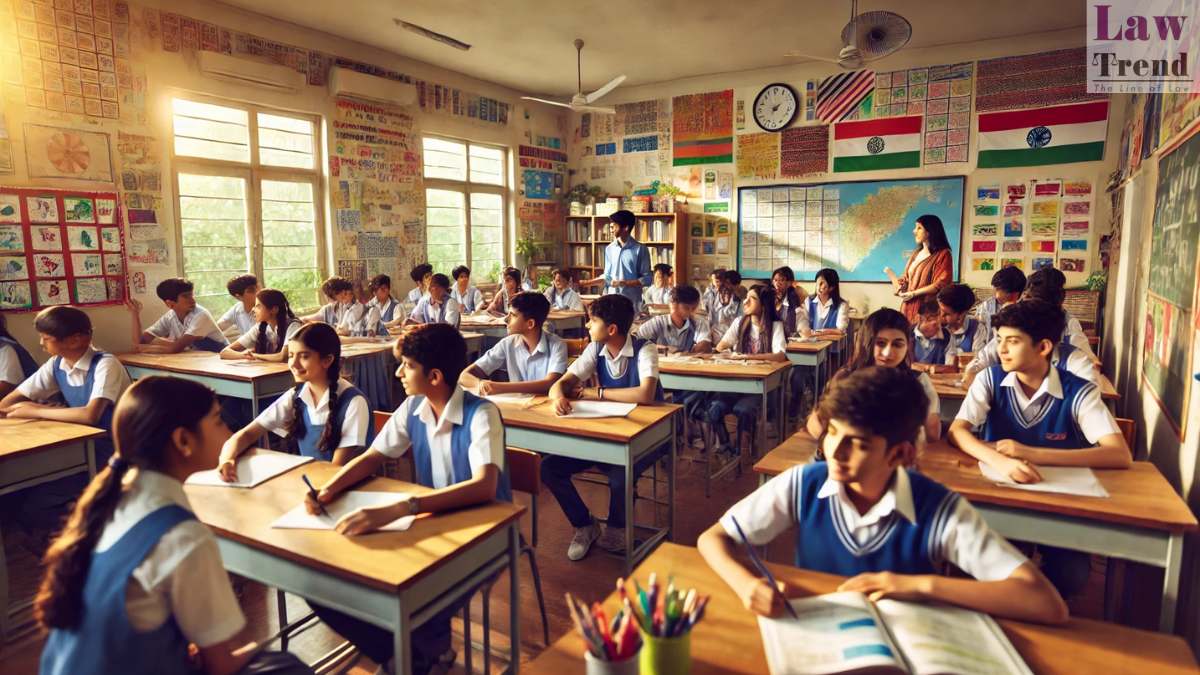
The Delhi High Court has modified its earlier order requiring the Government of NCT of Delhi (GNCTD) to provide school uniforms “strictly in kind” to students belonging to the Economically Weaker Section (EWS) and Disadvantaged Group (DG). The Division Bench, comprising Chief Justice Devendra Kumar Upadhyaya and Justice Subramonium Prasad, permitted the government to implement its policy of Direct Benefit Transfer (DBT), providing cash subsidies to students to purchase uniforms.

The Bench observed that insisting on the physical distribution of uniforms would create significant operational bottlenecks, potentially delaying the benefit for students.

Background of the Case

The matter originated from a Writ Petition (W.P.(C) 3684/2013) titled Justice For All v. Govt. of NCT of Delhi, filed to ensure the implementation of the Right of Children to Free and Compulsory Education Act, 2009 (RTE Act). The petition sought compliance with the mandate to provide free books, uniforms, and study materials to EWS and DG category students in private unaided and aided schools in Delhi.

Previously, on April 13, 2023, the High Court had disposed of the writ petitions but kept a contempt petition pending to monitor whether the government was providing uniforms or giving cash in lieu thereof. The Court had directed the GNCTD to explain why cash was being given instead of physical uniforms.

The Respondent (GNCTD) filed a Review Petition (Review Pet. 475/2025) seeking a review of the April 13, 2023 order. They requested the Court to modify the direction regarding the provision of uniforms “strictly in kind” and allow the implementation of a new policy dated June 10, 2025, which sanctioned the use of DBT.

READ ALSO  Andhra Pradesh HC Reiterates Strict Scope of Review Jurisdiction

Arguments of the Parties

The Counsel for the GNCTD argued that while the State is duty-bound to provide uniforms, the process of supplying them in kind is fraught with logistical challenges. It was submitted that:

  • Different schools have different uniform color combinations, making management difficult.
  • Getting measurements for every student and placing tenders through the Government E-Marketplace (GeM) is a “long and tedious process.”
  • Procuring cloth and getting uniforms stitched often leads to delays.

The government contended that to fulfill its responsibility under the 2011 Rules efficiently, it had decided to increase the reimbursement amount—paying between Rs. 1250 to Rs. 1700 per student—so that uniforms could be purchased directly.

Per contra, the Counsel for the Petitioner, Mr. Khagesh B. Jha, opposed the plea, stating that the mandate is to provide uniforms in kind. He argued that the new policy was contrary to the earlier directions passed by the Court.

Court’s Analysis

The High Court accepted the difficulties cited by the government as “genuine.” The Bench noted:

READ ALSO  Delhi HC restrains Illegal Websites from Streaming IPL Events

“Undoubtedly, it would be impossible to carry-out the exercise of taking measurements of every student, placing orders for different kinds of uniform cloth on the GeM portal, after procurement of the material getting the uniforms stitched as per the measurements and finally distributing the uniforms in schools before the commencement of a new session.”

The Court reasoned that providing money directly to students would ensure that uniforms are available in time. Crucially, the Bench clarified the statutory requirement under the Delhi Right of Children to Free and Compulsory Education Rules, 2011:

“Under the 2011 Rules, there is a mandate to provide uniforms but the Rules do not state that the Government has to provide uniforms in kind only. Therefore, the insistence of the Petitioners that actual physical uniforms be provided cannot be accepted.”

The Court also emphasized the limited scope of judicial interference in government policy. Citing the Supreme Court’s decisions in Fertilizer Corporation Kamgar Union (Regd.), Sindri & Ors. v. Union of India & Ors. (1981), Directorate of Film Festivals & Ors. v. Gaurav Ashwin Jain & Ors. (2007), and Jacob Puliyel v. Union of India and Ors. (2022), the Bench reiterated that courts should not interfere with policy decisions unless they are “grossly arbitrary or irrational” or contrary to statutory provisions.

READ ALSO  Delhi High Court to Hold Preliminary Hearing in January on Abdul Rashid Sheikh’s Plea Against Costs for Attending Parliament

The Court observed:

“The policy decision arrived at by the Respondent does not show that there was any intent of malafide or that the Policy is contrary to provisions of statutory rules or of the Constitution.”

Decision

The High Court allowed the Review Petition and modified its order dated April 13, 2023. The Court permitted the GNCTD to implement the uniform subsidy through Direct Benefit Transfer in accordance with the Cabinet decision dated May 10, 2025, and the policy order dated June 10, 2025.

The Bench directed the GNCTD to:

“…ensure that adequate amount is provided in accordance with the Policy decision taken by the Government well within time and at the earliest.”

Case Details:

Case Title: Justice For All v. Govt. of NCT of Delhi

Case Number: Review Pet. 475/2025 in W.P.(C) 3684/2013

Coram: Chief Justice Devendra Kumar Upadhyaya and Justice Subramonium Prasad

Law Trend
Law Trendhttps://lawtrend.in/
Legal News Website Providing Latest Judgments of Supreme Court and High Court

Related Articles

Latest Articles
