

If the Government Takes a Step to Improve the Efficiency of Public Service by Amending Promotion Rules Under Article 309, Such Action Cannot Be Held Arbitrary or Unreasonable: Chhattisgarh HC
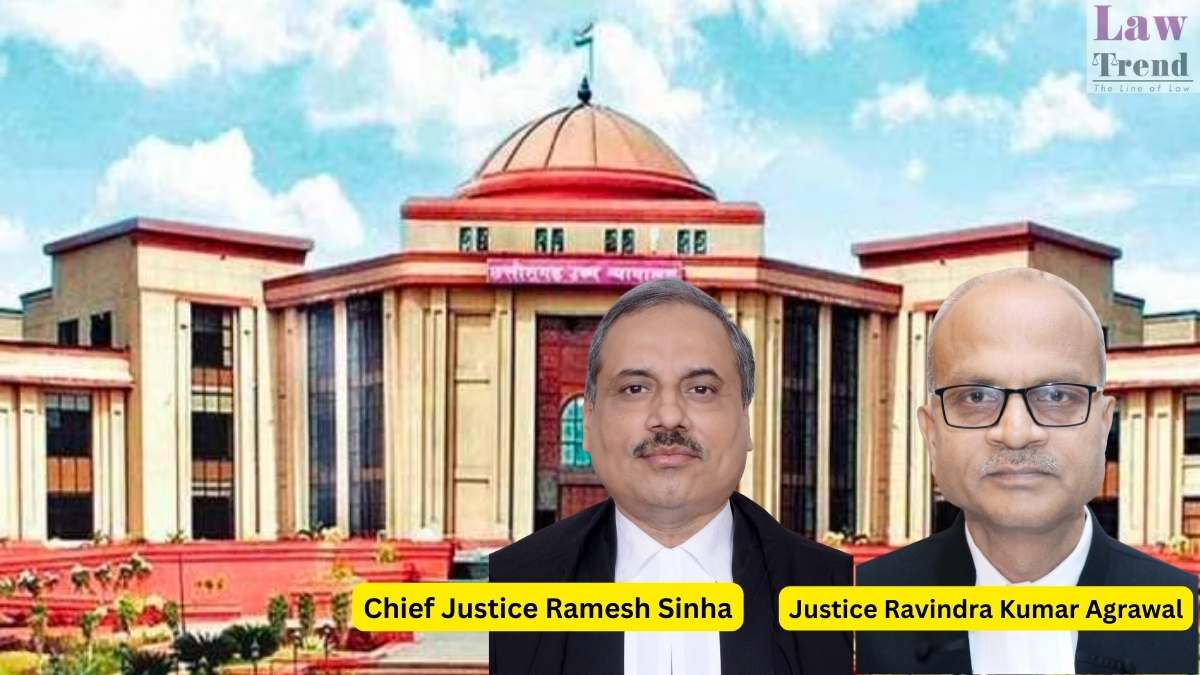
The High Court of Chhattisgarh has upheld the validity of the amendment to the Chhattisgarh Public Work Department (Non-Gazetted) Service Recruitment Rules, 2016, ruling that the inclusion of work-charged employees in the feeder cadre for promotion is a valid exercise of power under Article 309 of the Constitution. The Division Bench, comprising Chief Justice Ramesh Sinha and Justice Ravindra Kumar Agrawal, dismissed the writ petition filed by regular department employees, holding that if the government takes a step to improve the efficiency of public service by amending promotion rules, such action cannot be held to be arbitrary or unreasonable.

The Court was hearing a petition (Bashil Minj & Others v. State of Chhattisgarh & Others) filed by petitioners working as Tracers and Assistant Draftsmen in the Public Works Department (PWD). They challenged the legality of the notification dated January 22, 2022, which amended Schedule-IV of the Rules, 2016.

The amendment added “Diploma holder/Degree holder Field Assistant of Work Charged Establishment” to the eligibility criteria for promotion to the post of Sub-Engineer (Civil). Following this amendment, the Engineer-in-Chief, PWD, issued promotion orders on July 14, 2023, and August 29, 2023, promoting Field Assistants working under the Work Charged Establishment to the post of Sub-Engineer.

Arguments of the Parties

The petitioners contended that work-charged and contingency-paid employees are not regular government servants and are distinct from the regular cadre. Their counsel argued that treating work-charged employees as equals to regular employees for promotion violates Articles 14 and 16 of the Constitution. It was further argued that under Rule 2(d) of the Chhattisgarh Public Services (Promotion) Rules, 2003, work-charged employees are expressly excluded from the cadre eligible for promotion. The petitioners asserted that the private respondents were never regularized and did not fulfill the requirement of five years of regular service.

The State, represented by the Additional Advocate General, argued that the petition was barred by delay and laches, as the amendment was notified in January 2022, but the petition was filed only in October 2024. The State submitted that it is the exclusive prerogative of the government to frame or amend service rules under Article 309 of the Constitution based on administrative necessity. The State further argued that the amendment was a corrective measure to address stagnation among eligible work-charged employees who possessed the requisite technical qualifications.

READ ALSO  मनरेगा अधिनियम के तहत लोकपाल आरटीआई अधिनियम के अधीन है: छत्तीसगढ़ हाईकोर्ट ने रिट याचिका खारिज की

Court’s Analysis and Observations

The Court addressed the primary issue of whether the inclusion of work-charged employees for promotion violated constitutional principles.

On Legislative Competence and Article 309: The Bench observed that the impugned amendment was made in exercise of powers under the proviso to Article 309 of the Constitution. The Court stated that the authority competent to frame service rules is equally competent to amend them. The Judges noted:

READ ALSO  'Prolonged Physical Association' Points to Consensual Relationship, Not Rape: Calcutta HC Overturns Conviction

“If the Government takes a step to improve the efficiency of public service by amending the Promotion Rules in exercise of power conferred under Article 309 of the Constitution of India, such action cannot be held to be arbitrary or unreasonable.”

On Delay and Laches: The Court found that the petition suffered from “gross delay.” The petitioners challenged the amendment more than two and a half years after it was notified and over a year after the consequential promotion orders were issued. Citing the Supreme Court judgment in P.S. Sadasivaswamy v. State of Tamil Nadu, the Court observed that “stale claims relating to promotion should not be entertained.”

On Right to Promotion: Addressing the petitioners’ grievance regarding reduced promotional prospects, the Court reiterated the settled legal position that no government servant has a vested right to promotion. The Court quoted the Supreme Court’s decision in State of Maharashtra v. Chandrakant Anant Kulkarni:

“Mere chances of promotion are not conditions of service and can be altered by amending the rules.”

On Equality and Classification: Rejection the petitioners’ argument regarding the inequality between regular and work-charged employees, the Court held that the classification introduced by the amendment was based on educational qualification and experience, not solely on the nature of the establishment. The Court observed:

“The inclusion of work-charged employees as eligible for promotion is a corrective measure aimed at addressing the administrative necessity of ensuring that all qualified employees have an opportunity for career advancement, provided they meet the eligibility criteria.”

READ ALSO  Litigants Cannot Shift Entire Responsibility to Lawyers for Tracking Cases: Delhi High Court

The Court further clarified that the Promotion Rules, 2003 cannot be read in isolation to defeat the statutory scheme of the specific Recruitment Rules which included the feeder category.

Decision

The High Court concluded that the amendment was a policy decision based on rational classification and did not suffer from arbitrariness or unconstitutionality. The Court dismissed the writ petition stating:

“…the inclusion of Field Assistants of work-charged establishment as a feeder category is a policy decision, based on rational classification, and does not suffer from arbitrariness or unconstitutionality and the promotion orders dated 14.07.2023 and 29.08.2023 are legal and call for no interference.”

Case Details:

Case Title: Bashil Minj & Others v. State of Chhattisgarh & Others

Case No.: WPS No. 6899 of 2024

Bench: Chief Justice Ramesh Sinha and Justice Ravindra Kumar Agrawal 

Law Trend
Law Trendhttps://lawtrend.in/
Legal News Website Providing Latest Judgments of Supreme Court and High Court

Related Articles

Latest Articles
