

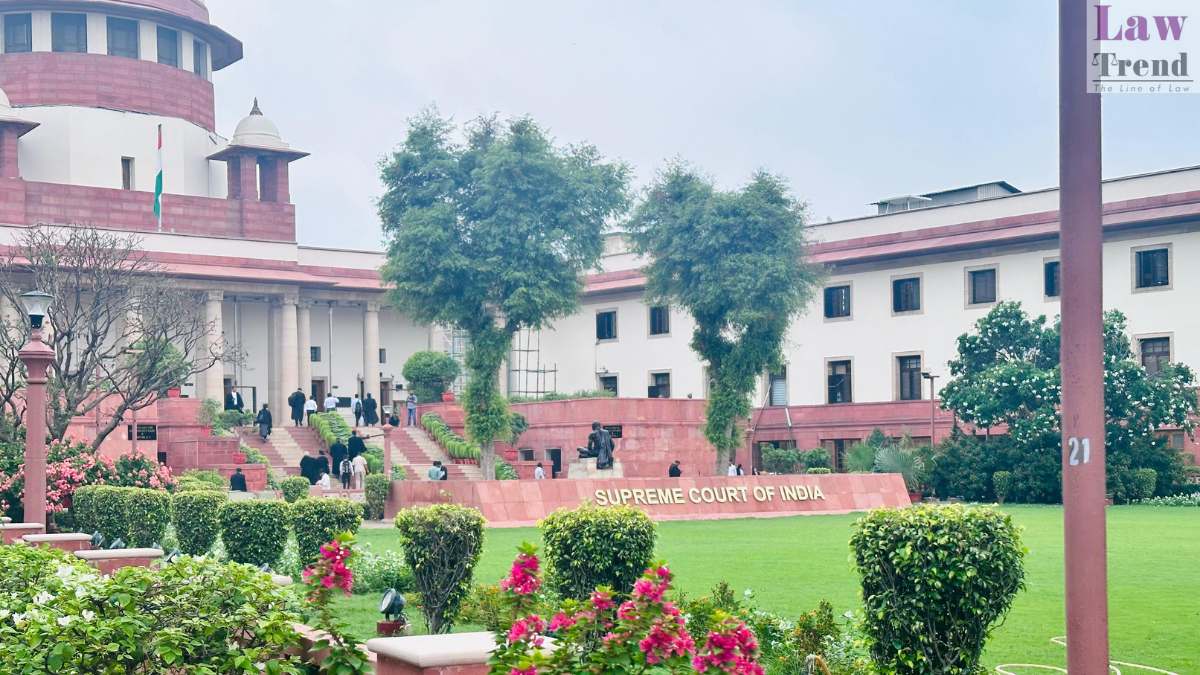
The Supreme Court on Thursday issued a stern warning to state development authorities such as NOIDA, Greater NOIDA, and Haryana’s town planning department, directing them to strictly comply with its earlier orders and not obstruct the completion of stalled housing projects by Unitech Ltd.
A bench comprising Justices J B Pardiwala and K V Viswanathan, which heard the matter for the first time, expressed its displeasure over instances of non-compliance and delays. “We will take a serious view if it is found that there is non-compliance of earlier orders of the court by state authorities. We will also not tolerate anyone creating hurdles in completion of these projects,” the court observed.
The bench clarified that the current exercise was to prioritise hearing on various applications related to Unitech, assuring that all grievances would be addressed. “In this court, there will be less hearing and more orders, so that things start moving again,” Justice Pardiwala told advocate R C Lahoty, appearing for the homebuyers.
The bench told senior advocate Ravinder Kumar, representing the NOIDA and Greater NOIDA authorities, that they must ensure timely approvals to enable the Unitech board to raise funds by selling unutilised inventory. “We are warning you that there should be compliance with earlier orders of the court,” it said, highlighting that the board was making efforts to revive the pending projects.
On January 16, 2023, the apex court had exempted various Unitech housing projects across seven states from registration under the Real Estate (Regulation and Development) Act, 2016 (RERA), thereby facilitating the disbursal of stalled home loans. The court observed that the exemption would streamline the process for loan releases and ultimately help homebuyers stuck in limbo.
As per Section 3 of the RERA Act, housing projects exceeding 500 square metres or eight apartments require registration. However, the court’s exemption aimed to bypass procedural delays and support homebuyers who had already invested in the developer’s unfinished projects.
The Court had also issued notices to banks and financial institutions that had declared homebuyer loans as Non-Performing Assets (NPAs), given the delays in construction caused by the company’s previous management. The current board, appointed by the Centre, sought directions for resuming disbursements now that construction activities were restarting.
In another important directive, the court had instructed the Chairperson of the Uttar Pradesh Pollution Control Board to grant environmental clearances for Unitech’s projects in NOIDA. The CEO of the NOIDA authority was also asked to approve three pending projects. Any unresolved issues were to be escalated to a committee headed by retired Supreme Court judge Justice A M Sapre.
On October 22, 2024, the top court allowed the Centre-appointed board of Unitech to seek police assistance to deal with any interference or encroachments on its properties. This was part of a larger effort to ensure the revival of projects without external disruptions.
In a landmark order on January 20, 2020, the Supreme Court had handed over complete control of Unitech Ltd to a new board nominated by the Ministry of Corporate Affairs. This board was empowered to collect pending dues from homebuyers, sell unsold and unclaimed inventory, and monetise unencumbered assets to fund ongoing construction work.
The action followed earlier developments, including the Centre’s 2017 move before the National Company Law Tribunal (NCLT) to take over Unitech’s management—a proposal later withdrawn due to a stay by the apex court.
In 2018, the court ordered a forensic audit of Unitech and its subsidiaries, conducted by Samir Paranjpe of Grant Thornton India. The audit revealed that between 2006 and 2014, Unitech had collected approximately ₹14,270 crore from 29,800 homebuyers and ₹1,805 crore from six financial institutions. Shockingly, around ₹5,063 crore of the buyers’ funds and ₹763 crore of institutional funds were diverted, including significant offshore investments in tax havens between 2007 and 2010.




