

DV Proceedings Initiated with Mala Fide Intent in Matrimonial Disputes Amount to Abuse of Process: Chhattisgarh High Court
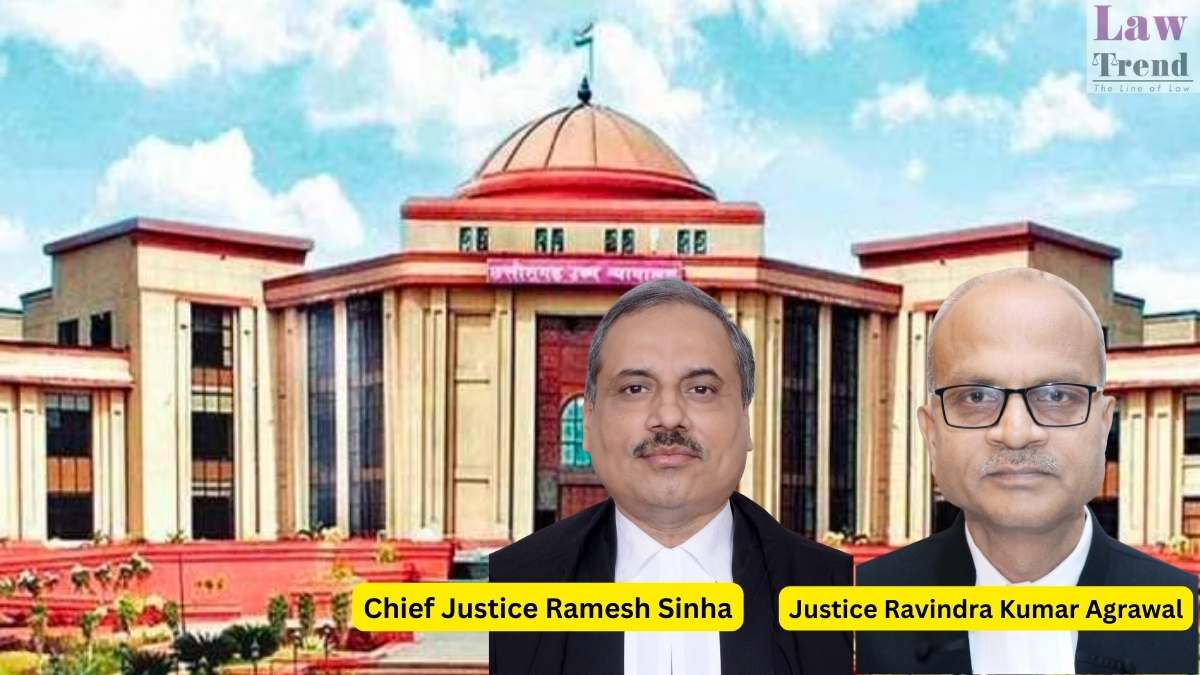
The High Court of Chhattisgarh has ruled that where a Domestic Incident Report (DIR) is vague and lacks material particulars required under Section 9 of the Protection of Women from Domestic Violence Act, 2005 (DV Act), and proceedings are initiated with mala fide intent or as a pressure tactic in matrimonial disputes, the continuation of such proceedings amounts to an abuse of the process of law.

The Division Bench, comprising Chief Justice Ramesh Sinha and Justice Ravindra Kumar Agrawal, allowed the writ petition filed by a husband and his family, quashing the domestic violence proceedings pending before the Judicial Magistrate First Class (JMFC), Surajpur.

Background of the Case

The case pertains to a matrimonial dispute between Petitioner No. 1 (husband) and Respondent No. 2 (wife). The couple was married on June 27, 2018, in Ballia, Uttar Pradesh, and has two sons, aged 6 and 4 years.

According to the petitioners, the marital discord began shortly after the birth of their first child. The petitioners alleged that the wife insisted on giving their elder son in adoption to her sister, who is separated from her husband and has no children. When the husband refused, the wife allegedly became abusive. The petitioners claimed that the wife left the matrimonial home in August 2021 and, despite returning briefly in March 2022 upon intervention, continued to demand the adoption and threatened suicide.

The petitioners contended that the wife initiated multiple litigations in different jurisdictions to secure custody of both children. Specifically, she filed an application under the DV Act in Surajpur, Chhattisgarh, which led to the impugned proceedings. The husband approached the High Court seeking to quash the DIR and the proceedings, arguing they were a “counter-blast” to the custody dispute.

READ ALSO  Mere Issuance of a Show-Cause Notice and its Subsequent Withdrawal Would Not Indicate a Punitive Termination: Allahabad HC

Arguments of the Parties

Petitioners’ Submissions: Mr. Himanshu Pandey, learned counsel for the petitioners, argued that the real dispute between the parties was civil in nature, primarily concerning the custody of the minor children. He submitted that the DV proceedings were initiated solely to “harass, pressure, and intimidate” the husband into relinquishing his parental rights.

Counsel highlighted that the Domestic Incident Report dated October 19, 2022, was “vague, bald, and entirely devoid of material particulars.” It failed to specify dates, times, or places of the alleged incidents, or attribute specific acts to any petitioner. He further argued that the respondent had suppressed material facts regarding other pending litigations in her application under Section 12 of the DV Act.

Respondents’ Submissions: Per contra, Mr. Anurag Singh, learned counsel for Respondent No. 2, submitted that the wife was subjected to continuous cruelty, physical assault, and dowry demands immediately after marriage. He alleged that the petitioners had an ulterior motive to force the adoption of the elder child to the husband’s sister.

It was further submitted that the husband had forcibly taken away the elder son and that the wife had been separated from him for over three years. Counsel argued that due to political influence wielded by the petitioner’s family in Ballia, the wife was compelled to seek relief in Surajpur.

Court’s Analysis and Observations

The Division Bench examined the pleadings and documents, relying on legal precedents regarding the quashing of proceedings.

On Maintainability: The Court referred to the recent Supreme Court judgment in Shaurabh Kumar Tripathi v. Vidhi Rawal (2025), which clarified that a petition under Section 482 of the CrPC (or Article 226) is maintainable for challenging proceedings arising out of Section 12(1) of the DV Act. The Court noted:

READ ALSO  Body Shaming by Sister-in-Law Prima Facie Amounts to Cruelty Under IPC Section 498A: Kerala High Court

“We hold that High Courts can exercise power under Section 482 of CrPC… for quashing the proceedings emanating from the application under Section 12(1) of the DV Act, 2005… However, considering the object of the DV Act, 2005, the High Courts should exercise caution and circumspection…”

On the Validity of the Domestic Incident Report (DIR): The Court scrutinized the DIR dated October 19, 2022, and found it lacking in mandatory details required under Section 9(1)(b) of the DV Act. The Bench observed:

“A bare perusal of the impugned Domestic Incident Report… reveals that the same is conspicuously vague and bereft of material particulars. The DIR does not disclose the date, time, place, or manner of the alleged incidents of domestic violence, nor does it specify any act attributable to any particular petitioner.”

The Court held that the failure to provide complete and accurate particulars “goes to the very root of the matter and vitiates the initiation of proceedings under Section 12 of the Act.”

On Abuse of Process: The Court concurred with the petitioners that the proceedings appeared to be a pressure tactic disguised as a DV case.

“The pleadings unmistakably demonstrate that the core dispute between the parties revolves around matrimonial discord and, more particularly, the custody of the minor children… The criminal process cannot be permitted to be used as a tool for harassment or to secure an advantage in collateral proceedings.”

The Bench also noted that the suppression of other legal proceedings by the respondent in her Section 12 application disentitled her to equitable relief and strengthened the inference of mala fide intent.

On the Magistrate’s Order: Reviewing the order dated November 26, 2024, passed by the JMFC, Surajpur, the High Court found it “arbitrary and unsustainable.” The Court noted that the Magistrate had failed to address multiple grounds raised by the petitioners regarding the maintainability of the proceedings.

READ ALSO  कानून व्यवस्था का मखौल: छत्तीसगढ़ हाईकोर्ट ने जन्मदिन मनाने के लिए सड़क जाम करने के मामले में पुलिस की नरम कार्रवाई पर स्वतः संज्ञान लिया

Decision

Applying the principles laid down by the Supreme Court in State of Haryana v. Bhajan Lal (1992), the High Court held that the continuation of the proceedings would amount to an abuse of the process of the Court.

“Where the Domestic Incident Report is vague, lacks the material particulars required under Section 9 of the Protection of Women from Domestic Violence Act, 2005, and the proceedings are initiated with mala fide intent or as a pressure tactic in matrimonial disputes, the continuation of such proceedings amounts to an abuse of the process of law.”

Consequently, the High Court allowed the writ petition. The Domestic Incident Report and Application dated October 19, 2022, and the impugned order of the JMFC, Surajpur, were set aside. The Court clarified that this order does not preclude either party from pursuing appropriate remedies before a competent civil or Family Court.

Case Details:

  • Case Title: Shri Prakash Singh & Others v. State of Chhattisgarh & Another
  • Case Number: WPCR No. 433 of 2025
  • Court: High Court of Chhattisgarh at Bilaspur
  • Coram: Chief Justice Ramesh Sinha and Justice Ravindra Kumar Agrawal
  • Counsel for Petitioners: Mr. Himanshu Pandey, Advocate
  • Counsel for Respondent No. 1 (State): Mr. S.S. Baghel, Government Advocate
  • Counsel for Respondent No. 2: Mr. Anurag Singh, Advocate

Law Trend
Law Trendhttps://lawtrend.in/
Legal News Website Providing Latest Judgments of Supreme Court and High Court

Related Articles

Latest Articles
