

Unregistered Will Excluding Only Son Raises Prima Facie Suspicion: Delhi High Court Orders Status Quo in Property Suit
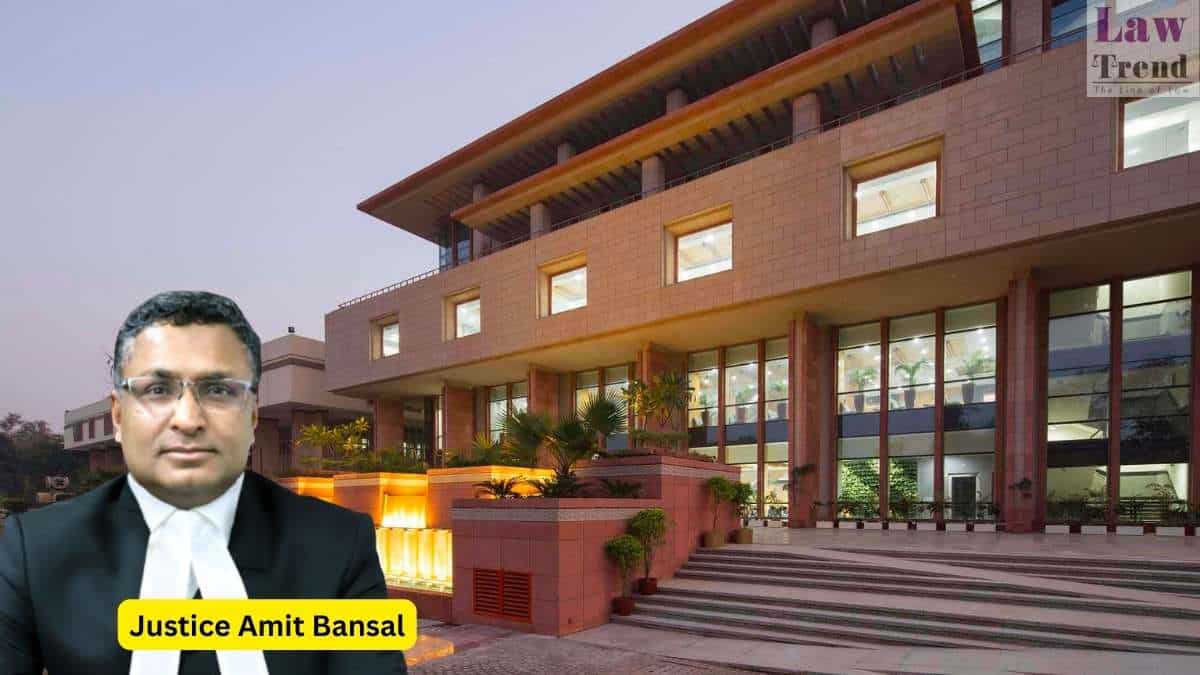
The Delhi High Court has confirmed an interim status quo order regarding the title and possession of a property in Rajouri Garden, holding that a Will allegedly executed by the plaintiff’s father, which excluded his only son and was attested by only one witness, appeared prima facie “suspicious” and invalid.

Justice Amit Bansal observed that since the initial Will and subsequent Sale Deed appeared invalid at this stage, any further third-party rights created in the suit property would cause irreparable loss to the plaintiff which cannot be compensated by an indemnity bond.

Case Background

The plaintiff, Manmohan Kumar, filed a suit seeking a declaration that a Sale Deed dated 19th September 1986 executed by his mother, Late Smt. Radha Rani, in favor of a tenant, Late Mr. Chander Mohan Nayyar, was void. He also sought a permanent injunction against the defendants.

The plaintiff stated that his father, Late Shri Madan Gopal Madhok, was the registered owner of the property at J-6/50 Rajouri Garden. According to the plaintiff, his father died intestate on 14th July 1981, leaving the plaintiff and his mother as the only legal heirs. The plaintiff alleged that he was compelled to leave the property in 1986 due to differences caused by the tenant. He claimed he only discovered the impugned Sale Deed in January 2021 when he applied for certified copies of ownership documents.

READ ALSO  याचिकाकर्ताओं ने कोविड-19 के सबसे कठिन और अभूतपूर्व समय में समाज के लिए योगदान दिया है- हाईकोर्ट ने एएनएम कर्मियों का बकाया वेतन देने का आदेश दिया

The plaintiff further alleged that the defendants were attempting to demolish and renovate the property illegally.

Arguments of the Parties

Plaintiff’s Contentions: The plaintiff argued that since his father died intestate, his mother did not become the absolute owner of the property. He claimed he held a 50% share in the property, and his mother executed the impugned sale deed without his consent.

The Counsel for the plaintiff, Mr. Arun Dhiman, submitted that the documents relied upon by Defendant No. 3, including a Will dated 10th January 1981, were forged. He pointed out that the Will was unregistered, falsely stated that the parents were childless, and was attested by only one witness.

Defendant’s Contentions: Defendant No. 3, represented by Mr. Gaurav Kumar, argued that the plaintiff’s father had left a valid Will dated 10th January 1981 in favor of the mother, making her the absolute owner. On the strength of this Will, the mother sold the property to Mr. Chander Mohan Nayyar in 1986 for Rs. 2,00,000.

The defendant contended that the property had changed hands multiple times since then, and the current owners (Defendant No. 3 and Defendant No. 10) had purchased it after due diligence. It was further argued that the plaintiff was aware of the sale deed since its execution and that the suit was time-barred. Defendant No. 3 offered to submit an indemnity bond to be permitted to sell constructed floors to third parties.

READ ALSO  Compounding of Offences Is Possible Even After Dismissal of Appeal: Madras High HC Acquits Convict in Cheque Bounce Case Post-Settlement

Court’s Observations and Analysis

Justice Bansal examined the Will dated 10th January 1981, which formed the basis of the defendants’ title. The Court noted a significant discrepancy:

“In the Will, it has been stated that the testator (plaintiff’s father) did not have any children out of his wedlock with Late Smt. Radha Rani. This cannot be true as it is an admitted position that the plaintiff was borne out of the wedlock of Shri Madan Gopal Madhok and Smt. Radha Rani. Therefore, on a prima facie view, the Will appears to have been executed under suspicious circumstances.”

The Court further observed legal infirmities in the execution of the Will:

“A perusal of the Will shows that apart from being unregistered, the said Will only bears the signature of one attesting witness. In terms of Section 63 of the Indian Succession Act, 1925, there is a mandatory requirement that a will has to be attested by at least two attesting witnesses.”

Based on these findings, the Court held that prima facie, the plaintiff’s mother could not be said to be the absolute owner of the suit property and thus could not have executed the impugned sale deed for the entire property. Consequently, the Court noted:

READ ALSO  Anticipatory Bail Maintainable under BNSS for Gangster Act Case Initiated Before 1 July 2024: Allahabad High Court

“Once a doubt has been created on the genuineness and validity of the Will, all the subsequent sale/ purchase documents qua the suit property would also be prima facie invalid.”

Addressing the defendant’s offer to furnish an indemnity bond, the Court rejected the plea, stating:

“The ownership right in an immovable property is a substantive right and cannot be substituted or neutralized by a mere indemnity bond… once third-party rights are created in the suit property, the plaintiff cannot be compensated for his substantive right in the suit property and any indemnity bond would be of no avail.”

Decision

The High Court confirmed the status quo order regarding title and possession of the suit property until the final adjudication of the suit. The Court disposed of the plaintiff’s application under Order XXXIX Rules 1 and 2 CPC and dismissed the defendant’s application under Order XXXIX Rule 4 CPC.

The matter is listed before the Roster Bench on 13th March 2026.

Case Details:

Case Title: Manmohan Kumar vs. Neelam Khurana & Ors.

Case No.: CS(OS) 626/2023

Bench: Justice Amit Bansal

Law Trend
Law Trendhttps://lawtrend.in/
Legal News Website Providing Latest Judgments of Supreme Court and High Court

Related Articles

Latest Articles
