

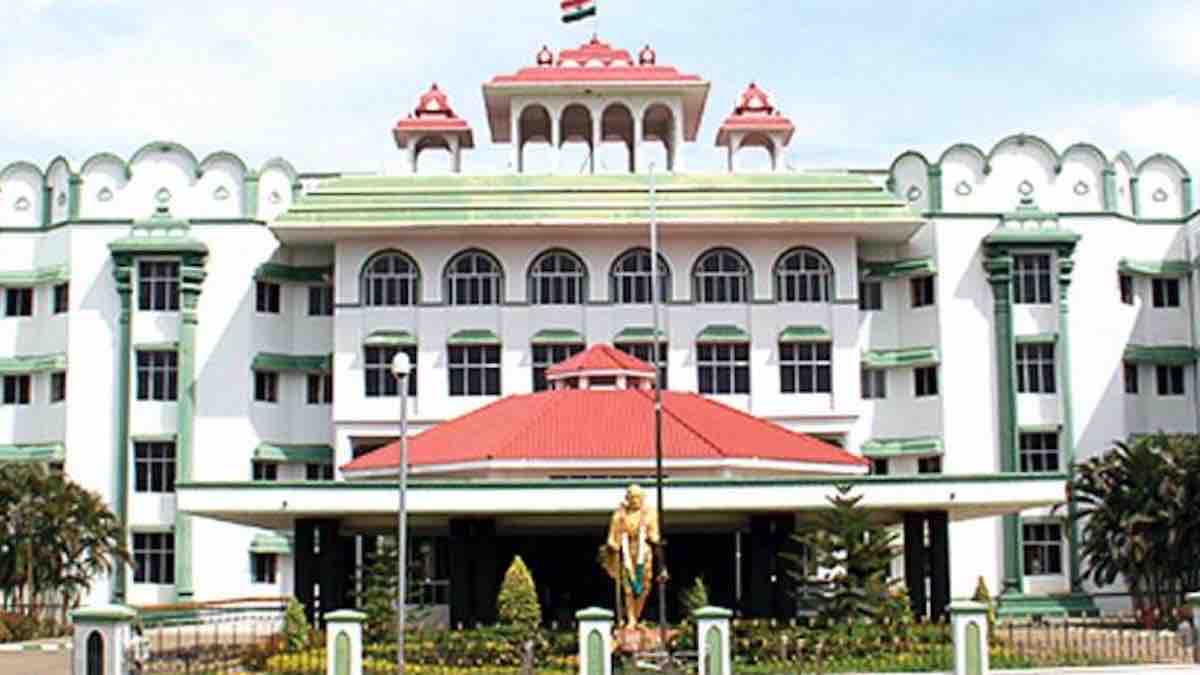
The Madurai Bench of the Madras High Court has quashed the First Information Report (FIR) filed against BJP IT Cell chief Amit Malviya for his remarks in response to controversial comments made by Tamil Nadu Deputy Chief Minister Udhayanidhi Stalin on ‘Sanatan Dharma’.
Justice S Srimathy, who delivered the verdict, held that Udhayanidhi’s original statement was itself “tantamount to hate speech” and that Malviya’s comments were merely a “reaction” to it.
The case pertains to a political row that erupted after Udhayanidhi Stalin, also the son of Chief Minister M K Stalin, made a speech in 2023 in which he equated ‘Sanatan Dharma’ with diseases like dengue, malaria, and coronavirus. He had argued that Sanatan Dharma is against social justice and equality and should be “eradicated” rather than merely opposed.
His remarks sparked nationwide outrage and drew criticism from various quarters. Amit Malviya responded by accusing Udhayanidhi of effectively calling for a “genocide of 80 percent of Indians who follow Sanatan Dharma.”
Subsequently, Tamil Nadu Police registered an FIR against Malviya under multiple provisions of the Indian Penal Code, including those related to promoting enmity and inciting hatred.
While quashing the FIR, Justice S Srimathy observed that Udhayanidhi’s speech was highly provocative and crossed the boundary into hate speech. In that context, Malviya’s criticism was viewed as a retaliatory response and not an independent act warranting criminal prosecution.
The court’s order effectively questioned the intent behind the FIR and gave weight to the principle that legitimate criticism, especially in reaction to inflammatory public statements, should not be criminalised.
BJP Tamil Nadu chief K Annamalai welcomed the decision, stating that the FIR against Malviya was “vindictive” and politically motivated. He accused the DMK government of being “corrupt” and “anti-Hindu”, and said the High Court’s order reaffirmed that the FIR had no legal merit.
The controversy had sharpened the ideological battle between the ruling DMK in Tamil Nadu and the BJP, with Sanatan Dharma emerging as a political flashpoint. While DMK leaders framed their criticism in the context of social justice, BJP leaders accused them of vilifying Hindu traditions and faith.
With the High Court’s ruling, the legal proceedings against Malviya come to an end, but the political debate surrounding Sanatan Dharma and freedom of speech is expected to continue in the run-up to future electoral contests.


