

Supreme Court Dissolves Marriage of Couple Who Lived Together for Only 65 Days and Litigated for Over a Decade; Imposes Costs for Treating Courts as “Battlefield”
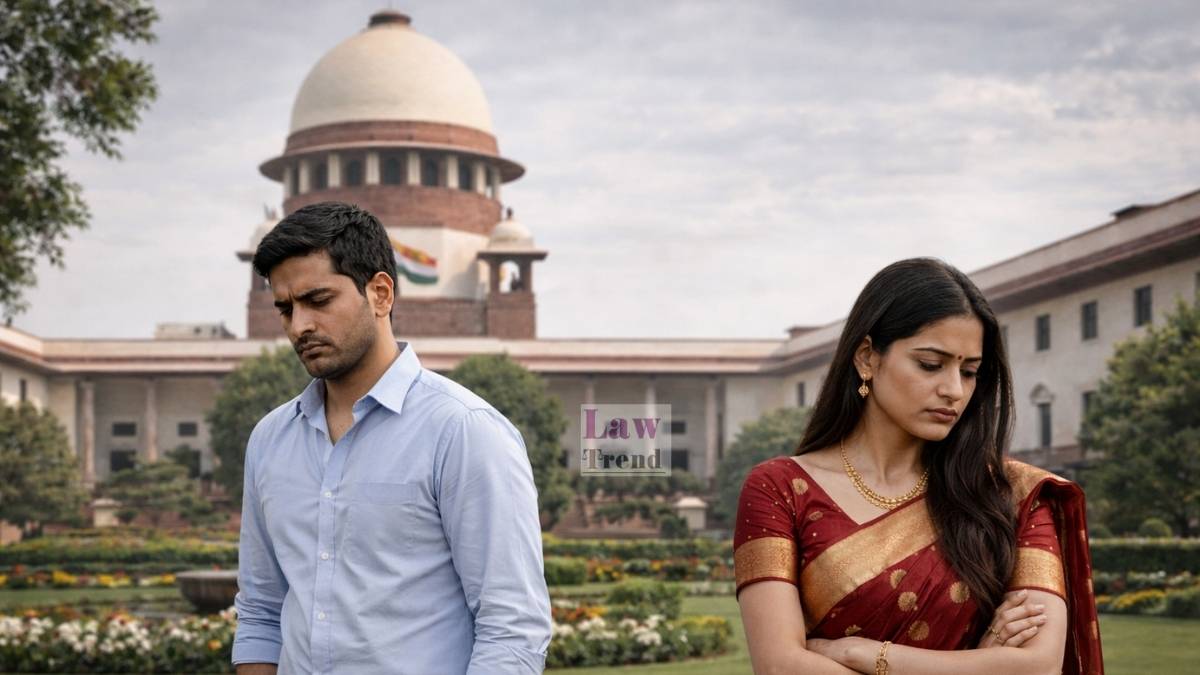
The Supreme Court has invoked its extraordinary powers under Article 142 of the Constitution to dissolve a marriage between a couple who cohabited for merely 65 days but engaged in over a decade of litigation, filing more than 40 cases against each other. Observing that “warring couples cannot be allowed to settle their scores by treating Courts as their battlefield and choke the system,” the Bench comprising Justice Rajesh Bindal and Justice Manmohan dissolved the union on the ground of irretrievable breakdown of marriage. While granting the divorce, the Court directed that proceedings for perjury initiated against the parties shall continue, emphasizing that “no one can be permitted to pollute the stream of justice.”

Background of the Dispute

The marriage between the petitioner-wife and the respondent-husband was solemnized on January 28, 2012. However, the parties lived together for only 65 days before separating on April 2, 2012. Following the separation, multiple litigations ensued, with the parties filing numerous criminal and civil cases against one another in various courts across Delhi, Uttar Pradesh, and the Supreme Court.

The matter reached the Supreme Court via a Transfer Petition filed by the wife, seeking the transfer of an application filed by the husband under Section 340 of the Code of Criminal Procedure (CrPC) from a Family Court in Delhi to Lucknow. During the proceedings, the wife filed an Interlocutory Application (I.A. No. 200539 of 2025) under Article 142 of the Constitution, seeking the dissolution of the marriage.

Arguments of the Parties

The counsel for the petitioner-wife argued that the marriage had irretrievably broken down. It was submitted that the parties had been living separately for more than a decade and had indulged in litigation one after the other. Reliance was placed on the Constitution Bench judgment in Shilpa Sailesh vs Varun Sreenivasan (2023) to contend that the Court could exercise its jurisdiction under Article 142 to dissolve the marriage.

The respondent-husband, appearing in-person, strongly opposed the prayer for dissolution. He submitted that his life had been “ruined because of false and frivolous cases filed by the petitioner.” He alleged that the wife had committed perjury, leading him to file applications under Section 340 CrPC and Section 379 of the Bharatiya Nagarik Suraksha Sanhita (BNSS), which were pending. He contended that the wife, who is well-settled and earning approximately Rs. 1,60,000 per month, was using her financial resources to harass him, whereas he was unemployed and contesting cases in-person.

READ ALSO  Allahabad HC Grants Bail to Man Accused of Killing Another Man for Having Illicit Relationship With his Wife

Court’s Analysis and Observations

The Court observed that despite valid efforts, including a referral to mediation on July 22, 2025, no settlement could be reached. The Bench noted that the parties had filed more than 40 cases against each other, some of which were disposed of while others remained pending.

On Irretrievable Breakdown of Marriage: Referencing the Constitution Bench decision in Shilpa Sailesh vs Varun Sreenivasan, the Court reiterated that it has the discretion to dissolve a marriage on the ground of its irretrievable breakdown to do “complete justice,” even if one spouse opposes it. The Bench observed:

READ ALSO  Watch Weekly Legal Updates of Supreme Court and High Courts (15.05.21 to 21.05.21)

“From the facts of the case as noticed above, we find this to be a clear case of irretrievable breakdown of marriage where the parties do not intend to live together and cohabitate… They may not have been made for each other… It may be impossible now to put the clock back and live together after forgetting the bitterness, which has been created in last more than a decade.”

On Misuse of the Legal System: The Court took a stern view of the multiplicity of litigation, stating:

“They have indulged into filing more than 40 cases against each other. Warring couples cannot be allowed to settle their scores by treating Courts as their battlefield and choke the system.”

The Bench further remarked on the tendency of matrimonial disputes to spiral into criminal proceedings:

“First and the foremost, earnest effort should be made by the parties… to convince them for a pre-litigation mediation… Even when a complaint is sought to be registered with the police of simple matrimonial dispute, first and the foremost effort has to be for re-conciliation… instead of calling the parties to the police stations.”

Decision

The Supreme Court allowed the application under Article 142 and dissolved the marriage between the parties. The Court directed that:

  1. Dissolution: The marriage stands dissolved.
  2. Disposal of Cases: All pending cases between the parties (matrimonial and criminal) arising out of the dispute shall stand disposed of.
  3. Continuation of Perjury Proceedings: The Court clarified that applications filed by the parties raising pleas of perjury (under Section 340 CrPC or Section 379 BNSS) “shall continue because no one can be permitted to pollute the stream of justice.” Specifically, five such applications listed in the judgment were directed to be dealt with on merits.
  4. Costs Imposed: Noting that the parties stayed together for only 65 days but litigated for over a decade “apparently with a view to settle scores,” the Court imposed costs of Rs. 10,000 on each party, to be deposited with the Supreme Court Advocates on Record Association.
READ ALSO  SC stays operation of sentence awarded to actor Jayapradha in ESIC case

Case Details:

  • Case Title: Neha Lal vs. Abhishek Kumar
  • Case Number: Transfer Petition (Crl.) No. 338 of 2025 (with I.A. No. 200539 of 2025)
  • Coram: Justice Rajesh Bindal and Justice Manmohan

Law Trend
Law Trendhttps://lawtrend.in/
Legal News Website Providing Latest Judgments of Supreme Court and High Court

Related Articles

Latest Articles
