

Benami Prohibition Act | Vicarious Liability Cannot be Invoked Without Specific Averments of Active Role: Madras High Court
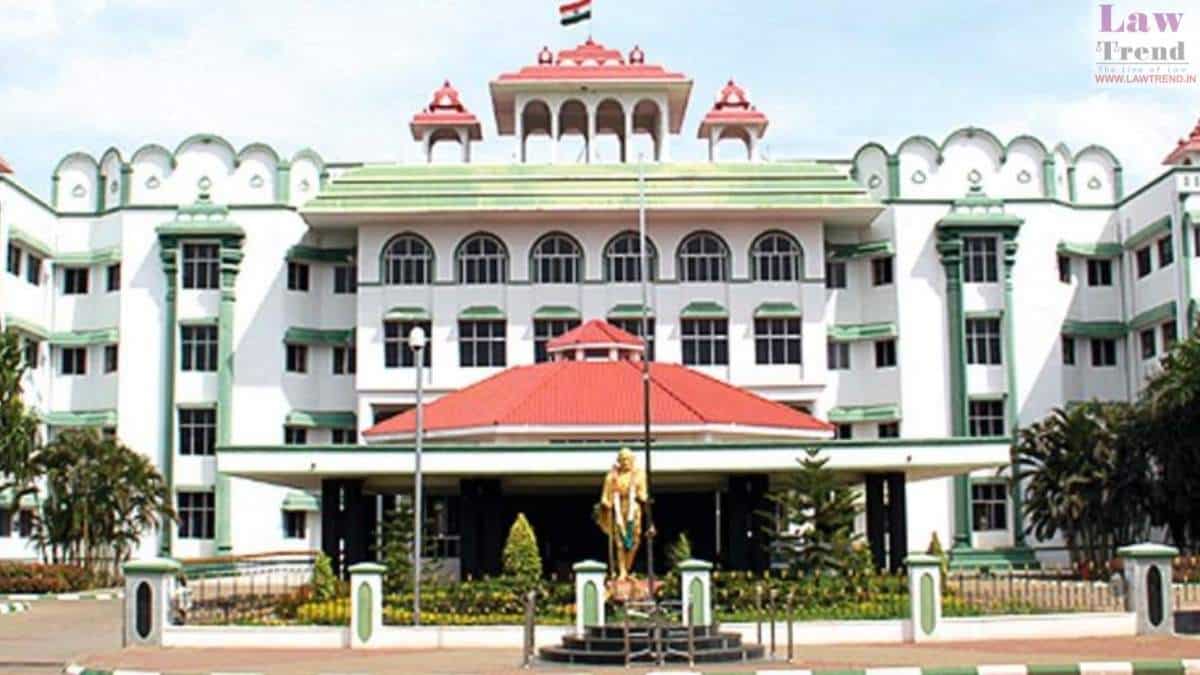
The Madras High Court has discharged a female partner in a partnership firm from prosecution under the Prohibition of Benami Property Transactions Act, 1988 (PBPT Act), ruling that she cannot be held vicariously liable without specific averments regarding her role in the conduct of the business. However, the Court upheld the prosecution against the firm and its Managing Partner regarding cash deposits of Rs. 68.71 Crores made post-demonetisation.

The Madras High Court, presided over by Justice Sunder Mohan, adjudicated two Criminal Revision Cases filed by the accused in a Benami Transactions case. The allegation involved the deposit of Rs. 68.71 Crores in the bank account of a partnership firm, M/s. V.P.C. & Co., shortly after demonetisation in 2017. The Court allowed the revision petition of the third accused (R. Kalaivani), a partner, discharging her on the grounds that the complaint lacked necessary averments to establish her vicarious liability. Conversely, the Court dismissed the revision petition of the firm (Accused No. 1) and its Managing Partner, R. Ramesh (Accused No. 2), finding a prima facie case against them.

Background of the Case

The prosecution, initiated by the Deputy Commissioner of Income Tax (Benami Prohibition), alleged that Rs. 68.71 Crores were deposited in cash into the bank account of the partnership firm, M/s. V.P.C. & Co. (Accused No. 1), post-demonetisation in 2017.

The respondent/complainant contended that the accused did not have the requisite sources to explain such huge deposits. It was alleged that the income declared by the firm in previous years was minimal and did not commensurate with the sudden surge in profits and deposits. The department alleged that the accused failed to produce sources for these deposits.

The accused filed discharge petitions before the IX Additional Special Judge for CBI Cases, Chennai, which were dismissed on March 20, 2023. The Special Judge held that the Court could not sift and weigh evidence at the stage of framing charges and that a prima facie case existed. Aggrieved by this order, the accused preferred the present Criminal Revision Cases before the Madras High Court.

READ ALSO  Section 228A IPC Which Penalises Revealing Rape Victim’s Identity Does Not Apply to Judges: Kerala High Court

Arguments of the Parties

Contentions of R. Kalaivani (Accused No. 3): Learned Senior Counsel Mr. R. John Sathyan, appearing for the third accused, argued that she was merely a “dormant partner” and the wife of the Managing Partner (Accused No. 2). He submitted that:

  • All affairs of the firm were managed by her husband.
  • In her reply to the show cause notice, she had explicitly stated her dormant status.
  • The respondent failed to collect evidence establishing her active role.
  • The complaint lacked specific averments required under Section 62 of the PBPT Act to invoke vicarious liability.

Contentions of the Firm and Managing Partner (Accused Nos. 1 & 2): Learned Counsel Mr. S. Manuraj argued on behalf of the firm and R. Ramesh (Accused No. 2), submitting that:

  • The firm had sufficient means, and the Rs. 68.71 Crores represented accumulated turnover from cash sales and advances over seven months prior to demonetisation.
  • The mere fact of lower profits in previous years should not lead to an assumption of guilt.
  • The alleged “beneficial owner” had not been traced by the respondent.
  • There were no specific averments in the complaint stating that the Managing Partner was in charge of and responsible for the conduct of the business.
  • Counsel relied on the Supreme Court judgment in Sanjay Dutt & Ors. vs. The State of Haryana & Anr. (2025 INSC 34) and the Madras High Court judgment in Umanga Vohra vs. The State of Tamil Nadu (2025-1-LW(Crl) 848).

Contentions of the Respondent (Income Tax Department): Special Public Prosecutor Ms. M. Sheela opposed the discharge, arguing:

  • The firm’s turnover in previous years was significantly low: Rs. 2,31,449/- (2015-16), Rs. 1,70,203/- (2016-17), rising to Rs. 24,36,212/- (2017-18). The claim of Rs. 68 Crores cash sales was “concocted.”
  • The firm had an overdue amount of Rs. 4.93 Crores as of 05.11.2016, making it improbable that they held Rs. 68 Crores in cash.
  • Investigation revealed that vehicle registration numbers cited in bills for transporting goods actually belonged to two-wheelers, not trucks.
  • As a partnership firm with only two partners, the Managing Partner and his wife (A3) are jointly liable.
READ ALSO  Consumer Court Directs Byju's to Refund ₹65000 to Student and Pay Compensation

Court’s Analysis

On the Firm and Managing Partner (Accused Nos. 1 & 2): Justice Sunder Mohan observed that the defense raised by the petitioners regarding the genuineness of the deposits could not be adjudicated at the discharge stage.

Regarding the identification of the beneficial owner, the Court noted:

“In fact, under Section 2(9)(D) of the PBPT Act, ‘Benami Transactions’ include the transaction in respect of the property where the person providing the consideration is not traceable or is fictitious. Therefore, the fact that the beneficial owner has not been identified would not be a ground for discharge.”

The Court rejected the reliance on the Sanjay Dutt case, distinguishing it on the facts that in the cited case, the company itself was not made an accused, and there was no evidence the Managing Director was aware of the employees’ acts. In the present case, the firm is the first accused, and the second accused is the Managing Partner.

The Court stated:

“In this case, the first accused is the partnership firm and the second accused is its Managing Partner without whose consent the said cash deposits would not have been made… He had also signed the Balance Sheet and other relevant documents, which indicates his knowledge and consent prima facie.”

On the Partner/Wife (Accused No. 3): The Court accepted the contention that the complaint lacked necessary averments to hold R. Kalaivani vicariously liable. The Court noted that she had replied to the notice claiming to be a dormant partner, yet the complaint did not specify her exact role.

READ ALSO  Bail Granted to Person Accused of Attacking his Advocate

The Court relied on the Supreme Court’s decision in Dilip Hariramani vs. Bank of Baroda (2024 (15) SCC 443), which reiterated that vicarious liability requires specific pleadings that the accused was in charge of and responsible for the conduct of the business.

Justice Sunder Mohan observed:

“The petitioner cannot be equated with her husband, who was the Managing Partner. Therefore, the respondent should have specifically averred that the petitioner was in-charge and responsible to the firm for the conduct of its business.”

“In the absence of any material to establish the role played by the petitioner/third accused, this Court is of the view that the petitioner/third accused cannot be made vicariously liable, especially since even the necessary averment to invoke vicarious liability is absent in the complaint.”

Decision

The High Court passed the following orders:

  1. Allowed Crl.R.C.No.872 of 2023: The order of the Trial Court was set aside insofar as R. Kalaivani (Accused No. 3) is concerned, and she was discharged.
  2. Dismissed Crl.R.C.No.956 of 2023: The revision petition filed by M/s. V.P.C. & Co. and R. Ramesh (Accused Nos. 1 & 2) was dismissed, and they must face trial.
  3. Liberty Granted: The Court clarified that if the respondent adduces evidence during the trial proving the role of the third accused, they are at liberty to invoke Section 319 of the Cr.P.C. (corresponding to Section 358 of BNSS) to proceed against her.

Case Details

  • Case Title: R. Kalaivani Vs. Deputy Commissioner of Income Tax (Benami Prohibition) / M/s. V.P.C. & Co. Vs. Deputy Commissioner of Income Tax
  • Case Numbers: Crl.R.C.Nos.872 & 956 of 2023
  • Judge: Justice Sunder Mohan

Law Trend
Law Trendhttps://lawtrend.in/
Legal News Website Providing Latest Judgments of Supreme Court and High Court

Related Articles

Latest Articles
