

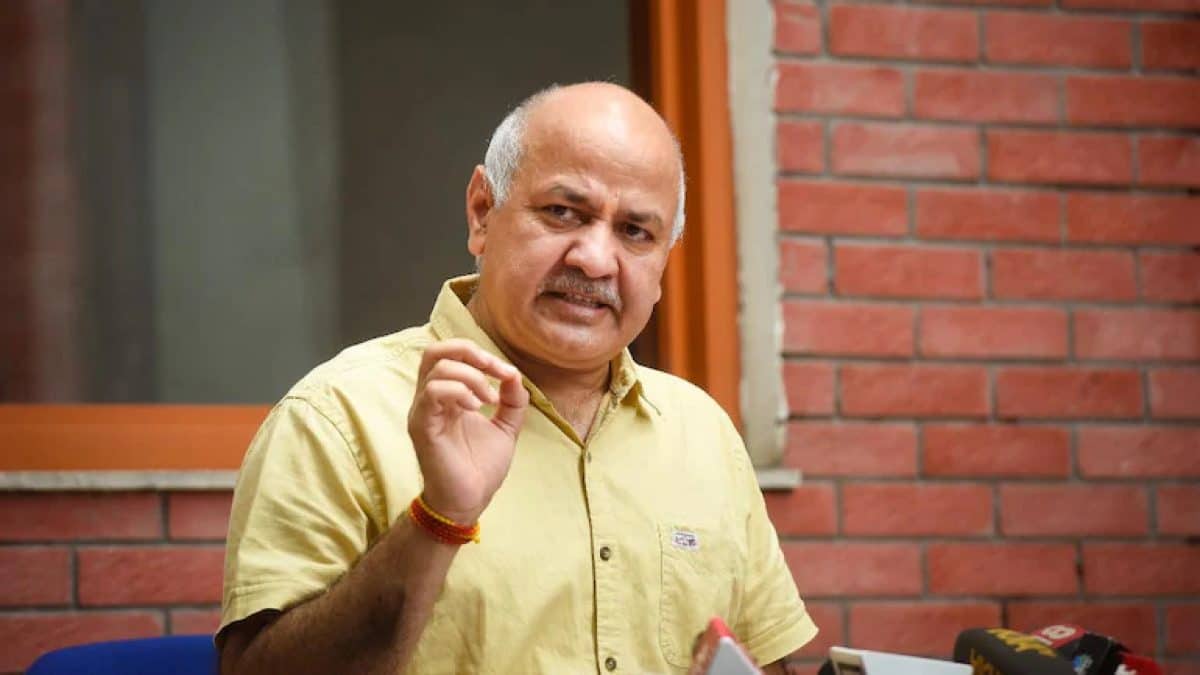
The Delhi High Court on Saturday dismissed an election petition challenging the 2020 Assembly election victory of Aam Aadmi Party (AAP) leader Manish Sisodia from the Patparganj constituency, ruling that the plea lacked the necessary material facts and legal substance.
Justice Jasmeet Singh held that the petitioner, Pratap Chandra—who had contested the election as a candidate of the Rashtriya Rashtrawadi Party—failed to establish any specific cause of action that could justify setting aside Sisodia’s election.
Sisodia had secured a clear victory with 70,163 votes, while the petitioner managed only 95 votes.
Pratap Chandra had alleged two main grounds for challenging the result:
- Violation of the “silence period”: He claimed that while he adhered to the 48-hour prohibition on campaigning before polling, other candidates—including Sisodia—continued to campaign through party hoardings, thereby distorting the level playing field.
- Non-disclosure of an FIR: The petitioner contended that Sisodia failed to disclose a 2013 FIR registered against him under the Prevention of Insult to National Honour Act, 1971, in his nomination papers.
The court, however, found no merit in either of these allegations.
The bench observed that the allegations were too general in nature and lacked specific details required by law.
“The photographs provided by the petitioner only depict party hoardings showing the symbol and name of the political party, with no direct reference to the respondent (Sisodia),” the court noted.
It further clarified that there was no plea or material to show that the hoardings were erected or maintained with the “knowledge, consent, or authorisation” of Sisodia. The court refused to accept that the mere display of static hoardings amounted to “propagation” under Section 126 of the Representation of the People Act, 1951.
Regarding the alleged non-disclosure of the FIR, the court ruled that the RP Act requires disclosure only when a court takes cognisance of the offence or frames charges. Since no charges were framed against Sisodia, and there was no material to show he was even aware of the FIR, the omission could not be treated as wilful concealment.
“It is only when charges are framed or cognisance of the offence is taken by the court, that the statutory obligation to disclose arises,” the court stated.
The court concluded that the election petition was not maintainable and failed to meet the basic legal requirements for challenging an election result.
“The petitioner has only made general allegations, without laying down the material facts required in law, which goes to the root of the maintainability of the election petition,” Justice Singh said while dismissing the plea.
.




