

Wait-Listed Candidates Have No Indefeasible Right to Appointment After Expiry of Reserve List: Supreme Court
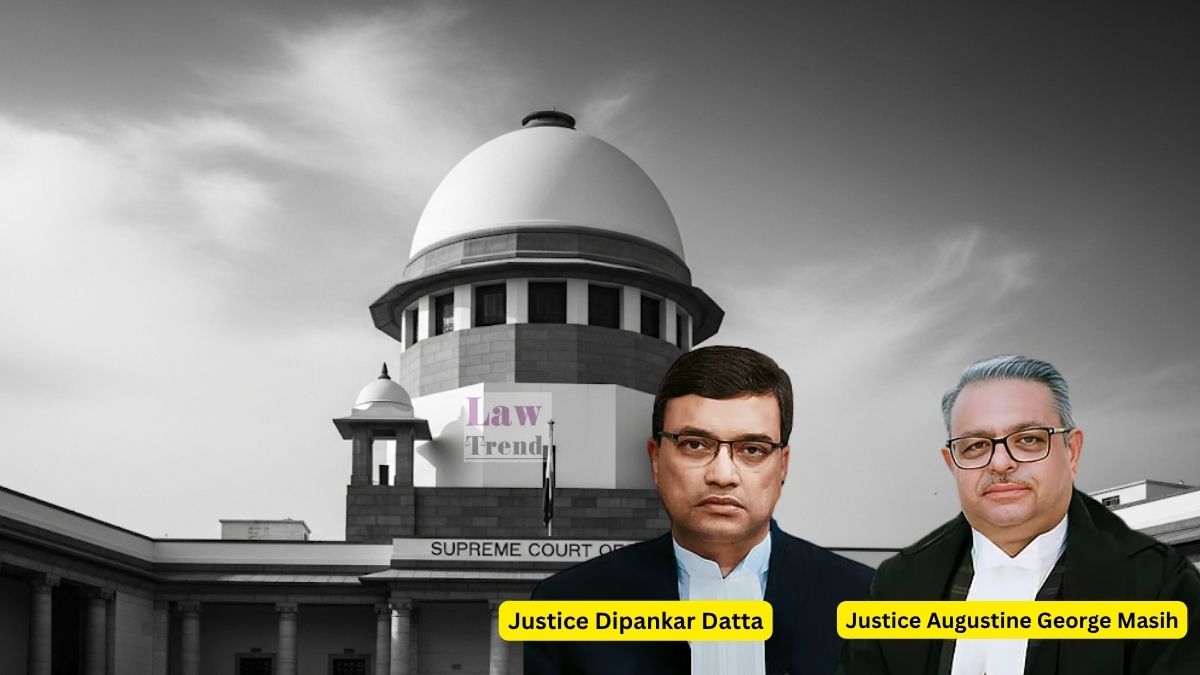

The Supreme Court has held that a candidate figuring in a waiting or reserve list has no indefeasible right to appointment, particularly after the expiry of the statutory validity period of such a list. The Court further ruled that the Rajasthan Public Service Commission (RPSC) has the locus standi to file an appeal against a High Court order directing appointment, even if the State Government has not challenged the said order.

A Bench comprising Justice Dipankar Datta and Justice Augustine George Masih allowed three civil appeals filed by the RPSC, setting aside the judgments of the Rajasthan High Court which had directed the consideration or appointment of candidates from the reserve list against vacancies caused by the non-joining of selected candidates.

Background of the Case

The appeals arose from three separate recruitment processes conducted by the RPSC:

  1. Junior Legal Officer (JLO) Recruitment 2019: Respondent Yati Jain, a reserve list candidate, sought appointment against a vacancy created when a selected candidate, Vikas Kumar, failed to join. The High Court directed the respondents to pick up her name from the reserve list.
  2. Assistant Statistical Officer (ASO) Recruitment 2018: Respondent Aakriti Saxena sought appointment after a selected candidate, Sunil Machhera, declined the offer. The High Court directed the authorities to consider her candidature.
  3. Junior Legal Officer (JLO) Recruitment 2013-14: Respondent Vivek Kumar Meena sought appointment against a vacancy arising from the cancellation of a recommended candidate’s appointment. The High Court directed consideration of his case.

In all three instances, the Single Judge of the High Court allowed the writ petitions. The Division Bench subsequently dismissed the RPSC’s appeals, primarily reasoning that since the State of Rajasthan had not appealed, the RPSC’s appeals had “no force.”

Arguments of the Parties

The RPSC contended that the Division Bench erred in dismissing the appeals on the ground that the State had not appealed. It argued that as a constitutional functionary, it has independent duties. It further submitted that the waiting/reserve lists had expired under the relevant rules (Rule 24 of the Rajasthan Legal State and Subordinate Services Rules, 1981 and Rule 21 of the Rajasthan Agriculture Subordinate Service Rules, 1978), and thus, no direction for appointment could be issued.

READ ALSO  Investor of a Company Cannot File Case for Cheating Against Another Investor if He Loses His Money Because Company Suffered Losses: Karnataka HC

The Respondents (Writ Petitioners) argued that the reserve list is intended to act as a contingency for non-joining candidates. They contended that a “purposive interpretation” of the rules was necessary, and the six-month validity of the reserve list should commence from the date the vacancy arises or the last appointment is made, not merely from the date the original list is forwarded. They also argued that the RPSC lacked locus standi as the determination of vacancies falls within the domain of the State Government.

Court’s Analysis

The Supreme Court addressed two primary issues: the maintainability of the appeals by the RPSC and the rights of wait-listed candidates.

On Locus Standi of RPSC The Court rejected the Division Bench’s view that RPSC could not appeal because the State had not. The Court observed that under Article 320 of the Constitution, the State can only appoint candidates recommended by the Commission.

Justice Datta, writing for the Bench, held:

“Concomitantly, in our considered opinion, a direction to the State of Rajasthan to appoint a candidate from the waiting list who has not been recommended for appointment does give the appellant a legal peg for a justiciable claim to hang on.”

The Court concluded that the RPSC fits the category of a “person aggrieved” and has the locus standi to maintain the appeals.

READ ALSO  Breastfeeding in Public and Workplaces Should Not Be Stigmatised: Supreme Court Directs States/UTs to Implement Child Care Facilities

On the Validity of Waiting List and Right to Appointment The Court reiterated settled law that a waiting list is not a perennial source of recruitment and operates only for a limited period. Referencing the specific rules (Rule 24 and Rule 21), the Court noted that the reserve list is valid for six months from the date the original list is forwarded to the Appointing Authority.

The Court observed:

“We, thus, hold that a wait-listed candidate has no right of appointment, much less an indefeasible right, except when the governing recruitment rules permit a small window authorizing appointments therefrom in the specified exceptional circumstances… and that too, when the waiting list has not expired.”

Decision on Specific Claims

  1. Yati Jain: The Court found that the reserve list validity expired on December 6, 2021 (or at latest February 6, 2022). The vacancy arose upon cancellation of appointment on July 14, 2022. The Court held, “Yati Jain, thus, had no right in law to claim that her name should have been recommended by the appellant once the appointment of the said Vikas Kumar was cancelled on 14th July, 2022.”
  2. Aakriti Saxena: The six-month period expired in February 2022, while she approached the court in April 2022. The Court noted the department never requisitioned a name from the RPSC for the vacancy.
  3. Vivek Kumar Meena: The reserve list expired in August 2016. The Court held that the Single Judge’s direction for consideration was “plainly not permissible.”
READ ALSO  [PC & PNDT Act] No Justification to Keep Sonography Machine Sealed Indefinitely After Acquittal: Supreme Court

On Negative Equality The respondents argued that other candidates had been recommended from the reserve list beyond the expiry period. Dismissing this claim, the Court cited the principle that “no person can claim ‘negative equality’ under the Indian Constitution.” The Court stated:

“The illegality in recommending some of the candidates figuring in the reserve list could not have been made the basis for issuance of a writ of mandamus citing Article 14 of the Constitution.”

Decision

The Supreme Court allowed the appeals and set aside the judgments of the High Court.

“Our sympathies are with the writ petitioners but the law being what it is, we hold that they may not be appointed on any of the posts for which they competed,” the Court concluded.

In an epilogue, the Bench advised the judiciary to interpret service rules in a manner that furthers the object of selection processes and ensures they are completed in a timely manner.

Case Details:

Case Title: Rajasthan Public Service Commission, Ajmer vs. Yati Jain & Ors. (and connected matters)

Case No.: Civil Appeal No. 273 of 2026 [Arising out of SLP (Civil) No. 20366/2024]

Bench: Justice Dipankar Datta and Justice Augustine George Masih

Appearances: Mr. Samant (for Appellant); Mr. K. Parameshwar, Senior Advocate, and Mr. Ronak Karanpuria (for Respondents)

Law Trend
Law Trendhttps://lawtrend.in/
Legal News Website Providing Latest Judgments of Supreme Court and High Court

Related Articles

Latest Articles

