

Writ Petition Not Maintainable for Quashing Cognizance Order Where Roster Assigns Such Jurisdiction to Single Judge: Allahabad High Court
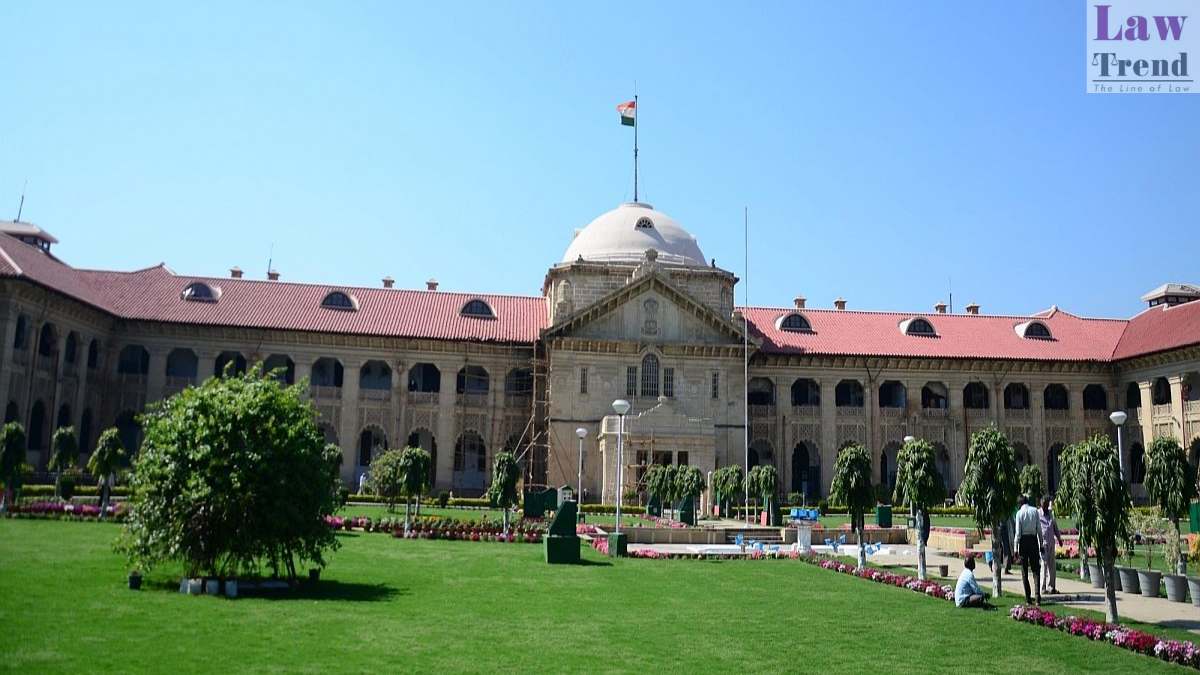
The Allahabad High Court has dismissed a criminal writ petition seeking the quashing of a charge sheet and a cognizance order, ruling that the petition was not maintainable under Article 226 of the Constitution of India given the specific roster allocations of the Court. The Division Bench of Justice Chandra Dhari Singh and Justice Lakshmi Kant Shukla held that once a magistrate takes cognizance, the remedy lies under Section 528 of the Bharatiya Nagarik Suraksha Sanhita, 2023 (BNSS), which, under the Allahabad High Court Rules, falls within the jurisdiction of a Single Judge, not the Division Bench hearing writ petitions.

Background of the Case

The case arose from a business dispute between the petitioner, Sanjay Wahi, and the complainant (Respondent No. 2). According to the prosecution, the parties were involved in a partnership regarding land development. The complainant alleged that on March 16, 2024, the petitioner was called to the complainant’s house, where he was assaulted, restrained, and forced to sign cheques amounting to Rs. 17.5 crores.

Following an application under Section 156(3) of the Cr.P.C., an FIR was lodged on August 3, 2024, at Police Station Beta 2, Greater Noida, under Sections 420, 406, 467, 468, 471, 120-B, 504, and 507 of the IPC.

The petitioner initially filed the writ petition to quash the FIR. However, during the pendency of the petition, the investigation concluded. A charge sheet was filed on July 17, 2025, and the Additional Chief Judicial Magistrate-I, Gautam Budh Nagar, took cognizance on August 26, 2025. Consequently, the petitioner amended the writ petition to challenge the charge sheet and the cognizance order as well.

Arguments of the Parties

The petitioner, represented by Senior Advocates Gopal Swaroop Chaturvedi and Dinesh Kumar Goswami, argued that the dispute was purely civil in nature, stemming from a partnership agreement and profit-sharing issues. They contended that the criminal justice system was being misused to settle personal scores. Relying on the Supreme Court’s judgment in Vesa Holdings (P) Ltd. vs. State of Kerala, the counsel submitted that “every breach of contract would not give rise to an offence of cheating,” and emphasized that the partnership deed contained an arbitration clause.

READ ALSO  Section 138 of NI Act | Payee’s Right to Institute Proceedings Remains Legally Enforceable for One Month From the Date on Which Cause of Action Has Arisen: Allahabad HC

The State and the complainant, represented by Senior Advocate V.P. Srivastava, raised a preliminary objection regarding the maintainability of the writ petition. They argued that once a charge sheet is filed and cognizance is taken, the power of judicial review under Article 226 is limited. They contended that the remedy for quashing a cognizance order lies under Section 528 of the BNSS (formerly Section 482 Cr.P.C.).

Crucially, the respondents pointed out that under Chapter V Rule 2 of the Allahabad High Court Rules, 1952, applications under Section 528 BNSS are to be heard by a Single Judge, whereas Criminal Writ Petitions are placed before a Division Bench. Therefore, they argued, the Division Bench lacked jurisdiction to adjudicate on the cognizance order.

READ ALSO  1996 मोदीनगर-गाज़ियाबाद बस ब्लास्ट केस: इलाहाबाद हाईकोर्ट ने मोहम्मद इलियास की सज़ा रद्द की, सबूतों के अभाव में बरी

Court’s Analysis

The Court focused on the legal question: “whether this Court can quash a summoning or cognizance order of the Magistrate concerned in the jurisdiction under Article 226 of the Constitution of India?”

The Bench referred to the Supreme Court’s decision in Radhey Shyam vs. Chhabi Nath, which held that judicial orders are not amenable to writ jurisdiction under Article 226. The Court also discussed the recent Supreme Court judgment in Pradnya Pranjal Kulkarni vs. State of Maharashtra (2025), which clarified that a High Court can quash a cognizance order in a writ petition if it invokes “twin jurisdiction” (Article 226 and Section 482 Cr.P.C./Section 528 BNSS) and “if the roster so permits.”

However, the Bench distinguished the present case based on the specific Rules and Roster of the Allahabad High Court. The Court observed:

“As per the aforesaid Rules, the application under Section 528 BNSS (482 Cr.P.C.) by which the Court has inherent power to quash the cognizance order or any judicial order passed by the concerned Court are to be placed before a Single Judge Bench but the Criminal Writ Petitions for quashing of the F.I.R. are to be placed before the Division Bench.”

The Court emphasized that the Chief Justice is the “master of the roster,” and a Bench cannot overstep the jurisdiction assigned to it. The Judges noted:

“It is an admitted fact that this Court is not having twin jurisdiction one under Article 226 of the Constitution and other under Article 227/528 BNSS, therefore, this Court has only jurisdiction under Article 226 of the Constitution of India as assigned by the Chief Justice.”

Decision

The High Court concluded that since the roster assigned to the Division Bench was limited to Article 226, it could not exercise jurisdiction to quash the cognizance order, a power vested in the Single Judge under Section 528 BNSS.

“Taking into consideration the aforesaid principle of law, clarification of Hon’ble the Supreme Court and the facts and materials available on record, we are of the opinion that the instant writ petition is not maintainable.”

The Court dismissed the writ petition, granting liberty to the petitioner to “move an appropriate application or petition before the appropriate Courts to quash the cognizance order.”

Case Details:

  • Case Title: Sanjay Wahi Vs. State of U.P. and 3 Others
  • Case Number: Criminal Misc. Writ Petition No. 18905 of 2025
  • Bench: Justice Chandra Dhari Singh and Justice Lakshmi Kant Shukla

READ ALSO  पूर्व भाजपा सांसद मेनका गांधी ने सुल्तानपुर में सपा के राम भुआल निषाद के चुनाव परिणाम को चुनौती दी
Ad 20- WhatsApp Banner

Law Trend
Law Trendhttps://lawtrend.in/
Legal News Website Providing Latest Judgments of Supreme Court and High Court

Related Articles

Latest Articles
