

Aadhaar and Voter ID Not Conclusive Proof of Date of Birth; MP HC Reinstates Anganwadi Sahayika Terminated Without Hearing
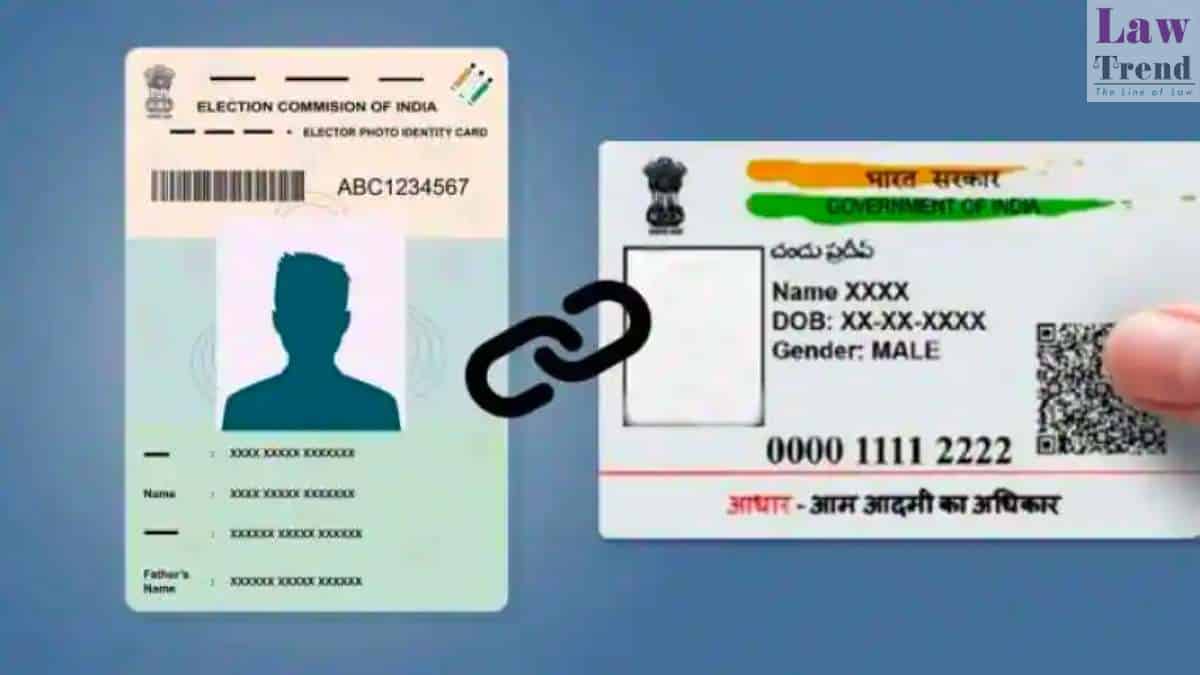

In a significant judgment reinforcing the sanctity of service records and principles of natural justice, the High Court of Madhya Pradesh has ruled that an Aadhaar Card and Voter Identity Card cannot be treated as determinative proof of date of birth in service matters, especially to alter service records after retirement. The Court quashed the orders of the Additional Collector, Dhar, which had reinstated a retired employee based on a revised date of birth claimed via Aadhaar, and consequently terminated the serving appointee without a hearing.

Case Background

The writ petition (Pramila v. The State of Madhya Pradesh and Others) was filed by Pramila, challenging the order dated September 1, 2020, passed by the Additional Collector, District Dhar, and the consequential termination order dated November 21, 2020.

The petitioner, Pramila, was appointed as an ‘Anganwadi Sahayika’ at Anganwadi Centre, Jamli (Ambapura) on June 19, 2018, following a selection process. The vacancy arose after the previous incumbent, Hirlibai (Respondent No. 5), retired on March 5, 2017, upon attaining the superannuation age of 62 years. Hirlibai’s date of birth in the official service record was March 5, 1955.

Nearly two years after her retirement, Hirlibai filed an appeal on December 26, 2019, claiming her actual date of birth was January 1, 1964, relying solely on her Aadhaar Card and Voter Identity Card. The Appellate Authority allowed the appeal, leading to her reinstatement and the immediate termination of the petitioner’s services.

Arguments of the Parties

Counsel for the petitioner, Shri Akshay Bhonde, argued that the Appellate Authority’s order was vitiated by gross violation of natural justice, as the petitioner was neither impleaded nor heard despite being the affected party. He contended that the appeal was filed after an unexplained delay of two years and that reliance on Aadhaar and Voter ID cards to alter the date of birth was legally unsustainable.

READ ALSO  Chhattisgarh HC Takes Suo Motu Cognizance of Bilaspur's Drainage and Power Supply Issues

Representing the State, Government Advocate Shri Amit Bhatia raised a preliminary objection regarding the availability of an alternative remedy. On merits, the respondents argued that the department was bound to comply with the Appellate Authority’s order to reinstate Respondent No. 5, as there was only one sanctioned post.

Court’s Analysis and Observations

Justice Jai Kumar Pillai rejected the respondents’ objections, noting that the petitioner had been “condemned unheard,” which warranted the Court’s intervention.

1. Finality of Service Records The Court observed that Respondent No. 5 had accepted the date of birth recorded in her service records throughout her tenure and had retired without protest. The Court held:

“The law is well settled that an employee who accepts the date of birth recorded in service records and allows it to attain finality cannot be permitted to challenge the same after retirement.”

2. Evidentiary Value of Aadhaar and Voter ID Citing the Supreme Court’s decision in Saroj & Ors. v. IFFCO-Tokio General Insurance Co. & Ors. and the Allahabad High Court’s ruling in Ram Kripal alias Chirkut v. Deputy Director of Consolidation, the Court clarified that such documents are not proof of age for service purposes.

“It is evident that the Aadhaar Card and Voter Identity Card relied upon by Respondent No.5 cannot be treated as determinative proof of her date of birth. These documents are prepared on the basis of self-declaration and are meant for identification purposes alone.”

READ ALSO  Requirement of Impleading the Company Arises When the Accused Is Vicariously Held Liable for the Acts of the Company: Jharkhand HC

The Court further noted the factual impossibility of Respondent No. 5’s claim. Documents on record showed her son’s date of birth as January 1, 1959, and her daughter-in-law’s as January 1, 1960. The Court remarked that these facts “clearly negate the possibility of Respondent No.5 having been born in the year 1964.”

3. Violation of Natural Justice The Court sternly criticized the authorities for terminating the petitioner’s services without notice or inquiry.

“The Appellate Authority was fully aware that the post in question was already occupied by the petitioner pursuant to a lawful appointment. Despite such knowledge, the authority proceeded to decide the appeal behind her back. This omission strikes at the very root of fair procedure and renders the order void.”

Decision

The High Court allowed the writ petition and issued the following directions:

  1. Quashing of Orders: The orders dated September 1, 2020, and November 21, 2020, were quashed.
  2. Reinstatement: The respondents were directed to reinstate the petitioner, Pramila, as Anganwadi Sahayika with continuity of service and all consequential benefits, including notional seniority and monetary benefits.
  3. Recovery: The Court directed the authorities to recover the entire amount paid to Respondent No. 5 towards salary and other benefits after her superannuation date (March 5, 2017) with 6% interest per annum. This amount is to be deposited with the State exchequer within 60 days.
READ ALSO  मध्यप्रदेश हाईकोर्ट ने धार्मिक भेदभाव का आरोप लगाकर तबादले को चुनौती देने वाली याचिका खारिज की

Case Details:

  • Case Title: Pramila v. The State of Madhya Pradesh and Others
  • Case No.: Writ Petition No. 19295 of 2020
  • Coram: Justice Jai Kumar Pillai
  • Counsel for Petitioner: Shri Akshay Bhonde
  • Counsel for State: Shri Amit Bhatia, Government Advocate
  • Counsel for Respondent No. 5: Shri S.P. Pandey

Law Trend
Law Trendhttps://lawtrend.in/
Legal News Website Providing Latest Judgments of Supreme Court and High Court

Related Articles

Latest Articles

