

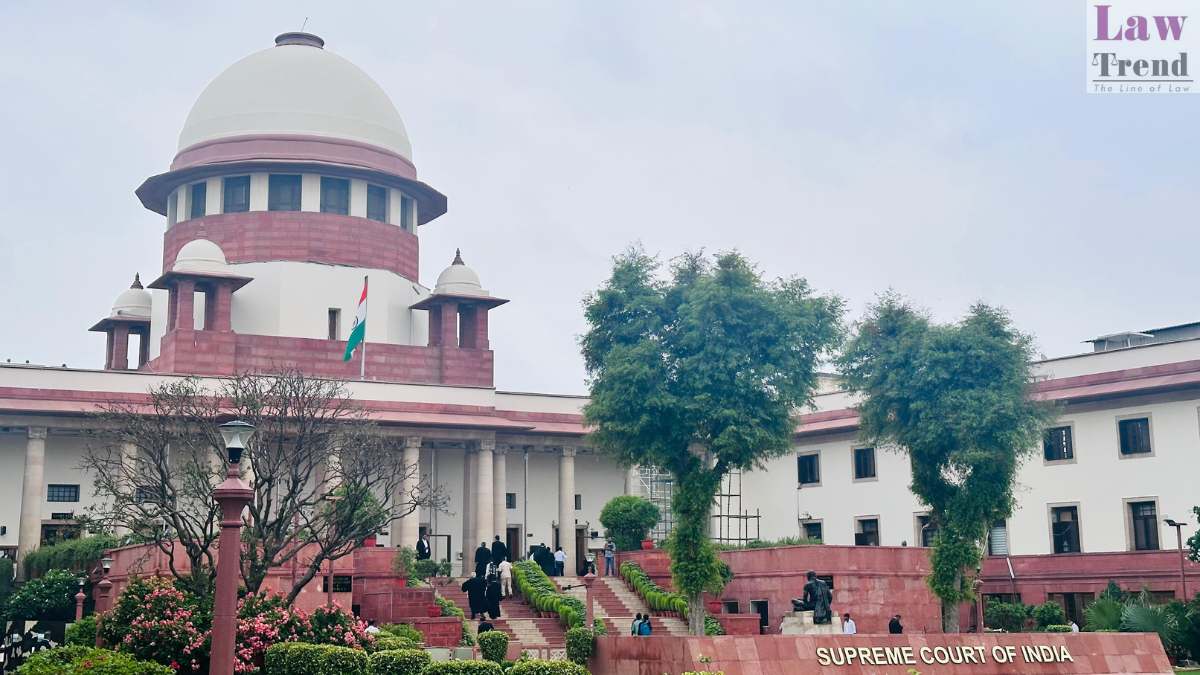
The Supreme Court on Friday modified the sentence of an 80-year-old man convicted in a 1992 criminal case, taking into account his advanced age and the six years and three months he has already spent behind bars. While upholding his conviction for culpable homicide not amounting to murder under Section 304 Part II of the Indian Penal Code (IPC), the Court reduced his sentence to the period already undergone.
A bench of Justices K Vinod Chandran and N V Anjaria observed,
“The appellant is more than 80 years of age at present. Since the appellant is an aged person, and in the December of his life, it would be harsh and inadvisable to send him behind the bars again at this stage. The courts are not supposed to be insensitive.”
The case stemmed from an incident in December 1992 in Madhya Pradesh, when a quarrel broke out between the appellant’s son and another person, escalating into a physical altercation between two groups. One of the individuals injured in the clash later succumbed during treatment. An FIR was registered against the appellant and others, leading to their arrest.
In 1997, a trial court convicted the appellant under Section 302 IPC (murder) and sentenced him to life imprisonment. However, the Madhya Pradesh High Court, in an appeal, altered the conviction to Section 304 Part II IPC, holding that the case did not involve a clear common intention to kill.
The Supreme Court agreed with the High Court’s reasoning, noting that the incident was essentially a “free fight” involving mutual aggression by rival groups.
“There was a commotion where the anger-filled group of two rival parties attacked each other and injuries were sustained by both sides,” the bench noted.
It said that in such circumstances, it could not be concluded that an unlawful assembly had formed with the common object of causing death. The Court upheld the High Court’s decision to assess the individual role of the appellant and convict him under Section 304 Part II.
The top court noted the timeline of his incarceration:
- Arrested: December 19, 1992
- Granted bail by High Court: August 1998
- Surrendered again: December 6, 2010
- Granted bail by Supreme Court: August 5, 2011
- Total jail time: 6 years and 3 months
Given these facts, the bench concluded that no further imprisonment was warranted.
“The appeal stands dismissed subject to the above modification in the sentence,” the bench ordered.




