

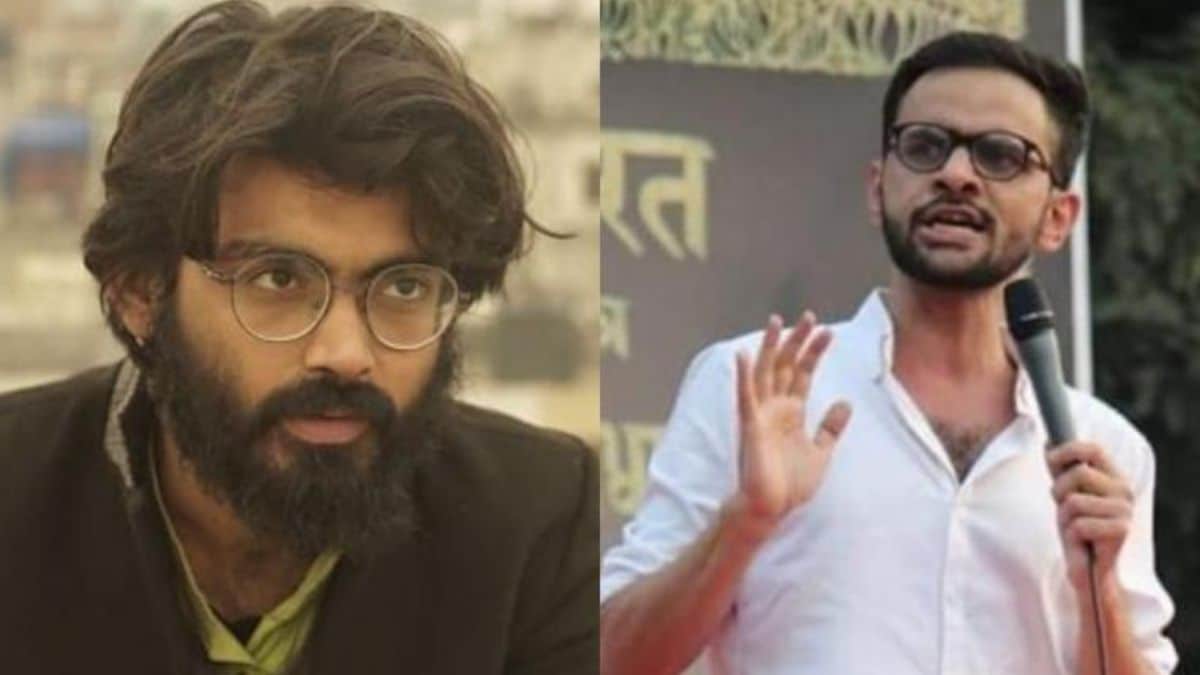
The Supreme Court on Monday delivered a decisive verdict in the Unlawful Activities (Prevention) Act (UAPA) case linked to the alleged larger conspiracy behind the 2020 North-East Delhi riots. While the Apex Court rejected the bail pleas of student activists Umar Khalid and Sharjeel Imam, citing the gravity of their alleged involvement, it granted bail to five other co-accused, including Gulfisha Fatima and Meeran Haider.
A bench comprising Justices Aravind Kumar and N.V. Anjaria drew a sharp distinction between the accused, observing that Khalid and Imam stood on a “different footing” regarding parity and culpability compared to the others.
“Terrorist Act Not Confined to Conventional Warfare”
In a significant observation regarding the scope of the UAPA, the Supreme Court remarked that a “terrorist act” under the statute is not limited to conventional warfare. The Court stated that such acts encompass all actions aimed at attacking national integrity and sovereignty.
Rejecting the pleas of Khalid and Imam, the bench clarified that they could approach the court for bail again after one year. The duo had approached the Supreme Court challenging a Delhi High Court order that had previously denied them bail.
Relief for Co-Accused
While the verdict came as a setback for Khalid and Imam, the Supreme Court allowed the appeals of five other accused who have been incarcerated for over five years. The Court granted bail to:
- Gulfisha Fatima
- Meeran Haider
- Shifa Ur Rehman
- Mohd. Saleem Khan
- Shadab Ahmad
The Arguments: “Regime Change” vs. Prolonged Incarceration
During the proceedings, the counsel for the accused emphasized the prolonged period of incarceration, noting that the petitioners had been in custody for more than five years without the trial commencing. The defense argued that despite the serious charges under the UAPA, there was no tangible evidence to prove they had instigated violence.
Countering these claims, the Delhi Police vehemently opposed the bail pleas. The prosecution characterized the alleged offences not as spontaneous protests, but as a “deep-rooted, premeditated, and pre-planned conspiracy” designed to destabilise the state.
The Police submitted that the conspiracy aimed for “regime change” and “economic strangulation.” They alleged that the violence was strategically timed to coincide with the visit of the then US President to India to attract international media attention and globalise opposition to the Citizenship Amendment Act (CAA). The police argued that the CAA was exploited as a “radicalising catalyst” under the guise of peaceful protests.
To substantiate the claims of a pan-India conspiracy, the prosecution cited the use of various WhatsApp groups, such as the ‘Delhi Protest Support Group’ (DPSG) and the ‘Jamia Awareness Campaign Team.’ The police contended that the orchestrated violence resulted in the deaths of 53 people, extensive property damage, and the registration of 753 FIRs in Delhi. Regarding the trial delay, the police attributed it to the accused, stating that the trial could conclude within two years if they cooperated.
Background of the Case
The case stems from the communal riots that erupted in North-East Delhi in February 2020. The Delhi Police’s Special Cell registered a case under the stringent UAPA, alleging a larger conspiracy to incite violence.
On September 2, the Delhi High Court had dismissed the bail pleas of Imam, Khalid, and several others. The High Court had observed that, prima facie, the roles attributed to Imam and Khalid were “grave,” accusing them of delivering inflammatory speeches along communal lines to instigate mass mobilisation.




