

Tenant Cannot Dictate Suitability of Accommodation or Landlord’s Choice of Business: Supreme Court
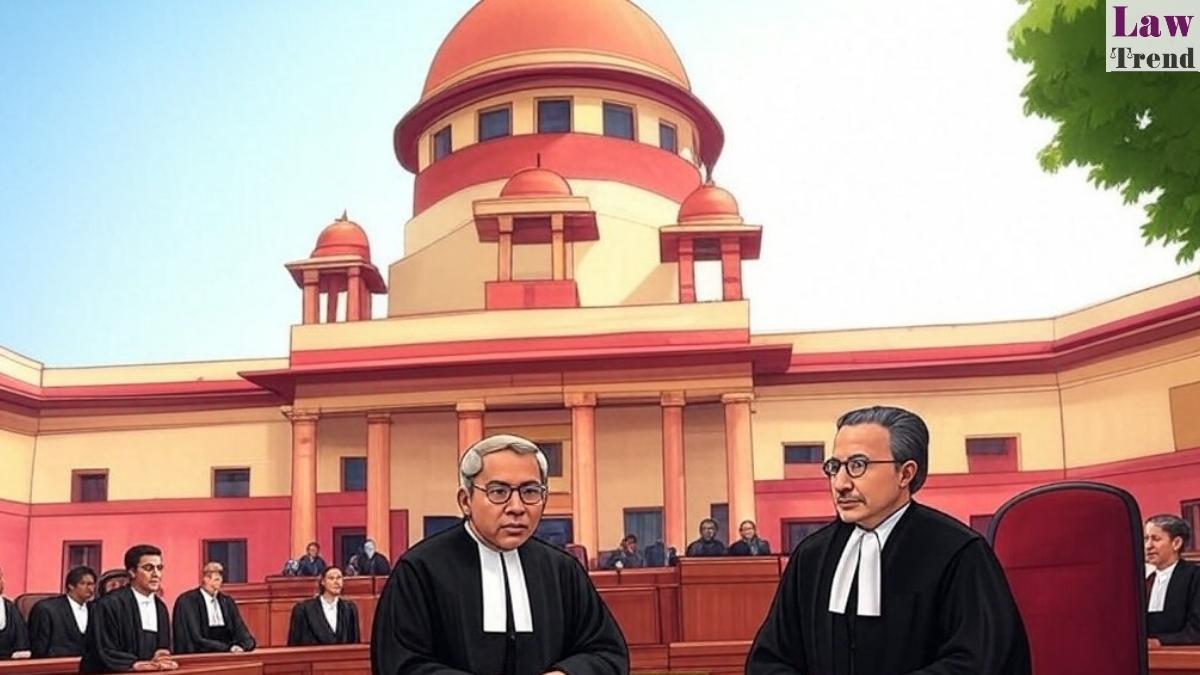

The Supreme Court has held that a tenant cannot dictate the suitability of alternative accommodation to the landlord or instruct them on where to start their business. The Court further ruled that the High Court cannot conduct a “microscopic scrutiny” of pleadings and evidence while exercising revisional jurisdiction, particularly when the lower courts have concurrently found in favor of the landlord regarding the bona fide need for the premises.

The Bench of Justice J.K. Maheshwari and Justice Vijay Bishnoi set aside a judgment of the Bombay High Court that had reversed the eviction decree passed by the Trial Court and the First Appellate Court. The Apex Court restored the decree, emphasizing the landlord’s autonomy in determining their business needs.

Case Background

The case originated from a suit seeking eviction from a non-residential accommodation situated at Plot CTS No. 425, 12th Lane, Kamathipura, Nagpada, Mumbai. The plaintiff (landlord) filed the suit claiming the premises were required for the bona fide need of his daughter-in-law.

Both the Trial Court and the First Appellate Court ruled in favor of the landlord, concurrently finding that the need for the plaintiff’s daughter-in-law was bona fide. Challenging these findings, the tenant approached the Bombay High Court.

The High Court, exercising its revisional jurisdiction, set aside the concurrent findings of the courts below. The High Court scrutinized the pleadings and evidence and reversed the decree, prompting the landlord to approach the Supreme Court.

READ ALSO  Power of Attorney | Registration of Sale Deed is Not a Mechanical Process, Registrar Should Verify Power of Transfer, Rules SC

Court’s Analysis and Observations

The Supreme Court examined whether the High Court was justified in reversing the concurrent findings of fact regarding the bona fide need. The Bench observed that the High Court had exceeded its jurisdiction by delving too deep into the evidence.

The Court observed:

“In our considered opinion, microscopic scrutiny as done by the High court in revisional exercise is ex facie without jurisdiction and warrants interference in this appeal and deserves to be set aside.”

The Bench clarified that such scrutiny is not permitted in revisional jurisdiction unless the findings of the lower courts are “ex facie without authority,” which was not the case here.

READ ALSO  सुप्रीम कोर्ट: विशिष्ट निष्पादन मुकदमे में वादी को बिक्री के लिए समझौते से पहले ज्ञात बाद के बिक्री विलेख को रद्द करने की मांग करने की आवश्यकता नहीं है

On Bona Fide Need and Suitability of Premises

The Court specifically addressed the tenant’s contentions regarding the nature of the premises. The landlord sought the commercial premises on the ground floor. The tenant argued that there were other premises on the second and third floors (which were residential) and one room on the ground floor.

The Supreme Court noted that the mere fact that a commercial electric connection was taken for a residential room on the ground floor during the pendency of the suit “cannot be a ground to nullify the requirement.”

Citing the precedent in Bhupinder Singh Bawa vs. Asha Devi reported in (2016) 10 SCC 209, the Court reiterated that a tenant cannot dictate terms to the landlord regarding which property is suitable for their business.

The Court stated:

“The defendant proposing alternative accommodation cannot dictate the plaintiff-landlord to accept the suitability of the accommodation and to nullify the need… the defendant cannot dictate the plaintiff-landlord regarding suitability of the accommodation and to start the business therein.”

Decision

The Supreme Court allowed the appeal and set aside the impugned judgment of the Bombay High Court. The judgments of the Trial Court and the First Appellate Court were restored.

READ ALSO  Judges Hearing Cases Not Assigned by Chief Justice is Gross Impropriety: SC

Considering the long duration of the tenant’s occupancy (noted as “last half century”), the Court granted the respondents time until June 30, 2026, to vacate the suit premises. This extension is subject to the payment of arrears within one month and the continued payment of regular rent. The respondents were directed to file a usual undertaking within three weeks before the Registrar of the Bombay High Court.

Case Details:

  • Case Title: Rajani Manohar Kuntha & Ors. v. Parshuram Chunilal Kanojiya & Ors.
  • Case No.: Civil Appeal No. __________ of 2025 (Arising out of SLP (C) No. 30407 of 2024)
  • Coram: Justice J.K. Maheshwari and Justice Vijay Bishnoi

Law Trend
Law Trendhttps://lawtrend.in/
Legal News Website Providing Latest Judgments of Supreme Court and High Court

Related Articles

Latest Articles

