

Magistrate Cannot Add or Subtract Sections at Cognizance Stage; Proper Stage is Framing of Charge: Allahabad HC
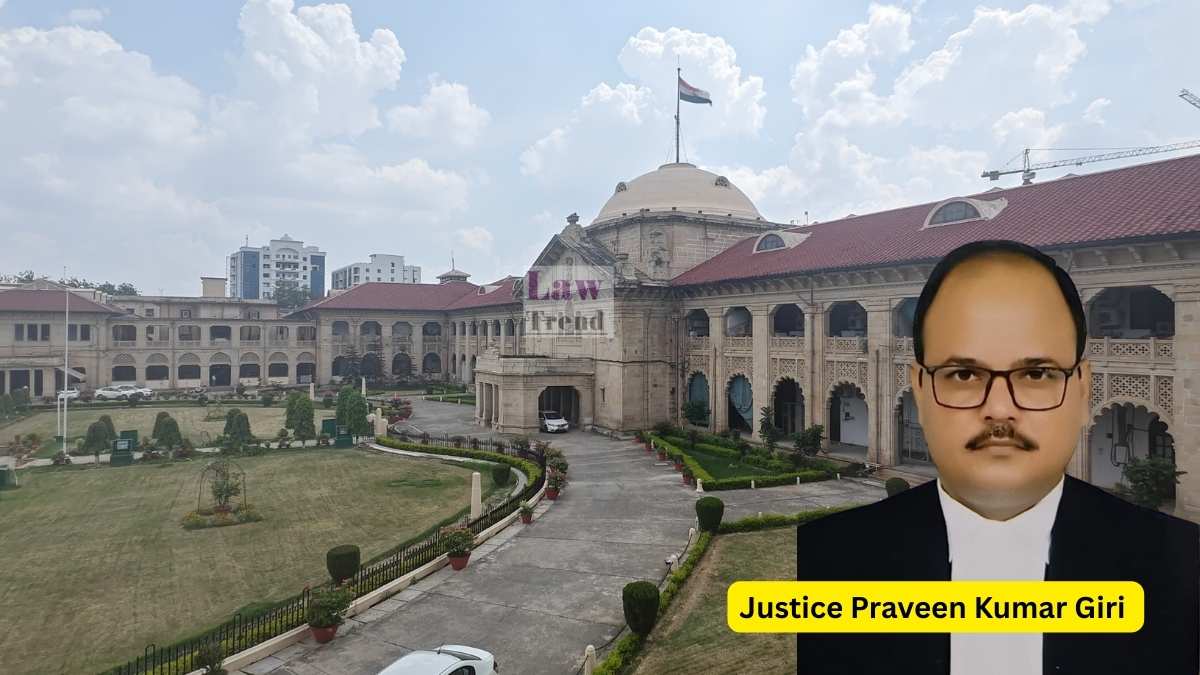

The Allahabad High Court has dismissed an application seeking to quash a summoning order in a molestation case, ruling that a Magistrate cannot alter the sections of the Indian Penal Code (IPC) mentioned in a charge-sheet at the stage of taking cognizance. The Court clarified that the addition or subtraction of sections is permissible only at the stage of framing charges.

The legal issue before the Court was whether a summoning order and criminal proceedings could be quashed on the grounds that the material collected during investigation allegedly did not support the charges, or if such arguments should be reserved for the discharge stage. Justice Praveen Kumar Giri dismissed the application filed under Section 482 of the Criminal Procedure Code (Cr.P.C.), holding that the Magistrate’s power to exclude or include sections arises at the time of framing charges, not at the stage of taking cognizance.

Background of the Case

The applicants, Pawan Kumar Singh and three others, approached the High Court challenging the summoning order dated May 28, 2024, passed by the Civil Judge, Junior Division (FTC/offences against woman), Mirzapur.

The proceedings stemmed from Case Crime No. 369 of 2023, registered at Police Station Kotwali Chunar, Mirzapur. The First Information Report (F.I.R.) was lodged by the opposite party No. 2, alleging molestation and indecent comments. Following the investigation, the police submitted a charge-sheet against the applicants for offences punishable under Sections 354A (Sexual harassment), 504 (Intentional insult with intent to provoke breach of the peace), and 506 (Criminal intimidation) of the IPC.

READ ALSO  Provisions of UP Probation of First Offenders’ Act Shall Be Followed in Geographical Area Where That Has Been Made Applicable and Not Section 360 CrPC.: Allahabad HC

Arguments of the Parties

Appearing for the applicants, Senior Advocate Dinesh Singh and Advocate Abhishek Bhushan submitted that the victim, in her statements recorded under Section 161 Cr.P.C. (police statement) and Section 164 Cr.P.C. (statement before Magistrate), had not supported the version of events alleged in the F.I.R.

The counsel contended that the case was a “counter blast,” alleging that disciplinary proceedings had been initiated against the victim by the department prior to the lodging of the F.I.R.

Per contra, Shri Pankaj Kumar Tripathi, learned Additional Government Advocate (AGA) for the State, opposed the application. He argued that the F.I.R. is not an encyclopedia and that the victim had disclosed facts at a later stage. He submitted that the Magistrate had rightly taken cognizance based on the charge-sheet. The AGA contended that if no offence is made out, the remedy lies in seeking discharge under Section 239 Cr.P.C. (corresponding to Section 262 of the Bharatiya Nagarik Suraksha Sanhita, 2023 – B.N.S.S.) at the stage of framing charges.

READ ALSO  High Courts Must Maintain a Hands-off Approach and Not Quash FIR pertaining to “Corruption” Cases, Specially at the Stage of Investigation: SC

Court’s Observations and Analysis

Justice Praveen Kumar Giri examined the procedural law regarding the alteration of charges and the stages of trial. The Court observed that quashing a cognizance order effectively amounts to discharging the accused at a premature stage.

The Court noted that adding, subtracting, excluding, or including any section amounts to the alteration of a charge. The Bench referred to Sections 216, 218, and 221 of the Cr.P.C. (corresponding to Sections 239, 241, and 244 of the B.N.S.S.) which provide the mechanism for such alterations.

Reliance on Supreme Court Precedent

The High Court placed heavy reliance on the Supreme Court judgment in State of Gujarat v. Girish Radhakrishnan Varde (2014). Quoting the Apex Court, the judgment stated:

“The magistrate in a case which is based on a police report cannot add or substract sections at the time of taking cognizance as the same would be permissible by the trial court only at the time of framing of charge… which means that after submission of the chargesheet it will be open for the prosecution to contend before the appropriate trial court at the stage of framing of charge to establish that on the given state of facts the appropriate sections which according to the prosecution should be framed can be allowed to be framed.”

The Court emphasized that the material collected by the Investigating Officer is not strictly “evidence” until permitted by the Court during inquiry or trial. The Court further outlined the statutory remedies available to an accused to seek discharge under Sections 227, 239, and 245 of the Cr.P.C. (corresponding to Sections 250, 262, and 268 of the B.N.S.S.), noting that the applicants have the liberty to raise their grievances at that stage.

Decision

READ ALSO  Borrower's Failure to Pay Upfront Amount Under OTS Scheme Renders Application Ineligible: Supreme Court

The Court held that the issue raised by the applicants was settled by the ruling in Girish Radhakrishnan Varde. Consequently, the Court declined to grant the relief sought in the prayer clause.

The application under Section 482 Cr.P.C. was dismissed. The High Court directed the trial court “to frame charge in accordance with law.”

Case Details:

  • Case Title: Pawan Kumar Singh And 3 Others Vs. State of U.P. and Another
  • Case Number: Application U/S 482 No. 40092 of 2024
  • Bench: Justice Praveen Kumar Giri
  • Counsel for Applicants: Abhishek Bhushan, Dinesh Singh (Sr. Advocate)
  • Counsel for State: Anand Kumar, Pankaj Kumar, Shyam Singh

Law Trend
Law Trendhttps://lawtrend.in/
Legal News Website Providing Latest Judgments of Supreme Court and High Court

Related Articles

Latest Articles

