

State Government Bound by Policy: Supreme Court Quashes Notification Naming Revenue Villages After Individuals

The Supreme Court has held that the State Government is bound by its own policy decisions and cannot act in contravention of them. The Court quashed a notification issued by the State of Rajasthan creating two new Revenue Villages, “Amargarh” and “Sagatsar,” observing that the names were derived from individuals, which was in direct violation of a state circular aimed at maintaining communal harmony.

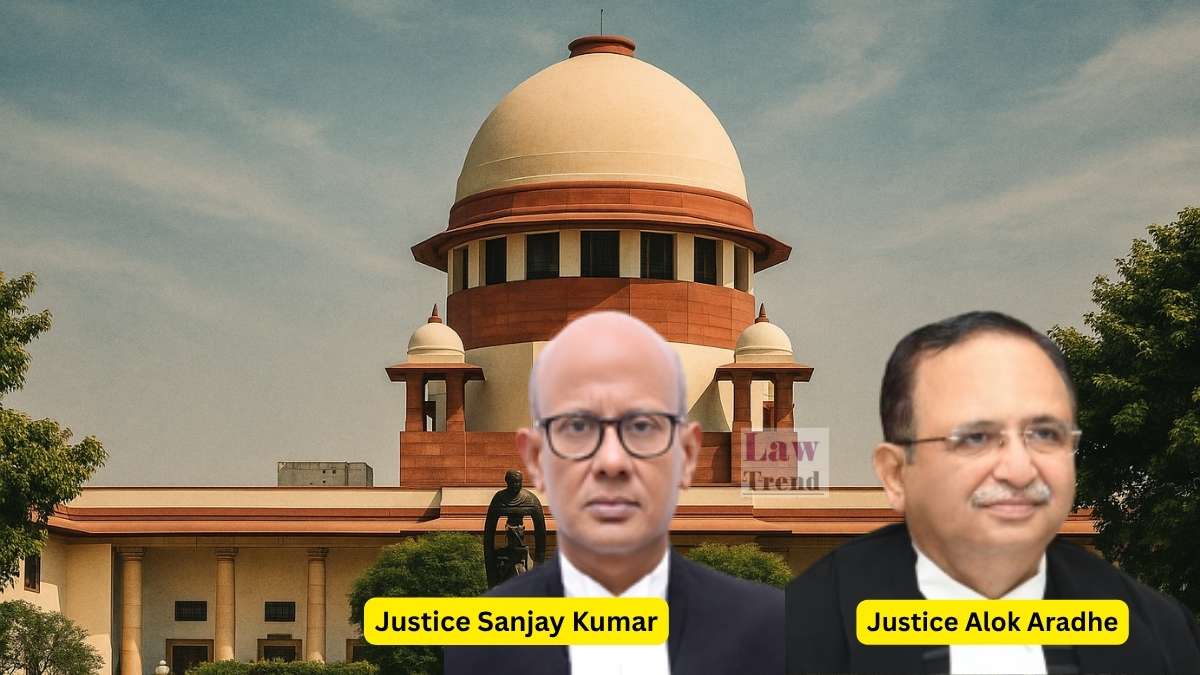
A Bench comprising Justice Sanjay Kumar and Justice Alok Aradhe set aside the judgment of the Division Bench of the Rajasthan High Court and restored the order of the learned Single Judge, which had directed the renaming of the villages in accordance with the law.

Background of the Case

The matter originated from a proposal submitted by the Gram Panchayat Sohda, District Barmer, for the creation of new Revenue Villages. The Tehsildar Gida (Land Records) issued certificates on December 24, 2020, stating that he had verified all aspects concerning the formation of four new Revenue Villages, including “Sagatsar” and “Amargarh,” carved out of Meghwalon Ki Dhani, Revenue Village Sohda. The certificate recorded that the proposed villages were not associated with any individual, religion, caste, or community.

However, on the same day and shortly thereafter (December 24 and 29, 2020), individuals named Amarram and Badli Kunwar (wife of Sagat Singh) executed affidavits agreeing to donate land for the proposed villages of Amargarh and Sagatsar, respectively.

The State Government, exercising powers under Section 16 of the Rajasthan Land Revenue Act, 1956, issued a notification on December 31, 2020, creating the new Revenue Villages. Subsequently, on April 21, 2025, villagers submitted objections asserting that the names “Amargarh” and “Sagatsar” were derived from the names of individuals.

READ ALSO  Pension of an Employee Is “Property” Under Article 31(1) and Any Interference Will Be a Breach of Article 31(1) of the Constitution: JKL HC

The appellants approached the High Court challenging the notification. The learned Single Judge, by an order dated July 11, 2025, held that the names were indeed derived from the donors, Amarram and Sagat Singh. Placing reliance on previous Single Bench decisions in Moola Ram v. State of Rajasthan and Joga Ram & Anr. v. State of Rajasthan & Ors., the Single Judge quashed the notification regarding these two villages.

Respondent Nos. 6 to 9 preferred an appeal against this order. The Division Bench of the High Court, vide judgment dated August 5, 2025, allowed the appeal and set aside the Single Judge’s order, holding that the benefit of the decisions in Moola Ram and Joga Ram could not be extended to cases where the process was not pending at the relevant time.

Arguments

Before the Supreme Court, the Appellants contended that the Division Bench erred in overlooking the fact that the names of the Revenue Villages were clearly based on the names of individuals. They argued this was in “direct violation of circular dated 20.08.2009,” issued by the State Government.

The State, represented by its counsel, argued that the statutory procedure prescribed for the creation of Revenue Villages had been followed. It was submitted that the circular dated August 20, 2009, was “merely directory” and urged that “settled issues ought not to be reopened retrospectively.”

READ ALSO  Supreme Court Questions Prioritization of Funds for Cycle Tracks Over Essential Services

Respondent Nos. 6 to 9 adopted the State’s submissions and further argued that the appellants lacked locus standi and that the notification did not cause any legal injury to them.

Court’s Analysis

The Supreme Court examined Section 16 of the Rajasthan Land Revenue Act, 1956, which empowers the State Government to create, abolish, or alter divisions, districts, and villages.

The Court placed significant reliance on the Circular issued by the Revenue Department on August 20, 2009, which laid down criteria for declaring new Revenue Villages. Clause 4 of the Circular states:

“While proposing the new Revenue Village, a proposal for its name shall also be forwarded. While deciding the name, it shall be ensured that it is not based on any person, religion, caste, or sub-caste. As far as possible, the name of the village shall be proposed with general consensus.”

Justice Alok Aradhe, writing for the Bench, observed that this circular is in the nature of a policy decision incorporated with the object to “maintain communal harmony.”

The Court held that a policy decision, though executive in nature, binds the Government. The Bench observed:

“It is well settled in law that a policy decision though executive in nature binds the Government, and the Government cannot act contrary thereto, unless the policy is lawfully amended or withdrawn. Any action taken in derogation of such a policy, without amendment or valid justification, is arbitrary and violative of Article 14 of the Constitution of India.”

READ ALSO  No Automatic Arrest in Section 498A IPC Cases: JKL HC Issues Guidelines on Arrest, Detention and Bail

The Court noted that it was admitted that the names “Amargarh” and “Sagatsar” were derived from the names of individuals, Amarram and Sagat Singh. Therefore, the notification dated December 31, 2020, was in contravention of Clause 4 of the Circular.

Critiquing the High Court’s Division Bench, the Supreme Court stated:

“The Division Bench failed to consider this material aspect and erred in limiting its consideration only to the applicability of earlier decisions in Moola Ram and Joga Ram (supra).”

Decision

The Supreme Court allowed the appeal and set aside the impugned judgment of the Division Bench dated August 5, 2025. The Court restored the order dated July 11, 2025, passed by the learned Single Judge, which had quashed the notification regarding the two villages and granted liberty to rename them in accordance with the law.

Case Details

Case Title: Bhika Ram & Anr. v. State of Rajasthan & Ors.

Case No: Civil Appeal No. [Number] of 2025 (@ SLP (C) No. 27965 of 2025)

Citation: 2025 INSC 1482

Coram: Justice Sanjay Kumar and Justice Alok Aradhe 

Law Trend
Law Trendhttps://lawtrend.in/
Legal News Website Providing Latest Judgments of Supreme Court and High Court

Related Articles

Latest Articles

