

SC Upholds Bombay HC Chief Justice’s Power to Appoint Kolhapur as Additional Place of Sitting; Dismisses Challenge Under States Reorganisation Act
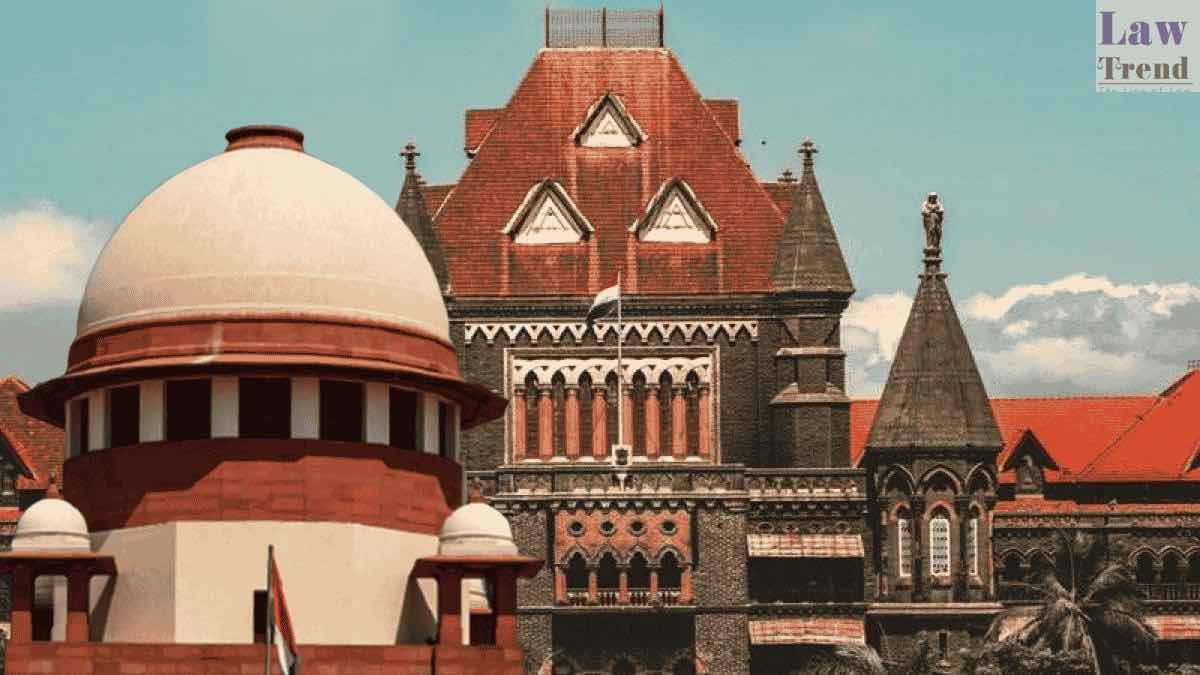

The Supreme Court has dismissed a Writ Petition challenging the administrative notification issued by the Bombay High Court appointing Kolhapur as an additional place of sitting. The Court held that Section 51(3) of the States Reorganisation Act, 1956, confers an independent and continuing power on the Chief Justice of a High Court to appoint places of sitting for the “more convenient transaction of judicial business,” distinct from the establishment of permanent benches under Section 51(2).

A Bench comprising Justice Aravind Kumar and Justice N.V. Anjaria observed that the Chief Justice, as the head of the institution, possesses the administrative authority to organise sittings to facilitate access to justice.

Background of the Case

The petitioner, Ranjeet Baburao Nimbalkar, approached the Supreme Court under Article 32 of the Constitution, assailing the Notification No. P.0108/2025 dated August 1, 2025. This notification, issued by the High Court of Judicature at Bombay with the approval of the Governor of Maharashtra, appointed Kolhapur as a place where Judges and Division Courts of the High Court may sit. The arrangement became operational on August 18, 2025.

The proposal contemplated that cases arising from the districts of Kolhapur, Sangli, Satara, Ratnagiri, and Sindhudurg would be assigned to the Kolhapur sitting. The petitioner contended that this move effectively established a permanent bench under the guise of an administrative order, bypassing the statutory requirements of Section 51(2) of the States Reorganisation Act, 1956.

Contentions of the Parties

Arguments for the Petitioner: Senior Advocate Balbir Singh, appearing for the petitioner, argued that Section 51(3) was intended for temporary exigencies and not for creating enduring institutional arrangements. He submitted that establishing a permanent additional bench requires a Presidential order under Section 51(2).

READ ALSO  क्राउडफंडिंग 'दुरुपयोग' मामला: टीएमसी नेता साकेत गोखले की जमानत याचिका पर 13 मार्च को सुनवाई करेगा सुप्रीम कोर्ट

The petitioner further argued that the decision lacked adequate consultation, noting the absence of a “Full Court” deliberation. Mr. Singh pointed out that similar proposals had been rejected by committees of judges in 1996, 1997, 2006, and 2018. Additionally, he invoked Article 14, claiming the decision was discriminatory against other regions like Pune or Solapur, and Article 21, arguing that diverting resources to a new sitting would weaken the District Judiciary.

Arguments for the Respondents: Solicitor General of India Tushar Mehta, appearing for the High Court administration, defended the notification. He argued that Section 51(3) is an “independent and continuing source of power” vested in the Chief Justice to ensure the convenient transaction of judicial business.

The Solicitor General submitted that the Chief Justice, as the “custodian of its administration,” acted within his domain. He contended that Section 51(3) requires only the Governor’s approval, which was obtained, and does not mandate Full Court approval. He further argued that past administrative decisions do not create an estoppel and that the decision was based on valid feasibility considerations.

Court’s Observations and Analysis

The Supreme Court examined the scope of Section 51 of the States Reorganisation Act, 1956, distinguishing between sub-sections (2) and (3).

On the Scope of Section 51(3): The Court rejected the petitioner’s argument that Section 51(3) is limited to temporary exigencies. Referring to the precedent in State of Maharashtra v. Narayan Shamrao Puranik (1982), the Bench observed:

“It would therefore be inconsistent with the text and purpose of Section 51(3) to read into it any temporary limitation or to construe it as a provision meant only for exceptional or short-term exigencies… Section 51(3) clearly admits of repeated and continuing exercise as circumstances so demand.”

READ ALSO  यूटिलिटी वाहन के ‘कॉन्ट्रैक्ट कैरेज’ परमिट पर सुप्रीम कोर्ट का फैसला: सभी यात्रियों के लिए बीमाकर्ता की पूर्ण जिम्मेदारी बरकरार

The Court clarified that while Section 51(2) involves “territorial bifurcation” and requires a Presidential order, Section 51(3) does not.

“What is determinative is not the duration of the sitting, but the absence of territorial bifurcation and the retention of administrative control with the Chief Justice.”

On the Authority of the Chief Justice: The Court emphasized the Chief Justice’s primacy in administrative matters.

“The administration of a High Court is an essential part of its constitutional functioning… Such decisions can only be taken by one who is closely acquainted with the Court’s docket, the nature and volume of litigation, the strength of the Bar, and the practical difficulties faced by litigants across regions.”

Regarding the lack of Full Court consultation, the Bench held:

“Section 51(3) expressly requires only the approval of the Governor. It does not stipulate consultation with the Full Court… To judicially impose a requirement of Full Court approval… would be to transgress the limits of interpretation and to trench upon legislative prerogative.”

On Past Rejections and Article 14: The Court ruled that past administrative decisions do not operate as an estoppel.

“Administrative and policy decisions… are necessarily contextual and are not intended to operate as permanent or inflexible conclusions.”

Addressing the Article 14 challenge regarding other regions like Pune and Solapur, the Court stated:

“The mere fact that another region may also have a legitimate demand for a High Court sitting does not render the present decision arbitrary. The Constitution does not require the State or the High Court to address all such demands at once… The decision to appoint Kolhapur as an additional place of sitting thus bears a clear and reasonable nexus with the object of facilitating access to justice for litigants from that region.”

READ ALSO  Supreme Court Allows Pension to Daily Wage Employee Regularized Subsequently

On Access to Justice (Article 21): The Court dismissed the argument that the new sitting would negatively impact the judiciary’s resources.

“Access to justice is not a narrow or abstract idea. It is concerned not merely with the existence of courts, but with whether litigants can realistically approach them without undue hardship… Decentralisation in such circumstances does not weaken the justice delivery system; it brings the Court closer to those whom it exists to serve and thereby advances the constitutional guarantee.”

Decision

The Supreme Court dismissed the Writ Petition, holding that the impugned notification was validly issued under Section 51(3) of the States Reorganisation Act, 1956. The Court concluded:

“The authority competent to exercise such power, namely the Chief Justice of the High Court, has acted within the bounds of the statute and has obtained the approval of the Governor, as required by law.”

However, the Court clarified that this exercise of power by the Chief Justice does not “denude or dilute” the Union Government’s power under Section 51(2) to establish permanent benches if it deems fit.

Law Trend
Law Trendhttps://lawtrend.in/
Legal News Website Providing Latest Judgments of Supreme Court and High Court

Related Articles

Latest Articles

