

Executive Instructions Supplement but Cannot Override Statutory Provisions: Chhattisgarh HC Dismisses Joint Venture’s Mining Lease Appeal
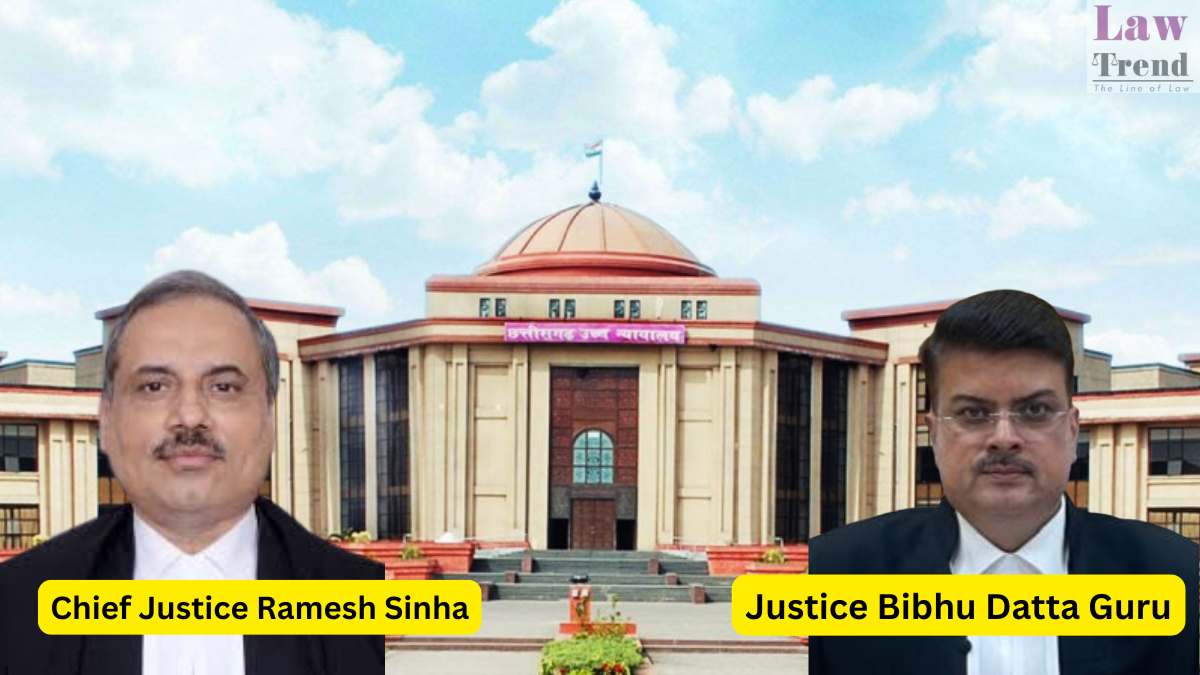

The High Court of Chhattisgarh has dismissed a writ appeal filed by Keshkal G.N. India Bauxite Mines and Mineral Limited (JVC), affirming that executive instructions issued by the government are meant to supplement statutory provisions and cannot override them. The Division Bench, comprising Chief Justice Ramesh Sinha and Justice Bibhu Datta Guru, upheld the dismissal of the appellant’s challenge against the rejection of mining lease proposals, citing a lack of locus standi and the lapsing of applications under amended mining laws.

Background of the Case

The legal dispute traces back to 1981 when the Government of Madhya Pradesh reserved bauxite mining rights in certain districts for the M.P. State Mining Corporation (MPSMC). Following the creation of Chhattisgarh in 2000, the Chhattisgarh Minerals Development Corporation (CMDC) was established as a State PSU.

In February 2003, a Joint Venture Agreement (JVA) was executed between CMDC and the appellant for bauxite exploitation in Kanker and Bastar districts. A supplementary JVA in 2008 stipulated that CMDC would apply for leases in its name and transfer rights to the joint venture. However, proposals submitted to the Central Government were repeatedly rejected on several grounds, including the reservation of areas for public sector use and non-compliance with ownership guidelines.

READ ALSO  Maintenance Rights of Wife and Children Take Precedence Over Creditors in Recovery Proceedings: Supreme Court

The appellant challenged these rejections via a writ petition (WPC No. 1142/2023), which was dismissed by a Single Judge on October 16, 2025. The current appeal was filed against this dismissal.

Arguments of the Parties

The appellant, represented by Senior Advocate Shri Kishore Bhaduri, argued that as a 74% equity holder in a State-approved joint venture, it was a “person aggrieved” by the respondents’ inaction. It was contended that the appellant had invested over ₹20 crores based on State assurances, invoking the doctrines of promissory estoppel and legitimate expectation. They further argued that the mining applications were protected under Section 10A(2A) and 17A of the Mines and Minerals (Development and Regulation) (MMDR) Act and that applying 2009 guidelines retrospectively was arbitrary.

Conversely, the respondents argued that the appellant lacked locus standi since the mining lease applications were in the name of CMDC (Respondent No. 2), not the appellant. They maintained that under Section 10A(1) of the MMDR Act, as amended in 2015 and 2021, all pending applications had become ineligible or had lapsed.

The Court’s Analysis

The High Court addressed three primary points: the retrospectivity of shareholding guidelines, the eligibility of applications under the amended MMDR Act, and the appellant’s locus standi.

READ ALSO  धारा 9 हिंदू विवाह अधिनियम | वैवाहिक अधिकारों की बहाली से इनकार करने के लिए पत्नी का आचरण पर्याप्त आधार है: हाईकोर्ट

1. Executive Instructions vs. Statute: Regarding the 2009 guidelines prescribing shareholding ratios for joint venture partners, the Court observed that these were issued to carry out the provisions of Section 17A of the MMDR Act. The Bench noted:

“The executive instruction cannot override the statutory provision but they are meant to supplement the law or to carry out the provisions of law.”

The Court found that Clause 14 of the JVA gave the appellant complete management control, which violated Section 17A(2) requiring the State-owned company to maintain control. It held that the guidelines were “clarificatory in nature” and therefore applicable to the case.

2. Lapsing of Applications: The Court examined the impact of the MMDR Amendment Acts of 2015 and 2021. It noted that Section 10A(2)(b) and its subsequent proviso meant that pending applications deemed not to have been recommended or processed within specific timelines lapsed on July 9, 2021. The Court stated:

“The application submitted by respondent No. 2 for all the reasons as detailed hereinabove have become ineligible or lapse as no recommendation was made to the Central Government by the State Government for considering the case of respondent No. 2 for grant of mining lease.”

READ ALSO  Kerala Co-operative Society Employees Entitled to Benefits of Minimum Wages, Maternity Benefits, and Other Welfare Legislation: HC

3. Locus Standi and “Person Aggrieved”: The Bench emphasized that the primary applicant was CMDC, which had not challenged the rejections. Referencing several Supreme Court precedents, the Court defined a “person aggrieved” as one whose legal rights are directly invaded.

“The petitioner has not been denied or deprived of a legal right. The petitioner has not sustained injury to any legally protected interest… therefore, he is not a ‘person aggrieved’ and respondent No. 2 has not approached this Court whose interest is adversely affected.”

Decision of the Court

The Division Bench concluded that the Single Judge’s order suffered from no patent illegality or perversity. It affirmed that the appellant could not maintain the petition as its rights were not directly affected by the actions of the State or Union governments.

Dismissing the appeal, the Court held:

“The order passed by the learned Single Judge is just and proper warranting no interference of this Court. Accordingly, the writ appeal is dismissed.”

The Court, however, granted the appellant liberty to avail other legal remedies as may be available under the law.

Law Trend
Law Trendhttps://lawtrend.in/
Legal News Website Providing Latest Judgments of Supreme Court and High Court

Related Articles

Latest Articles

