

Electronic Evidence Inadmissible Without Mandatory Sec 65-B(4) Certificate in Kidnapping-for-Ransom Case: Chhattisgarh HC
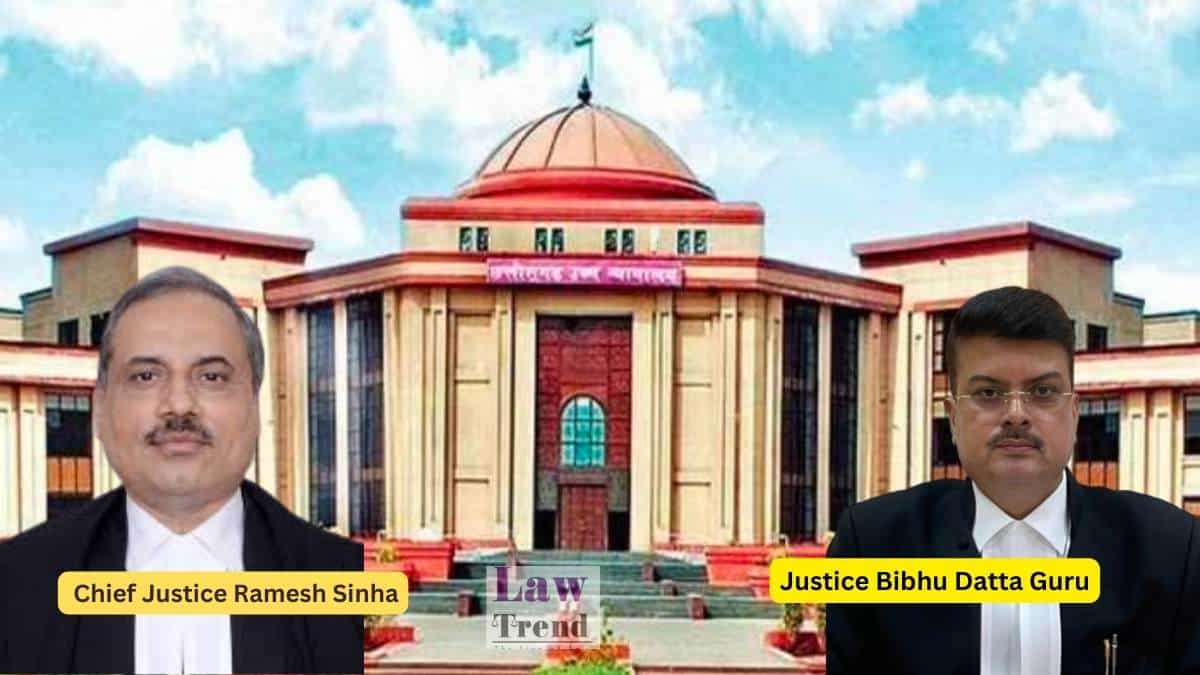

The High Court of Chhattisgarh has set aside the life imprisonment sentences of three young men convicted for the kidnapping, ransom demand, and murder of a 16-year-old boy. The Division Bench, comprising Chief Justice Ramesh Sinha and Justice Bibhu Datta Guru, acquitted the appellants, citing serious procedural infirmities, including the prosecution’s failure to furnish the mandatory certificate under Section 65-B of the Indian Evidence Act for electronic evidence.

The High Court allowed the criminal appeals filed by Ravi Khandekar, Sahil @ Shibu Khan, and Abhishek Dan, overturning the judgment of the 3rd Additional Sessions Judge, Bilaspur. The appellants had been convicted under Sections 363, 364A, 387, 302, and 201 of the Indian Penal Code (IPC). The High Court held that the prosecution failed to prove the “taking” of the minor from lawful guardianship and could not rely on electronic records due to statutory non-compliance. The Court also passed strictures against the investigating agency for “glaring lapses.”

Background of the Case

The prosecution’s case was that on February 6, 2022, the minor victim, Mohammad Rehan, went missing after leaving his home in Tarbahar, Bilaspur, to buy snacks. His father, Asif Mohammad, lodged a missing person report. Later that night, the father allegedly received a call from the victim’s mobile number demanding a ransom of ₹50,00,000.

Based on call detail records (CDRs), the police apprehended the accused persons. The prosecution claimed that accused Abhishek Dan disclosed that he, along with co-accused Sahil and Ravi, had kidnapped the boy, murdered him, and concealed his body in a sack under a culvert near Mananpur Highway. The trial court convicted all three accused on August 23, 2024, sentencing them to life imprisonment for kidnapping for ransom and murder.

READ ALSO  Chhattisgarh HC CJ Ramesh Sinha Inaugurates New Record Room and Victim Waiting Hall at Surajpur District Court

Arguments of the Parties

The counsels for the appellants, Mr. Rajesh Jain, Mr. Goutam Khetrapal, and Mr. Santosh Bharat, argued that the conviction was based on inadmissible evidence and conjecture.

  • Procedural Lapse regarding Age: It was argued that the trial against appellant Ravi Khandekar was conducted improperly. After the Juvenile Justice Board declared him an adult, only two out of nine cited witnesses were examined, denying him a fair trial.
  • Electronic Evidence: The defense contended that the call detail records and CCTV footage were inadmissible as the prosecution failed to produce the mandatory certificate under Section 65-B of the Indian Evidence Act.
  • No “Kidnapping”: Counsel argued there was no evidence that the accused “took” or “enticed” the boy, as he left home voluntarily.

Deputy Advocate General Mr. Shashank Thakur, appearing for the State, supported the conviction, arguing that the recovery of the dead body and the mobile phone used for the ransom call, along with the chain of circumstances, established the guilt of the accused beyond reasonable doubt.

Court’s Analysis

The High Court meticulously examined the evidence and found the prosecution’s case lacking on several fronts:

1. Failure to Prove Kidnapping (Section 363 IPC)

The Court observed that for an offence under Section 361 IPC (punishable under Section 363), the prosecution must prove the accused “took” or “enticed” the minor. The Court noted that the victim left his house voluntarily to buy chips. Citing the Supreme Court judgment in S. Varadarajan v. State of Madras (1965), the Bench held:

READ ALSO  Suspicion Cannot Replace Proof Beyond Reasonable Doubt: Chhattisgarh High Court Upholds Convictions in Murder Case

“If the prosecution establishes that though immediately prior to the minor leaving the father’s protection no active part was played by the accused… mere subsequent association of the accused with the minor… does not satisfy the requirement of ‘taking’ or ‘enticing’.”

2. Inadmissibility of Electronic Evidence (Section 65-B Evidence Act)

A critical factor in the acquittal was the lack of a certificate under Section 65-B(4) of the Indian Evidence Act for the CDRs and CCTV footage. Relying on the Supreme Court’s decision in Arjun Panditrao Khotkar v. Kailash Kushanrao Gorantyal (2020), the Court held:

“The Investigating Agency failed to comply with the mandatory requirement of furnishing a certificate under Section 65-B of the Indian Evidence Act in respect of electronic evidence such as call detail records, mobile data and CCTV footage, rendering such evidence legally inadmissible and incapable of being relied upon.”

3. Unproven Ransom Demand (Section 364A & 387 IPC)

The Court found that the ransom demand was not conclusively proved to have been made by the appellants. The conviction under Section 364A relied heavily on the inadmissible electronic evidence. The Court stated:

READ ALSO  Reinstatement Not Mandatory for Fresh Suspension After Quashing of Previous Suspension Order: Allahabad HC

“The prosecution, however, has failed to establish that the appellants themselves made the ransom call or directly threatened PW-1 or the deceased.”

4. Procedural Irregularities

The Court expressed serious concern over the trial of appellant Ravi Khandekar. Despite the prosecution citing nine witnesses, only two were examined after he was tried as an adult. The Court termed the trial Court’s failure to summon the remaining witnesses as an “abdication of judicial duty” that caused serious prejudice to the accused.

5. Flawed Investigation

The Bench highlighted “glaring lapses” in the investigation, including a 45-day delay in seizing CCTV footage, which undermined its reliability.

Decision

The High Court allowed CRA No. 1656 of 2024, CRA No. 1696 of 2024, and CRA No. 1954 of 2024, setting aside the conviction and sentence dated August 23, 2024. The appellants were acquitted of all charges and directed to be released forthwith.

The Court also directed the Registrar (Judicial) to transmit the judgment to the Director General of Police, Chhattisgarh, to ensure strict adherence to legal procedures in future investigations.

“With a heavy heart, this Court is constrained to allow the present appeals… due to serious procedural and technical infirmities in the prosecution case… consistent with constitutional safeguards and settled principles of criminal jurisprudence.”

Law Trend
Law Trendhttps://lawtrend.in/
Legal News Website Providing Latest Judgments of Supreme Court and High Court

Related Articles

Latest Articles

