

Injunction Cannot be Granted Where Title is Unproven and Property Identification is Ambiguous: Supreme Court Sets Aside High Court Order
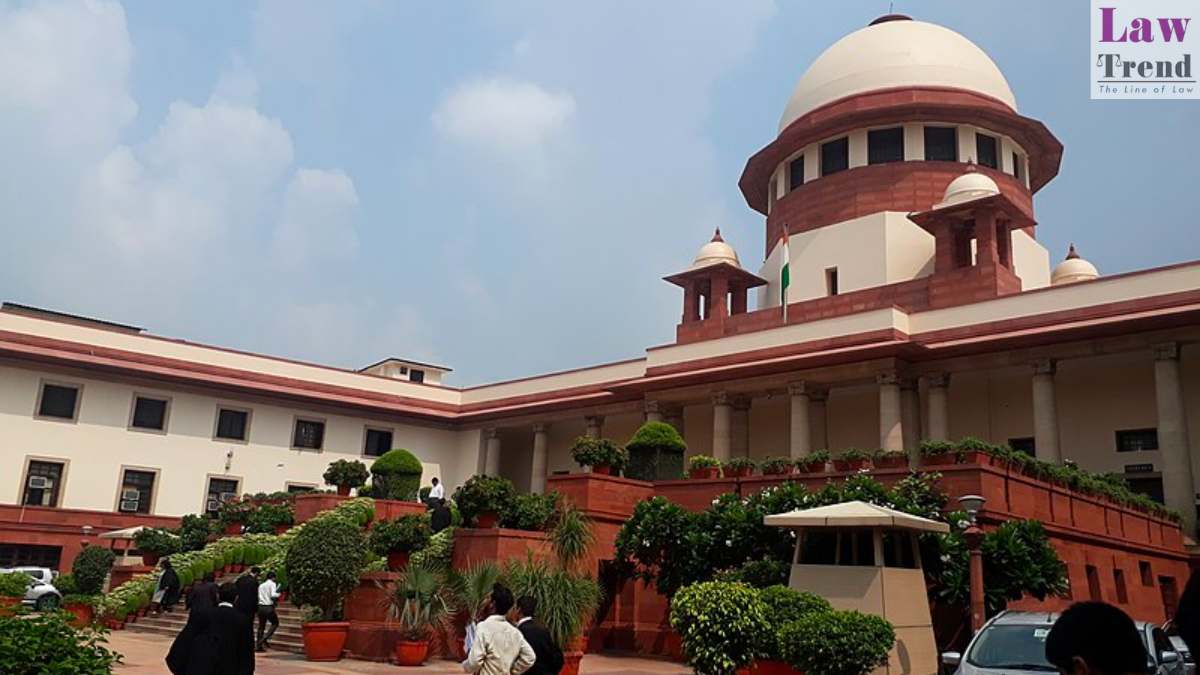

The Supreme Court has set aside a judgment of the High Court which had decreed a suit for permanent injunction by reversing the Trial Court’s dismissal. The Apex Court held that the plaintiffs failed to establish their title or properly identify the suit schedule property, particularly when the underlying land acquisition proceedings had been set aside and a rectification deed was executed two decades later without valid reasons.

The Bench, comprising Justice Ahsanuddin Amanullah and Justice K. Vinod Chandran, restored the Trial Court’s order dismissing the suit filed by the respondents (plaintiffs).

Background of the Case

The dispute pertains to a suit for permanent injunction filed by the respondents (Pawan Kumar Bhihani and others) against the appellants (Obalappa and others) seeking to restrain them from interfering with the suit schedule properties.

The respondents claimed that their father was allotted Site No. 66 by the Bangalore Development Authority (BDA). They relied on a sale agreement executed in 1993 and a subsequent sale deed executed in 2003. Initially, the property was described as being comprised in Survey Nos. 349/1 and 350/12 of Kempapura Agrahara Village.

However, the acquisition of the land in Survey Nos. 349/1 and 350/12, which originally belonged to the appellants’ family, was challenged and eventually set aside by the High Court. Subsequently, while the suit was pending, the BDA executed a rectification deed on August 3, 2012, in favor of the respondents, changing the survey numbers of the allotted site to Survey Nos. 350/9, 350/10, and 350/11, alleging a mistake in the original documents.

READ ALSO  सुप्रीम कोर्ट ने लोकसभा चुनाव के प्रत्येक चरण के बाद 'प्रमाणित' मतदान प्रतिशत का खुलासा करने पर ECI से जवाब मांगा

The Trial Court dismissed the suit, holding that the plaintiffs had failed to establish their title and that the identification of the property was not possible based on the documents produced. The High Court, in the First Appeal, reversed this decision and decreed the suit, relying on a survey purportedly conducted by the BDA.

Arguments of the Parties

Mr. Shailesh Madiyal, learned Senior Counsel appearing for the appellants, submitted that the property in Survey Nos. 349/1 and 350/12 belonged to the appellants’ family and, although acquired by the BDA, possession was never taken. He highlighted that the acquisition itself was subsequently set aside by the High Court.

Mr. Madiyal argued that “the rectification made after two decades of the sale agreement cannot be countenanced.” He contended that the High Court “egregiously erred” in relying on a so-called survey by the BDA which was neither proved before the Trial Court nor authenticated by a seal.

Mr. M.N. Umashankar, learned counsel for the respondents, argued that their father had purchased the property in an auction from the BDA and possession was handed over in 1993. He submitted that the High Court correctly relied on the BDA survey which identified Site No. 66 in the rectified survey numbers. He contended that the appellants had no right over the adjacent property purchased by the respondents.

Court’s Analysis and Observations

The Supreme Court examined the records and found that the acquisition proceedings regarding Survey Nos. 349/1 and 350/12 were indeed set aside. The Court noted, “The preliminary notification dated 30.07.1977 and the final notification dated 10.05.1978 with respect to the said property was declared to have been set aside.”

READ ALSO  सुप्रीम कोर्ट ने बॉम्बे हाईकोर्ट सीजे डी के उपाध्याय के शपथ ग्रहण को चुनौती देने वाली जनहित याचिका खारिज कर दी, याचिकाकर्ता पर जुर्माना लगाया

On the Rectification Deed and Property Identification

The Court observed significant discrepancies regarding the identification of the property. The Bench noted that the rectification deed was executed changing the survey numbers after two decades.

Justice Vinod Chandran, writing for the Bench, observed:

“Insofar as the rectification deed is concerned, as noticed by the trial court, the change of survey numbers after two decades, especially without any valid reasons being shown, that too after the acquisition proceedings in Survey Nos.349 and 352 were set at naught, does not inspire confidence nor can it be treated as a valid rectification.”

The Court further held that the properties in the new survey numbers (350/9, 350/10, and 350/11) were found by the Trial Court to be in the name of third parties who were not arrayed in the suit.

On the High Court’s Reliance on BDA Survey

The Supreme Court criticized the High Court’s reliance on the BDA survey letter (Exhibit P-24). The Bench pointed out that the document lacked a seal or a legible signature and was not properly proved.

“The High Court in our opinion seriously erred in having relied on the alleged survey carried out by the BDA. The letter produced is silent insofar as it does not refer to any clear boundaries or the measurements by metes and bounds. Moreover, the said survey, if at all carried out was behind the back of the appellants which could not have been relied upon by the High Court.”

READ ALSO  Police best judge to decide regulation of traffic movement: Delhi HC

On Violation of Sale Agreement Conditions

The Court also took note of the fact that the original sale agreement from 1993 insisted on the construction of a residential house within two years. The Court observed that “Admittedly, there was no construction of a residential building in the property allotted in the year 1993… There was no such building existing even when the suit was filed in the year 2012.”

Decision

The Supreme Court concluded that the respondents (plaintiffs) could not claim any right over the property originally acquired from the appellants since that acquisition was set aside. Regarding the rectified property, the Court held:

“The properties in the survey numbers as shown in the rectification having not been identified, there can be no injunction granted. The plaintiff has not proved the title, nor was Site No.66 properly identified on the ground, based on survey numbers.”

Consequently, the Court allowed the appeal, set aside the judgment of the High Court, and restored the order of the Trial Court dismissing the suit.

Case Details:

  • Case Title: Obalappa and Ors. v. Pawan Kumar Bhihani and Ors.
  • Case Number: Civil Appeal No. of 2025 (@ SLP (C) No. 14966 of 2025)
  • Citation: 2025 INSC 1450
  • Coram: Justice Ahsanuddin Amanullah and Justice K. Vinod Chandran

Law Trend
Law Trendhttps://lawtrend.in/
Legal News Website Providing Latest Judgments of Supreme Court and High Court

Related Articles

Latest Articles

