

Complainant in Cheque Bounce Case Can Appeal Acquittal Before Sessions Court as ‘Victim’ Without Special Leave: Madhya Pradesh High Court
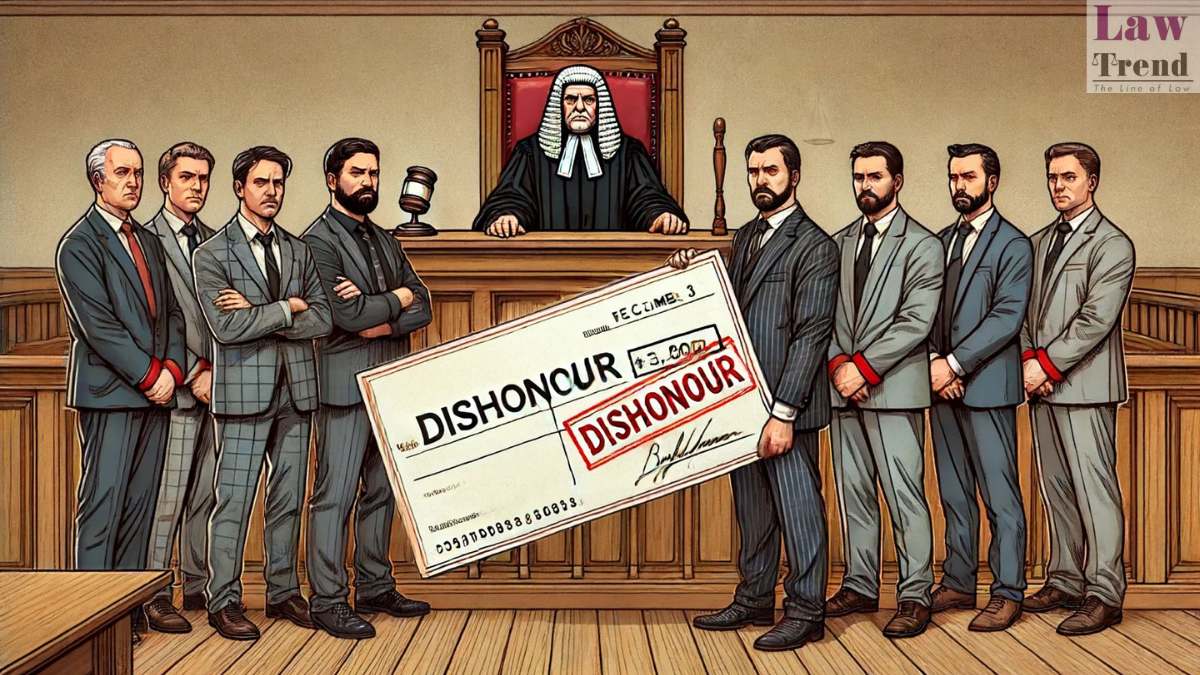

The High Court of Madhya Pradesh, Indore Bench, has ruled that a complainant in a case under Section 138 of the Negotiable Instruments Act, 1881 (NI Act) is not required to seek special leave to appeal against an acquittal from the High Court. Instead, the complainant, qualifying as a ‘victim’, can prefer an appeal directly before the Sessions Court under the proviso to Section 372 of the Code of Criminal Procedure (CrPC).

Case Background and Legal Issue

The Single Judge Bench of Justice Gajendra Singh was hearing a Criminal Appeal filed by the complainant, Narayan Chouhan, challenging the acquittal of the respondent, Santosh Chohan, by the Judicial Magistrate First Class (JMFC), Indore. The acquittal was recorded in SCNIA No. 2742893/2016 involving charges under Section 138 of the NI Act.

The appeal was initially preferred before the High Court under Section 419(4) of the Bhartiya Nagrik Suraksha Sanhita, 2023 (BNSS), which corresponds to the earlier Section 378(4) of the CrPC. The appellant also filed an application (I.A. No.17226/2025) seeking a grant of leave to appeal. The primary legal issue before the Court was the maintainability of such an appeal before the High Court given recent legal precedents regarding the rights of a “victim” to appeal.

READ ALSO  Principle that ‘Rules of Game Cannot be Changed After the Game has Started’ Will Not Apply on Change in Selection Process: Supreme Court

Court’s Analysis and Observations

The High Court heard the matter on the question of maintainability. Justice Singh relied extensively on the recent Supreme Court judgment in the case of M/s. Celestium Financial vs. A. Gnanasekaran Etc. (2025 INSC 804).

The Court observed that the Supreme Court has settled the position that a complainant in a Section 138 NI Act case falls within the definition of a “victim” as defined in Section 2(wa) of the CrPC (corresponding to Section 2(y) of the BNSS). Consequently, such a complainant is entitled to file an appeal under the proviso to Section 372 of the CrPC (corresponding to Section 413 of the BNSS).

Highlighting the reasoning of the Supreme Court, the High Court quoted:

“In the context of offences under the Act, particularly under Section 138 of the said Act, the complainant is clearly the aggrieved party who has suffered economic loss and injury due to the default in payment by the accused owing to the dishonour of the cheque which is deemed to be an offence under that provision.”

The Court further noted the Supreme Court’s observation that it would be “just, reasonable and in consonance with the spirit of the CrPC” to treat the complainant as a victim. This classification enables the complainant to maintain an appeal against an acquittal “in his own right without having to seek special leave under Section 378(4) of the CrPC.”

READ ALSO  Story Put Up by the Prosecution Is Full of Holes and Raises Reasonable Doubt: Supreme Court Acquits Rape Convicts

The judgment clarified the distinction between appeals filed under Section 378(4) and the proviso to Section 372. While Section 378(4) mandates seeking special leave from the High Court, the proviso to Section 372 grants a victim an absolute right to appeal.

Quoting the Apex Court, Justice Singh noted:

“If the complainant is also a victim, he could proceed under the proviso to Section 372, in which case the rigour of sub-section (4) of Section 378, which mandates obtaining special leave to appeal, would not arise at all, as he can prefer an appeal as a victim and as a matter of right.”

Decision and Directions

Based on the precedent set by M/s. Celestium Financial, the High Court held that the appellant was not required to seek leave to appeal from the High Court under Section 419(4) of the BNSS.

Justice Gajendra Singh disposed of the appeal with the following directions:

  1. Liberty to Approach Sessions Court: The appellant is granted liberty to prefer an appeal against the acquittal judgment dated December 10, 2025, before the concerned Sessions Judge.
  2. Timeline: The appeal may be filed within a period of 60 days from the date of receipt of the High Court’s order.
  3. Waiver of Limitation: The Court clarified that if the appeal is filed within the prescribed 60-day window, the Sessions Judge “would not insist upon the limitation while deciding the same and will proceed to decide the same in accordance with law.”
READ ALSO  Rejection of Wife’s Maintenance Claim U/s 125 CrPC Doesn’t Bar Her From Seeking Maintenance Under Domestic Violence Act: MP HC

The Registry was directed to return the certified copy of the impugned judgment to the appellant and send the record back to the concerned JMFC forthwith.

Case Details:

  • Case Title: Narayan Chouhan vs. Santosh Chohan
  • Case Number: Criminal Appeal No. 12024 of 2025
  • Coram: Justice Gajendra Singh
  • Citation: 2025:MPHC-IND:36952
  • Statutes Involved: Bhartiya Nagrik Suraksha Sanhita, 2023 (Sections 419, 413, 2(y)); Code of Criminal Procedure, 1973 (Sections 378, 372, 2(wa)); Negotiable Instruments Act, 1881 (Section 138).

Law Trend
Law Trendhttps://lawtrend.in/
Legal News Website Providing Latest Judgments of Supreme Court and High Court

Related Articles

Latest Articles

