

Property Inherited by Son from Father Under Section 8 of Hindu Succession Act is Separate Property, Not Ancestral; Son Has Absolute Right to Sell: Bombay High Court
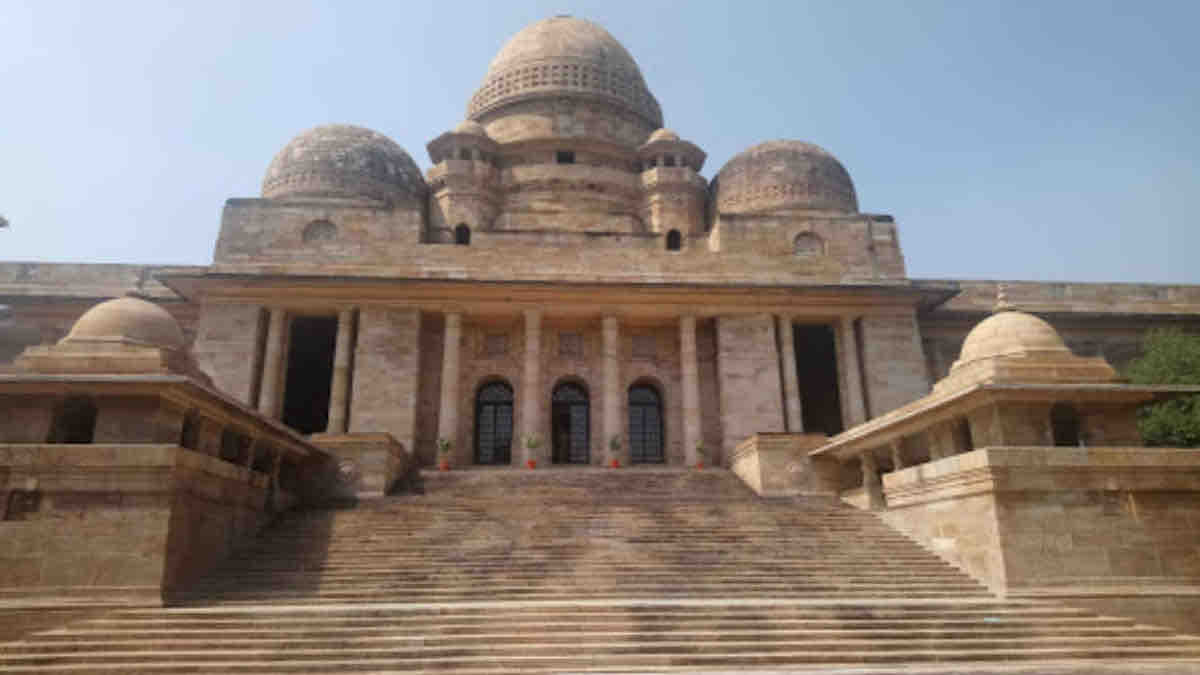

The Bombay High Court (Nagpur Bench) has held that property inherited by a son from his father, who had received it in a prior partition, constitutes the son’s separate property under Section 8 of the Hindu Succession Act, 1956, and not ancestral property.

Justice Rohit W. Joshi set aside the appellate court’s findings which had restrained a property sale on the grounds that the land was “ancestral.” The High Court restored the Trial Court’s decree directing the registration of the sale deed in favor of the purchaser, affirming that the vendor had the absolute right to alienate the property.

Background of the Case

The dispute involved agricultural land bearing Gat No. 138 (Old Survey No. 81) in Daryapur, District Amravati. The vendor, Kishor Maliye (Defendant No. 1), had entered into an agreement to sell the suit property to the appellant, Arun Narayanrao Kale (Purchaser), for a consideration of Rs. 1,29,500/-.

According to the purchaser, a sale deed was executed on July 11, 2007, and possession was handed over. However, the deed could not be registered because the vendor’s wife (Respondent No. 1) created a ruckus at the Sub-Registrar’s office.

Two civil suits were filed:

  1. Regular Civil Suit No. 39/2007: Filed by the vendor’s wife and children (Objectors) seeking an injunction to restrain Kishor Maliye from selling the land. They claimed the property was “Joint Hindu Family property” and that Kishor, being addicted to liquor, was selling it to satisfy his vices.
  2. Regular Civil Suit No. 15/2012: Filed by the purchaser seeking a declaration of ownership, a mandatory injunction for the registration of the sale deed, and a perpetual injunction against disturbance of possession.
READ ALSO  Bombay High Court Slams Police for ‘Leisurely’ Preliminary Enquiries, Seeks Centre’s Stand on BNSS Compliance

The Trial Court decided in favor of the purchaser, directing the execution of the sale deed. However, the First Appellate Court reversed this decision, holding that the property was ancestral and the vendor had no right to sell it. The Appellate Court granted a refund of the consideration amount instead of enforcing the sale. Both parties preferred Second Appeals before the High Court.

Arguments of the Parties

The Objectors (wife and children) argued that the property was ancestral. They contended that since the land came to Kishor Maliye through a partition, it retained the character of Joint Hindu Family property in which his children acquired rights by birth.

The Purchaser argued that the property was the self-acquired/separate property of the vendor. It was submitted that Kishor Maliye inherited the property from his father, who had received it as his share in a partition dated August 11, 1982. Therefore, under Section 8 of the Hindu Succession Act, the property devolved upon Kishor as a Class-I heir in his individual capacity.

Court’s Analysis and Observations

The Court first addressed the validity of the sale deed. It observed that while the execution of the document and payment of consideration were proved, the transaction was incomplete under Section 54 of the Transfer of Property Act because the deed remained unregistered.

READ ALSO  Mere filing of FIR is Not Sufficient to Invoke Detention Laws, Rules Gujarat HC

On the Nature of Property (Ancestral vs. Separate)

The central issue was whether the property inherited by Kishor Maliye from his father was ancestral or separate. The Court noted that the property was originally ancestral to Kishor, his brother, and his father. However, by a registered partition deed dated August 11, 1982, the specific land in question was allotted to the share of Kishor’s father.

The Court observed:

“The suit property became separate property of the vendor’s father in view of the said partition. The vendor has inherited the suit property after demise of his father.”

Citing the Supreme Court judgment in Commissioner of Wealth-tax, Kanpur v. Chander Sen (AIR 1986 SC 1753), the High Court clarified the legal position regarding succession under the Hindu Succession Act, 1956. The Court noted that the traditional Shastric Hindu Law position—where a son receives property by survivorship—was “drastically altered” by the 1956 Act.

Justice Joshi observed:

“It is held that after commencement of Hindu Succession Act, a property of male Hindu, after his demise devolves upon his Class-I legal heirs by succession/inheritance and does not go by survivorship. The Hon’ble Supreme Court has held that the property is received by the son under Section 8 of the Hindu Succession Act as a separate property and not as ancestral property.”

The Court rejected the Objectors’ reliance on judgments which suggested that property received in partition continues to be Joint Family property qua lineal descendants, noting that those cases did not deal with a situation where property is inherited by a son from a father who died after 1956.

READ ALSO  Bombay High Court Cancels EC Notification, No By-Election in Akola West Assembly Seat

The Court further held:

“The objectors, therefore, cannot claim any right in land bearing Gat No.138 (Old Survey No.81) including the suit property by birth as coparceners… For the reasons recorded above, the suit property must be held to be separate property of the vendor, since it is inherited by him from his father.”

Decision

The High Court concluded that the vendor had an absolute right to sell the suit property. Consequently, the Objectors had no right to challenge the transaction.

The Court allowed Second Appeal Nos. 455/2023 and 457/2023 filed by the purchaser and dismissed the appeals filed by the Objectors. The judgment of the First Appellate Court was quashed, and the Trial Court’s decree—directing the vendor to execute the sale deed and granting perpetual injunction in favor of the purchaser—was restored.

Case Details:

Case Title: Arun s/o Narayanrao Kale vs. Meena w/o Kishor Maliye and Others (and connected appeals)

Case No.: Second Appeal No. 455/2023, Second Appeal No. 148/2024, Second Appeal No. 457/2023, Second Appeal No. 156/2024

Coram: Justice Rohit W. Joshi

Cited Laws: Section 8, Section 19 of the Hindu Succession Act, 1956; Section 54 of the Transfer of Property Act; Section 77 of the Registration Act, 1908.

Law Trend
Law Trendhttps://lawtrend.in/
Legal News Website Providing Latest Judgments of Supreme Court and High Court

Related Articles

Latest Articles

