

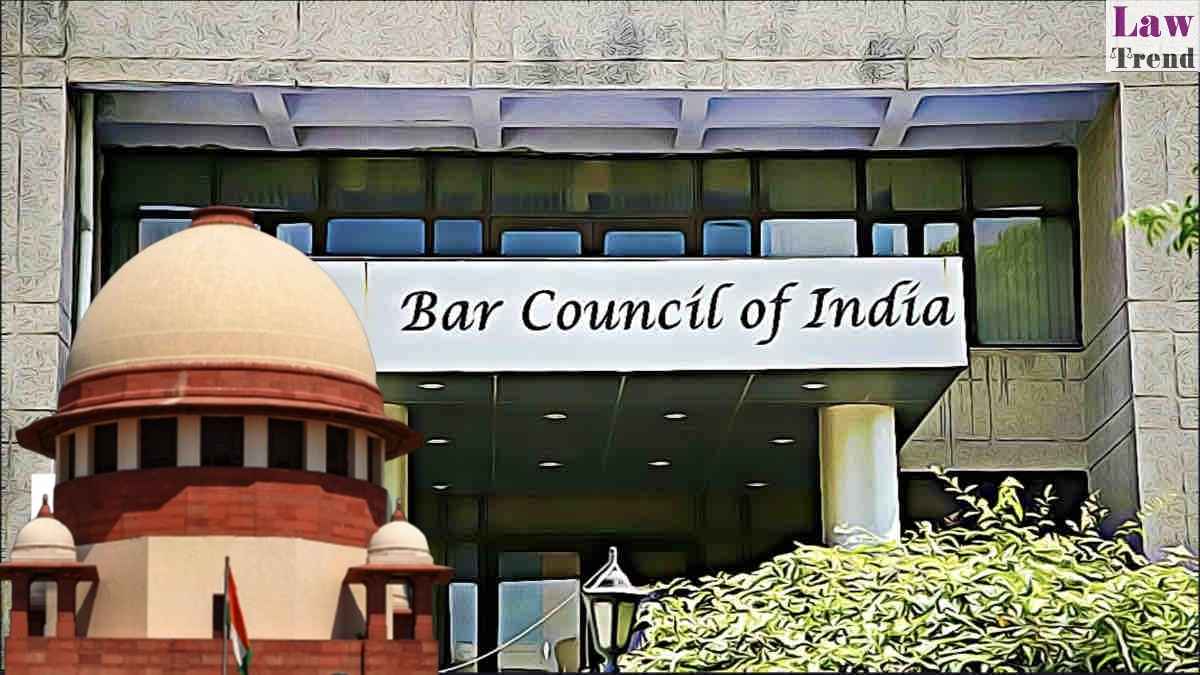
The Supreme Court on Tuesday called upon the Bar Council of India (BCI) to embrace inclusivity and demonstrate a “humane face” by ensuring the representation of persons with disabilities (PwDs) in state bar councils.
A bench comprising Chief Justice of India (CJI) Surya Kant and Justice Joymalya Bagchi suggested that the apex bar body could introduce members with disabilities through a process of co-option rather than waiting for legislative amendments to the election process.
Call for Inclusivity
Hearing a plea seeking reservation for persons with disabilities in state bar council elections, the Court emphasized that the presence of diverse voices is paramount. CJI Kant addressed BCI Chairman and Senior Advocate Manan Kumar Mishra, stating, “If we have even one representative, that will strengthen the institution, that will enhance the humane face of the institution and will also fortify your commitment to inclusivity.”
The bench proposed that the BCI launch a pilot project in Tamil Nadu, where council elections have not yet been announced. The Court directed the BCI to hold consultations and submit a proposal regarding the inclusion of disabled members.
BCI Opposes Statutory Changes
The proposal met with resistance from the BCI leadership. Chairman Manan Kumar Mishra argued that the Advocates Act does not currently provide for reservations for persons with disabilities and that such a mandate falls within the domain of Parliament. He expressed concern that initiating such reservations could set a precedent with “no end to it.”
Mishra further contended that the population of advocates with disabilities is minimal, making the reservation of seats in councils with limited strength impractical. Supporting this stance, Senior Advocate S. Prabhakaran, Vice Chairperson of the BCI, added, “In Tamil Nadu, many transgender advocates are practising, and tomorrow, they will also claim a seat in the Council.”
Co-option as a Solution
Countering the BCI’s rigid stance on statutory elections, the bench offered a pragmatic solution: increasing the number of seats to accommodate a member with a disability through co-option.
“Think of holding a small meeting to consider this aspect to increase one or two seats in the state bar councils,” the bench told Mishra. “File an appropriate proposal before us. Then you can think of co-opting the members instead of forcing them to go through a proper election process.”
Senior Advocate Indira Jaising, representing the petitioners, challenged the BCI’s arguments, pointing out that the Rights of Persons with Disabilities Act already mandates reservations for PwDs.
Addressing the hesitation regarding Tamil Nadu, the CJI remarked that the state has historically produced some of the finest leaders of the Bar and should be at the forefront of adopting inclusive practices. “Today, an issue has been flagged which is of paramount importance,” CJI Kant observed. “That’s why we said inclusivity, a humane approach is important and their presence shall be felt everywhere.”
Background on Bar Council Reforms
This directive follows a recent push by the Supreme Court to diversify state bar councils. On December 4, the Court asked the BCI to ensure 30 per cent reservation for women in upcoming elections.
Subsequently, on December 8, the Court ordered that in state bar councils where the election process has not yet commenced, 30 per cent of seats be reserved for women advocates. The order specified a split implementation for the current year: 20 per cent of seats to be filled via elections and 10 per cent through co-option if there is an inadequate number of contesting women lawyers.




