

Investigation Against Public Servant Without Prior Sanction Void; SC Terms Proceedings ‘Politically Motivated’

In a significant judgment on the protection of public servants from malicious prosecution, the Supreme Court has quashed criminal proceedings against former Karnataka Minister R. Ashoka. The Court held that the investigation by the Anti-Corruption Bureau (ACB) was “ex facie politically motivated” and legally unsustainable due to the absence of mandatory prior sanction.

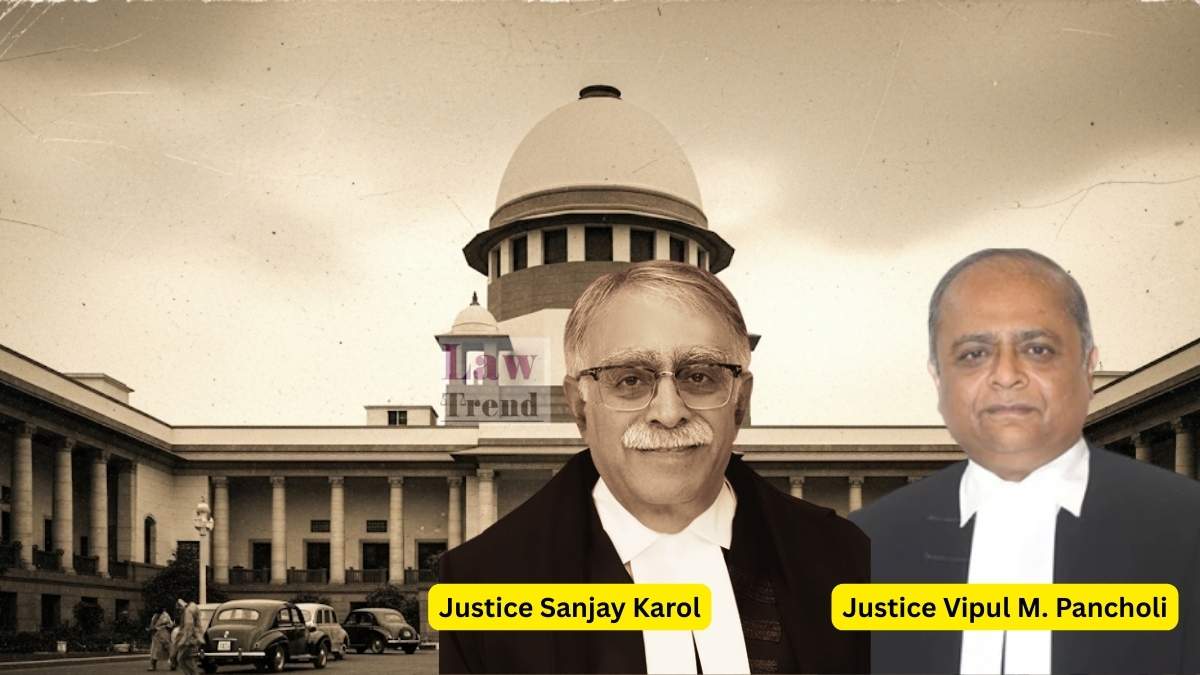
The Division Bench comprising Justice Sanjay Karol and Justice Vipul M. Pancholi ruled that the requirement of sanction under the Government Order dated March 14, 2016, is a pre-requisite even for the initiation of an investigation, not just for prosecution. The Court observed that the proceedings against the appellant were “afflicted by malice” and operated in the face of an express legal bar.

Case Background

The case originated from allegations regarding the regularization of unauthorized occupation of government lands between 1998 and 2007, during which R. Ashoka served as the Chairman of the Committee for Regularization of Unauthorized Occupation. The allegations, initially raised in a complaint to the Lokayukta in 2012, claimed that land meant for economically downtrodden persons, Scheduled Castes, and Scheduled Tribes was allotted to ineligible persons, including family members and followers of the appellant.

The Karnataka Lokayukta police had investigated the matter twice.

  • In November 2012, the Additional Director General of Police, Karnataka Lokayukta, concluded that the allegations did not stand to reason and were misconceived.
  • A revised inquiry was ordered, and in August 2014, the Superintendent of Police, Karnataka Lokayukta, submitted a report concluding that the charges could not be substantiated and the complaint should be closed.
READ ALSO  Able-Bodied Husband's Unemployment No Excuse to Deny Maintenance: Calcutta High Court

However, in November 2017 and January 2018, fresh complaints were filed before the Anti-Corruption Bureau (ACB) on the same set of facts. Based on a preliminary inquiry report dated January 6, 2018, the ACB registered an FIR (Crime No. 5/2018) on January 8, 2018.

R. Ashoka moved the Karnataka High Court seeking to quash the FIR, arguing political vendetta and procedural lapses. The High Court rejected the petition on September 25, 2018, holding that the delay did not vitiate the action and that the materials prima facie established cooperation in the commission of offences.

Arguments of the Parties

Before the Supreme Court, Senior Advocates Mukul Rohatgi, Sajan Poovayya, and Gaurav Agrawal, appearing for the appellant, argued that:

  1. The complaints were politically motivated, filed by members of a rival political party strategically in an election year.
  2. The Lokayukta had already investigated and closed the matter twice.
  3. There was an unexplained delay, with the FIR being registered nearly 11 years after the alleged period.
  4. The investigation violated the Government Order dated March 14, 2016, which mandates prior approval from the recruitment authority before the ACB can investigate a public servant.

The State of Karnataka, represented by Senior Advocates P.B. Suresh and Harin P. Rawal, contended that:

  1. The lapse of time does not bar proceedings against offenders (nullum tempus aut locus occurit regi).
  2. The earlier closures by the Lokayukta did not preclude the ACB from registering an FIR upon disclosing a cognizable offence in a preliminary inquiry.
  3. The High Court had correctly observed that sanction is required for prosecution, not for the investigation stage.
READ ALSO  Subsequent Pleadings Not a Substitute for Amendment: Andhra Pradesh High Court Rejects Defendant’s Bid to Alter Stand After 5 Years

Court’s Analysis and Observations

Mandatory Requirement of Sanction for Investigation

The Supreme Court scrutinized the Government Order dated March 14, 2016, which stipulates that “No investigation shall be carried out by the Anti Corruption Bureau in respect of any actions or recommendations made by a public servant in discharge of his official functions without prior approval from the recruitment authority.”

The Court rejected the High Court’s view that sanction was only relevant at the prosecution stage. Justice Karol, writing for the Bench, observed:

“Quite apparently, the State, in bringing this notification, has taken a stand different from the other statutory examples of the requirement of sanction where the requirement of sanction is a precursor to cognizance but here, sanction is to be taken even prior to the commencement of an investigation.”

The Court held that since the record was “conspicuously silent” on any sanction being obtained, the preliminary report and the subsequent FIR “operated in the face of an express bar.”

Political Malice and Delay

The Court extensively addressed the issue of mala fides. It noted the timeline of the complaints: the first was filed five years after the relevant period and closed; the second was filed after a silence of three years; and the third, which led to the FIR, was filed almost 11 years after the period in question.

READ ALSO  SC To Hear Gyanvapi Mosque Case Tomorrow at 3 PM

The Bench observed that all three complainants were members of a rival political party, indicating a “concerted effort… to cast aspersions on the credibility of the appellant.”

“However, in view of the above, the actions against the appellant ex facie appear to be politically motivated and thereby afflicted by malice, even if delay was kept aside, the prosecution of the appellant could not proceed in the eyes of the law.”

Conclusion

Relying on the principles laid down in State of Haryana v. Bhajan Lal, the Court held that the FIR deserved to be quashed on three grounds:

  1. Absence of mandatory sanction.
  2. Presence of malice.
  3. Administrative and judicial recognition/approval of the land allotments in question.

The Court also allowed the connected appeal of C. Sandeep Sahu, a beneficiary of the allotment, noting that the allotment in his favor had been upheld by the Assistant Commissioner in 2017.

Decision

The Supreme Court allowed the appeals and quashed the judgment of the High Court dated September 25, 2018, as well as the FIR in Crime No. 5/2018 registered by the ACB.

Case Details:

  • Case Title: R. Ashoka v. State of Karnataka & Ors. (Connected with C. Sandeep Sahu v. State of Karnataka & Ors.)
  • Case Number: Criminal Appeal @ SLP (Crl.) No. 9070 of 2018
  • Citation: 2025 INSC 1441
  • Bench: Justice Sanjay Karol and Justice Vipul M. Pancholi

Law Trend
Law Trendhttps://lawtrend.in/
Legal News Website Providing Latest Judgments of Supreme Court and High Court

Related Articles

Latest Articles

