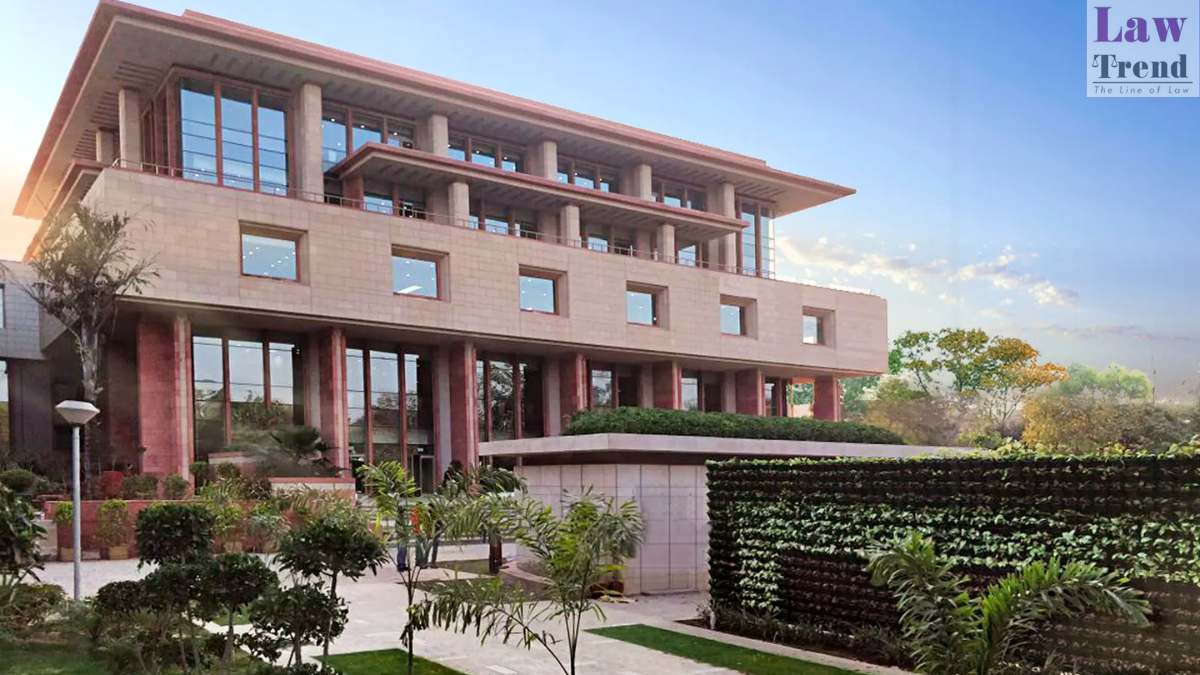
The Delhi High Court has dismissed an appeal seeking a decree on admissions under Order XII Rule 6 of the Code of Civil Procedure (CPC), holding that substantial factual disputes regarding the identity of properties, shares of legal heirs, and rental income necessitate a full trial.
The Division Bench comprising Justice Anil Kshetarpal and Justice Harish Vaidyanathan Shankar upheld the Single Judge’s order declining the relief, observing that admissions must be “unequivocal, unambiguous, and unconditional” to warrant a summary decree.
Case Background
The appeal arose from a partition suit filed by the appellant (plaintiff) regarding the estate of her late parents, Sh. Om Prakash Verma and Smt. Chandra Wati. Originally seeking partition of seven properties, the claim was later confined to three properties situated in Gandhi Nagar, Delhi. The plaintiff also sought recovery of her alleged 1/6th share in the rental income, estimated at Rs. 2.5 lakhs per month.
The case involved complex disputes regarding the genealogy of the family. While the plaintiff claimed to be one of six heirs, the defendants contended that the family comprised eight children. A key point of contention was the status of a deceased brother, Sh. Dinesh Verma; the plaintiff asserted he died childless, while the defendants claimed he had a son, Vikram Verma, who was not impleaded in the suit.
In 2015, the Single Judge had deleted certain issues after noting that the plaintiff failed to plead title documents regarding her parents’ ownership of specific properties. Later, in 2024, the defendants filed relinquishment deeds and stated they were not pressing their plea of an oral family settlement. Based on this, the plaintiff moved an application under Order XII Rule 6 CPC, arguing that the pleadings and documents contained clear admissions of her rights.
Arguments of the Parties
The appellant argued that the defendants’ affidavits and registered Relinquishment Deeds dated October 9, 2020, constituted clear admissions of parental ownership and her entitlement to a share. Counsel for the appellant contended that “proof of title by any co-heir is binding on all other co-heirs” and that the Single Judge erred in requiring independent proof of title despite these admissions.
The respondents (defendants) opposed the plea, arguing that substantial disputes remained regarding the area of the properties (250 sq. yards vs. 165 sq. yards), the quantum of rent, and the question of succession. They submitted that the relinquishment deeds could not remedy the “fundamental absence of pleadings regarding title” noted in the 2015 order.
Court’s Analysis and Observations
The Division Bench examined the record and found a “fundamental lack of clarity” on foundational aspects of the suit. The Court observed that the parties were not ad idem (in agreement) on the identity, extent, and nature of the suit properties.
Addressing the legal standard for a judgment on admissions, the Bench stated:
“It is well-settled that for a decree under Order XII Rule 6 of the CPC, the admissions relied upon must be unequivocal, unambiguous, and unconditional… The Court must also be satisfied that no substantial issue of fact or law survives for adjudication.”
The Court noted specific factual conflicts, including:
- The size and description of property No. X/61-87.
- The existence and extent of rental income.
- The status of the alleged heir, Vikram Verma.
- The occupation of portions of property No. X/2302.
The Bench held that partition suits require a complete examination of title, boundaries, and possession, which are “not amenable to summary adjudication unless admitted without reservation.”
The Court affirmed the Single Judge’s reliance on the principle that the “plaintiff has to succeed on his own feet,” noting that the inconsistencies in property descriptions and the contest regarding the number of heirs weighed against granting summary relief.
Decision
The High Court dismissed the appeal, concurring with the Single Judge that the matter did not satisfy the threshold for a decree under Order XII Rule 6 CPC. The Court concluded:
“This Court is therefore satisfied that substantial factual disputes remain, necessitating a full trial unless otherwise resolved in accordance with procedural law.”
However, in the interest of justice, the Bench granted the appellant liberty to file a “comprehensive application under Order XII Rule 6 of the CPC,” provided she could clearly identify specific admissions regarding the precise size of the properties, the basis for her claimed share, and the source of rental income.
Case Details:
- Case Title: Anu (Since Deceased) Thru LR v. Suresh Verma (Since Deceased Through LRs) & Ors.
- Case Number: FAO(OS) 151/2025
- Coram: Justice Anil Kshetarpal and Justice Harish Vaidyanathan Shankar
- Citation: 2025:DHC:11289-DB