

Supreme Court Lays Down Format for Criminal Judgments; Mandates Tabulated Charts of Evidence
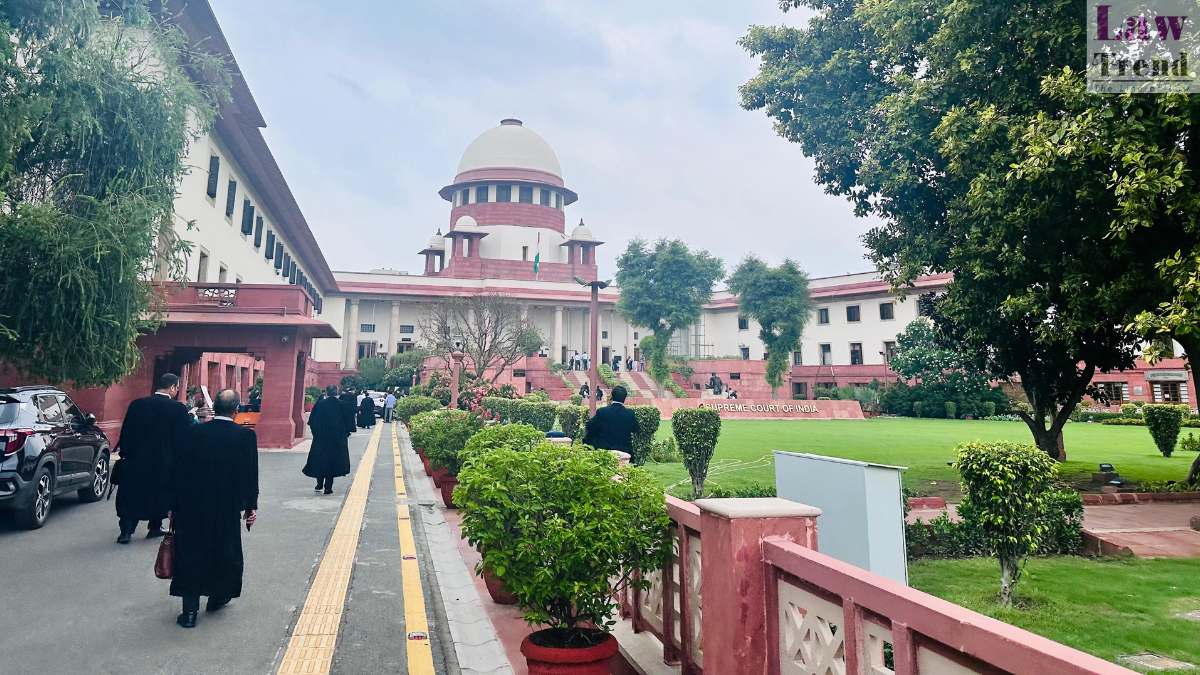
In a significant development aimed at streamlining the appreciation of evidence in criminal trials, the Supreme Court has issued mandatory directions to all Trial Courts across the country to adopt a “standardized format” for judgments. The Court has directed that every criminal judgment must contain tabulated charts of witnesses, documentary evidence, and material objects.

The Division Bench, comprising Justice Vikram Nath and Justice Sandeep Mehta, issued these directions while acquitting an accused who had spent nearly thirteen years in custody for a rape case, which the Court described as being marred by “investigative apathy” and a “hopelessly botched” investigation.

Mandatory Guidelines for Trial Courts

Observing that a structured presentation of evidence facilitates better comprehension for stakeholders and Appellate Courts, the Supreme Court has directed that all Trial Courts must incorporate the following tabulated charts at the conclusion of their judgments (as an appendix or concluding segment):

1. Standardized Chart of Witnesses

Each judgment must contain a witness chart with at least the following columns:

  • Serial Number
  • Name of the Witness
  • Brief Description/Role of the Witness (e.g., Informant, Eye-witness, Medical Jurist, Investigating Officer, Panch Witness).

The Court noted that this description should be succinct to indicate the evidentiary character of the witness.

2. Standardized Chart of Exhibited Documents

A separate chart must be prepared for all documents exhibited during the trial, including:

  • Exhibit Number
  • Description of the Document (e.g., FIR, Panchnama, FSL Report).
  • The Witness who Proved/Attested the Document.
READ ALSO  [COVID] No Arrest in Violation of Guidelines laid down in Arnesh Kumar Case: Supreme Court

The Bench emphasized that specifying the witness who proved the document is crucial for traceability and appreciating compliance with the Evidence Act.

3. Standardized Chart of Material Objects (Muddamal)

Whenever material objects are produced, a third chart must be included:

  • Material Object (M.O.) Number
  • Description of the Object
  • Witness who Proved the Object’s Relevance.

Additional Clarifications

  • Defence Evidence: These directions apply mutatis mutandis to all witnesses and evidence adduced by the defence.
  • Voluminous Evidence: In complex cases (e.g., economic offences, conspiracies), courts may prepare charts confined to material and relied-upon witnesses to avoid unwieldy compilations.
  • Civil Proceedings: The Supreme Court left it open to High Courts to consider adopting similar formats for civil matters, particularly those involving voluminous evidence.

The Registry has been directed to transmit the judgment to the Registrar Generals of all High Courts to ensure compliance.

The Acquittal: “Investigative Apathy” and “Botched” Investigation

While laying down these procedural norms, the Court set aside the conviction of the appellant, Manoj Jethabhai Parmar, who had been sentenced to life imprisonment for the rape of a four-year-old girl in 2013. The Court termed the case a “grave and distressing” example of how procedural lapses can lead to a miscarriage of justice.

READ ALSO  Secured Creditor Can Initiate Proceedings Under the SARFAESI Act Against the Guarantor in Case of Loan Default Even When There Is a Moratorium on Action Against Borrower: Bombay HC

Background of the Case

The prosecution’s case was that on June 13, 2013, the complainant (PW-1) saw four boys taking a naked, bleeding four-year-old girl to a specific locality. The boys allegedly told the complainant that they had seen the appellant pushing the girl out of his house. However, the FIR lodged later that night was against “unknown persons” and did not name the appellant or the four boys, despite the complainant claiming he knew these details.

Supreme Court’s Findings

1. “Fabric of Lies” and FIR Omissions The Court found the prosecution’s case to be woven on a “fabric of lies.” It noted that while the complainant claimed he was told about the appellant’s involvement immediately, he failed to mention this crucial fact in the FIR. Citing Amar Nath Jha v. Nand Kishore Singh, the Court held that such a vital omission brought the entire case under a cloud of doubt.

2. Unnatural Witness Conduct The Court expressed shock at the “gross insensitivity” of the alleged witnesses (the four boys). After claiming to see a naked, bleeding child being pushed out of a house, they casually walked her to another area without covering her or calling for help.

“The rank indifference shown by these four witnesses… reaffirms our doubt that they might have been the perpetrators of the offence and by way of self-preservation, threw the blame on to the accused-appellant.”

READ ALSO  Application Under Order 41 Rule 27 CPC Has to be Considered at the Time of Hearing of Appeal to Determine the Relevance of Documents/Evidence to the Case: Allahabad HC

3. Flawed Recoveries The prosecution claimed to have recovered blood-stained clothes from the appellant’s house. However, the Supreme Court found serious contradictions:

  • The Investigating Officers failed to prove the appellant’s ownership or possession of the house.
  • One panch witness admitted that police entered the house without independent witnesses and that no seizure took place in his presence.
  • The Court observed that the recoveries appeared to be planted or at least lacked credibility.

4. Lack of Scientific Investigation The Bench heavily criticized the failure to conduct DNA profiling or secure forensic material properly, stating that such “investigative apathy” suggested the investigation was not fair or diligent.

Decision

Concluding that the trial was conducted with “pedantic rigidity” that obscured the truth, the Supreme Court acquitted the appellant of all charges, setting aside the concurrent judgments of the Trial Court and the Gujarat High Court.

Case Details

  • Case Title: Manojbhai Jethabhai Parmar (Rohit) v. State of Gujarat
  • Case No.: Criminal Appeal No(s). 2973 of 2023
  • Coram: Justice Vikram Nath and Justice Sandeep Mehta

Law Trend
Law Trendhttps://lawtrend.in/
Legal News Website Providing Latest Judgments of Supreme Court and High Court

Related Articles

Latest Articles


