

Voluntary Moral Obligations Toward Siblings Cannot Dilute Statutory Duty to Maintain Wife and Child: Delhi High Court
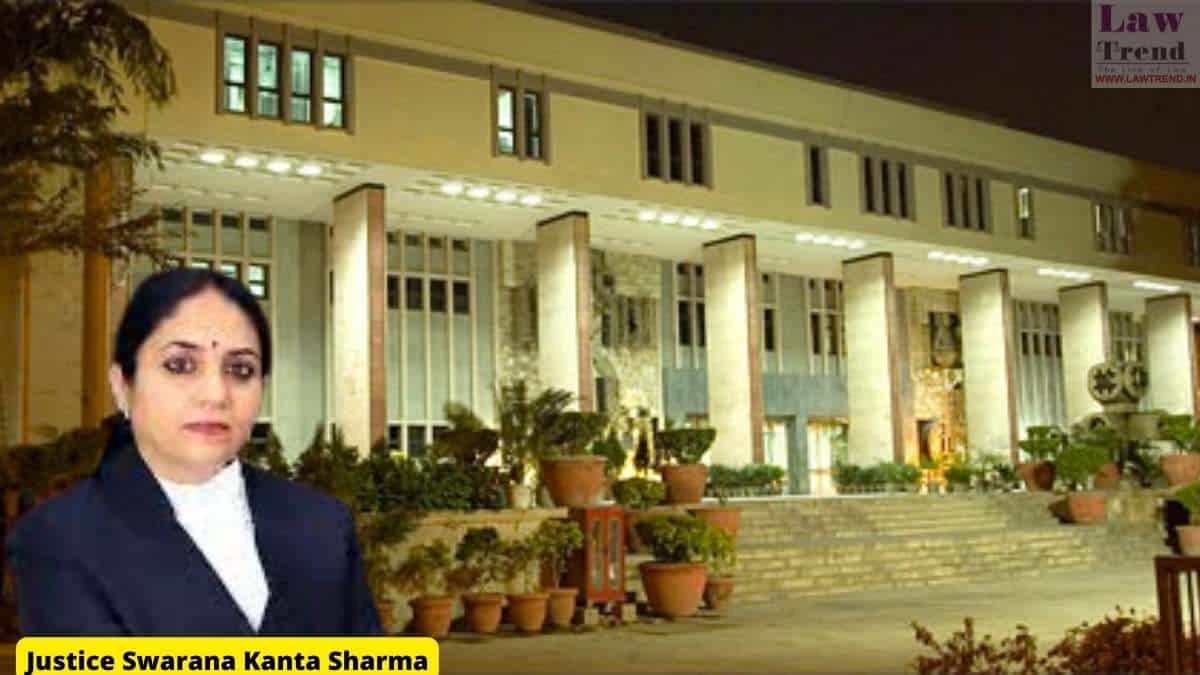

The Delhi High Court has held that a husband’s moral obligations toward his siblings, who have other legal recourse for maintenance, cannot dilute his statutory duty to maintain his wife and minor child under Section 125 of the Code of Criminal Procedure (Cr.P.C.).

The Bench of Justice Swarana Kanta Sharma upheld the interim maintenance awarded to the wife while modifying the amount awarded to the minor child, observing that “voluntary and sentimental obligations cannot dilute his statutory duty under Section 125 of Cr.P.C.”

Case Background

The Court was hearing a revision petition filed by the husband (Petitioner) seeking to set aside the order dated July 16, 2024, passed by the Family Court, South, Saket Court, New Delhi. The Family Court had directed the Petitioner to pay ₹15,000/- per month to his wife (Respondent No. 1) and ₹15,000/- per month to his minor daughter (Respondent No. 2) as interim maintenance.

The marriage between the parties was solemnized on June 22, 2018, according to Muslim rites. The wife alleged in her petition under Section 125 Cr.P.C. that while she was happy in the matrimonial relationship, the husband was dissatisfied as he expected a substantial dowry. She submitted that she is a housewife with no independent source of income and is responsible for taking care of their minor daughter, aged about three and a half years.

READ ALSO  Is Re-registration Required for a Vehicle Taken to Another State or Union Territory? Jammu and Kashmir High Court Clarifies

Arguments of the Parties

The counsel for the Petitioner-husband argued that the Family Court failed to appreciate that the wife is a well-educated woman holding a Master’s degree in Business Administration (MBA) and is capable of securing gainful employment. It was contended that granting maintenance encourages “undue dependency rather than promoting self-sufficiency.”

The Petitioner further submitted that he has significant financial obligations, including caring for his ailing and elderly parents and providing moral and emotional support to his divorced sister and her child. He also cited a personal loan EMI of ₹6 lakh as a liability that should be considered.

The counsel for the Respondent-wife argued that she has no independent source of income and is medically unfit to undertake employment. It was submitted that possession of a degree does not substitute for actual employment, particularly when she is suffering from health issues. The Respondents contended that the Petitioner is gainfully employed and has willfully neglected his statutory duty.

Court’s Analysis

Justice Swarana Kanta Sharma analyzed the financial status of the parties and the legal principles governing interim maintenance.

On Employability of the Wife The Court observed that while educational qualification is a relevant factor, the significant question is whether the wife presently has an independent and sufficient source of income.

READ ALSO  Qualification Equivalence not a Matter to be Decided in Exercise of the Power of Judicial Review: Supreme Court

“While the educational qualification or employability of the wife may be a relevant factor, the more significant question is whether she presently has an independent and sufficient source of income to maintain herself with dignity in accordance with the standard of living she enjoyed in the matrimonial home.”

On Dependents (Parents and Divorced Sister) The Court noted that the Petitioner’s father is a retired government servant drawing a monthly pension of ₹17,000. The Court held that such an individual cannot be treated as financially dependent on the son for day-to-day sustenance.

Regarding the Petitioner’s divorced sister, the Court observed:

“Being divorced, she possesses a legal remedy to claim maintenance from her former husband under the provisions of the Cr.P.C. or the relevant personal law, as the case may be. Any assistance rendered by the petitioner to his sister, therefore, would fall within the realm of moral and familial duty, but not a legal dependency enforceable under Section 125 of Cr.P.C.”

On Loan EMIs Referring to previous decisions, including Sodan Singh Rawat v. Vipinta and Abhinav Kumar v. Swati & Anr., the Court reiterated that voluntary financial obligations cannot be considered mandatory deductions.

“Maintenance cannot be defeated on account of EMIs that the petitioner is paying towards any property.”

Income Assessment and Apportionment The Court accepted the Petitioner’s admitted income of ₹59,670/- per month. Relying on the principle of the ‘family resource cake’ laid down in Anurita Vohra v. Sandeep Vohra (2004), the Court divided the income into four shares: two for the earning husband and one each for the wife and child.

READ ALSO  Delhi High Court Seeks NIA's Response on J&K MP Rashid Engineer's Interim Bail Plea for Parliament Attendance

“Each share thus approximately comes to ₹14,900/-, which fairly represents the petitioner’s capacity and the dependents’ reasonable needs…”

Decision

The High Court affirmed the findings of the Family Court regarding the Petitioner’s income and the wife’s entitlement to maintenance. The Court held that the amount of ₹15,000/- per month awarded to the wife was “just, reasonable, and commensurate with her medical condition.”

However, regarding the minor child, the Court modified the order considering the child’s age:

“Having regard to the tender age of the minor child, who is only three and a half years old, the quantum of ₹15,000/- awarded as interim maintenance to the child may be marginally reduced to ₹10,000/- per month.”

The revision petition was disposed of with the direction that the arrears be cleared as per the Family Court’s order.

Law Trend
Law Trendhttps://lawtrend.in/
Legal News Website Providing Latest Judgments of Supreme Court and High Court

Related Articles

Latest Articles

