The Supreme Court has set aside a sentence of simple imprisonment imposed by the Bombay High Court on a contemnor who had criticized the judiciary in a circular regarding the stray dog menace. The Bench held that the power to punish for contempt carries the “concomitant power to forgive” when an individual demonstrates genuine remorse.
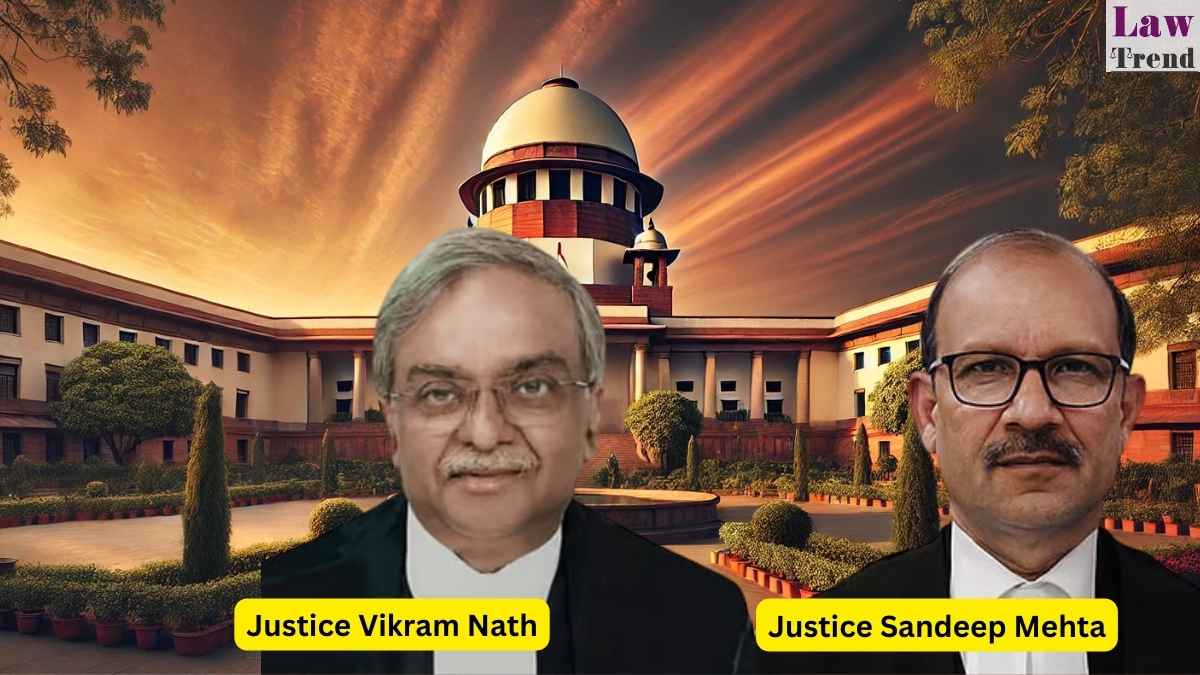
The Division Bench of Justice Vikram Nath and Justice Sandeep Mehta allowed the appeal filed by Vineeta Srinandan, observing that the High Court failed to exercise its contempt jurisdiction with due circumspection by rejecting an unconditional apology tendered at the earliest opportunity.
Background of the Dispute
The case originated from a circular dated January 29, 2025, issued by the Appellant, Vineeta Srinandan, who was then the Director (Cultural) of Seawoods Estates Ltd. The circular, titled “How Democracy is being crushed by Judicial System?”, was brought to the notice of the Bombay High Court during the hearing of a Writ Petition challenging the Animal Birth Control Rules, 2023.
The circular alleged the existence of a “dog feeder’s mafia” with a “strong presence in the Judicial system.” It claimed that judges avoided taking cognizance of material showing dog attacks and that “most of the high court/supreme court orders will defend dog feeders ignoring the value of human life.”
Taking cognizance of the circular, the High Court initiated Suo Motu Criminal Contempt proceedings. By a judgment dated April 23, 2025, the High Court held the Appellant guilty of criminal contempt under Section 12 of the Contempt of Courts Act, 1971. The High Court concluded that the circular was issued with an intent to scandalize the Court and sentenced the Appellant to one week of simple imprisonment and a fine of Rs. 2,000.
The Arguments and Apology
Upon receiving the show-cause notice, the Appellant filed a reply affidavit on February 18, 2025. She admitted to committing a “grave error” under mental pressure exerted by residents and stated that she had resigned from the Board of Directors of Seawoods Estates Ltd. in repentance. She tendered an unconditional and unqualified apology.
However, the High Court declined to accept the apology, terming it “perfunctory” and “borrowed rather than borne out of sincere repentance.”
Supreme Court’s Analysis
The Supreme Court, while agreeing that the circular satisfied the essential ingredients of criminal contempt, disagreed with the High Court’s decision to impose a custodial sentence despite the apology.
The Power to Forgive
Justice Vikram Nath, writing for the Bench, emphasized the virtue of mercy in judicial proceedings:
“The power to punish necessarily carries within it the concomitant power to forgive, where the individual before the Court demonstrates genuine remorse and repentance for the act that has brought him to this position… Mercy, therefore, must remain an integral part of the judicial conscience, to be extended where the contemnor sincerely acknowledges his lapse and seeks to atone for it.”
Interpretation of Section 12
The Court analyzed Section 12 of the Contempt of Courts Act, specifically the Proviso and Explanation. The Bench noted that the statute empowers the Court to discharge the accused or remit the punishment on an apology being made to its satisfaction.
“The statutory scheme is thus clear, once repentance is demonstrated, the Court may act with magnanimity… The Explanation to Section 12 further provides that an apology shall not be rejected merely because it is qualified or conditional, if offered bona fide.”
Distinguishing Precedents
The Supreme Court held that the High Court’s reliance on precedents such as Dr. D.C. Saxena v. Hon’ble the Chief Justice of India, Perspective Publications (P) Ltd. v. State of Maharashtra, In re: Roshan Lal Ahuja, and Rajendra Sail v. M.P. High Court Bar Association was misplaced.
The Bench pointed out that in those cases, the contemnors either offered no apology, withdrew their apology, or made grave allegations of bribery against judges. In contrast, the Appellant in the present case had expressed remorse and tendered an unconditional apology “from the very first day of her appearance.”
The Decision
The Supreme Court concluded that there was no material to suggest the Appellant’s apology lacked bona fides. Consequently, the Court held that the ends of justice would be met by remitting the sentence.
The Court set aside the impugned judgment of the Bombay High Court to the extent of the sentence imposed and allowed the appeal.
Case Details:
- Case Title: Vineeta Srinandan vs. High Court of Judicature at Bombay on its own Motion
- Case Number: Criminal Appeal No. 2267 of 2025
- Bench: Justice Vikram Nath and Justice Sandeep Mehta