

Allahabad HC Refuses to Condone 405-Day Delay by State Tax Department, Cites “Complete Neglect and Lethargy”
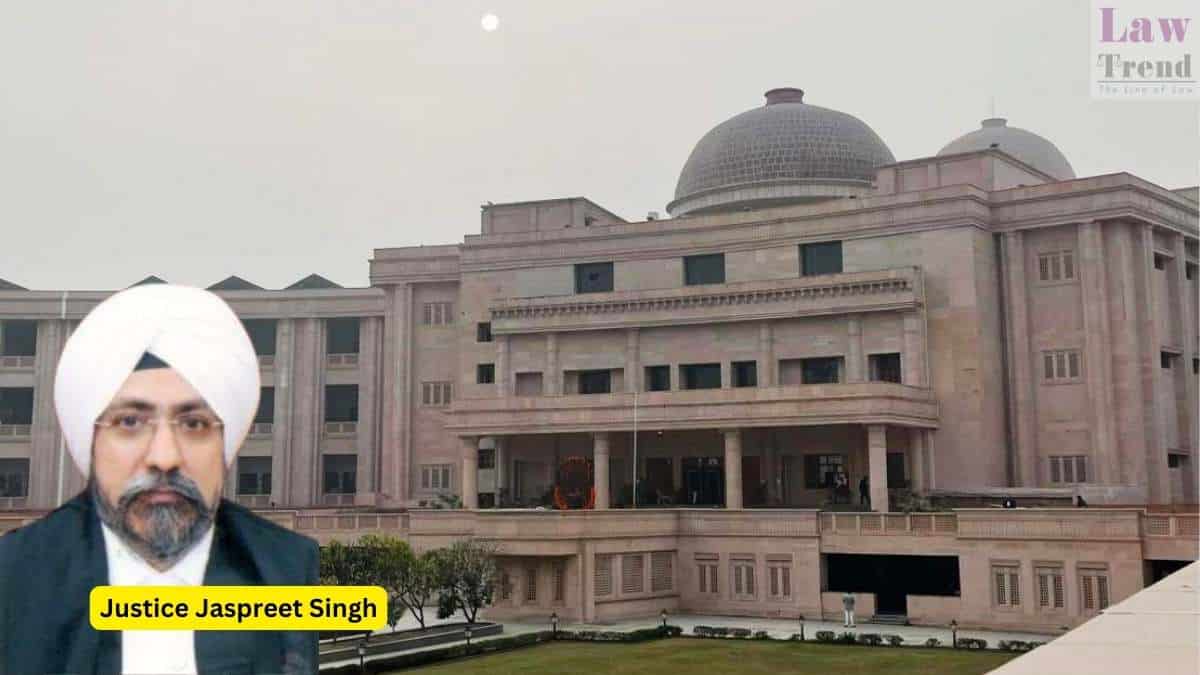

The Allahabad High Court (Lucknow Bench), presided over by Justice Jaspreet Singh, has dismissed a revision petition filed by the Commissioner of State Tax, refusing to condone a delay of 405 days in its filing. The Court observed that the State machinery exhibited “complete neglect and lethargy” and failed to provide a sufficient explanation for the delay.

Background of the Case

The revision petition was preferred by the Commissioner of State Tax against the common judgment and order dated March 28, 2023, passed by the Commercial Tax Tribunal, Lucknow Bench-III, in Second Appeal No. 117/2020 pertaining to the Assessment Year 2014-15. The revision was reported to be barred by limitation by 405 days. The State filed an application (IA No. 1/2024) supported by an affidavit seeking condonation of this delay.

Arguments of the Parties

Contentions of the Revisionist (State): The learned Additional Chief Standing Counsel appearing for the State urged that the delay was bonafide and not deliberate. It was submitted that the State machinery operates through an “impersonal mechanism” involving “systemic functioning which requires approvals at various levels.” The counsel argued that the Court should adopt a pragmatic approach and construe the “sufficiency of cause” liberally to do substantial justice. Reliance was placed on the Supreme Court’s decision in Esha Bhattacharjee v. Managing Committee of Raghunathpur Nafar Academy and others (2013).

Contentions of the Respondent: Ms. Shhreiya Agarawal, learned counsel for the respondent, opposed the application, arguing that the delay was explained in a “very casual manner” with “vague assertions without material particulars.” She contended that there was no bonafide effort by the State, but rather an attempt to overcome the law of limitation. Citing the Supreme Court’s recent decision in Shivamma (Dead) by LRS v. Karnataka Housing Board and others (2025) and a Division Bench order of the Allahabad High Court in State of U.P. and others v. Committee of Management, Shyam Kali Balika Vidyalaya Bhitari, she argued that the State is not entitled to any extra leverage.

READ ALSO  Allahabad HC Directs Registry to Not to Refer “Trial Court” as “Lower Court” 

Court’s Analysis and Observations

Justice Jaspreet Singh scrutinized the affidavit filed by the State and noted a lack of specific details. The Court pointed out that the initial affidavit failed to indicate when the judgment dated March 28, 2023, was first received by the office. While the affidavit mentioned referring the matter for legal opinion on August 23, 2023, it did not disclose when that opinion was received or when the file moved to the Administrative or Legal Departments.

READ ALSO  Allahabad HC Rejects Bail of Juvenile, Accused of Raping 6 Year Old Girl

The Court observed:

“It is significant to note that in the initial affidavit filed in support of the application for condonation of delay… no particulars or details or any enclosure has been brought on record to substantiate the averments.”

The Court noted that under Section 11 of the U.P. Trade Tax Act, 1948, the limitation period is 90 days, which expired in June 2023. The State’s affidavit indicated that the matter was referred for legal opinion only in August 2023, well after the limitation had expired.

Referring to the precedents cited, the Court discussed the principles laid down in Esha Bhattacharjee, noting that while a liberal approach is generally adopted, applications for condonation should not be drafted in a “haphazard manner.”

The Court placed significant reliance on the Supreme Court’s decision in Postmaster General and others v. Living Media India Ltd. and another (2012), which held that government departments cannot claim a separate period of limitation or take advantage of “impersonal machinery” to explain away inordinate delays.

Furthermore, referring to the recent apex court judgment in Shivamma (2025), the Court reiterated that “administrative lethargy and laxity can never stand as a sufficient ground for condonation of delay.” The Court emphasized the principle that constitutional courts should not become “surrogates for State laxity and lethargy.”

READ ALSO  Madras HC Junks Contempt Petition Filed After Nine-Year Delay Over Non-Compliance of Incentive Increment Order

Regarding the State’s Rejoinder Affidavit, the Court noted that while it mentioned receiving the impugned order on April 19, 2023, it still failed to provide clear indications regarding dates when permissions were applied for and received.

The Court observed:

“There is a complete neglect and lethargy at the behest of the State. Even though a lenient view is taken, but yet the manner in which the delay has been explained only amplies the malafide inflicts the system and there does not appear to be any bonafide explanation.”

Decision

The High Court held that the explanation offered in the affidavit was not sufficient and that the delay of 405 days had not been adequately explained. Applying the dictum of the Supreme Court that condonation of delay is an exception and not an anticipated benefit for government departments, the Court dismissed the application for condonation of delay.

Law Trend
Law Trendhttps://lawtrend.in/
Legal News Website Providing Latest Judgments of Supreme Court and High Court

Related Articles

Latest Articles

