

Civil and Criminal Remedies Can Coexist: SC Refuses to Quash Cheating and Intimidation Proceedings Based on Disputed “No Dues Certificate”
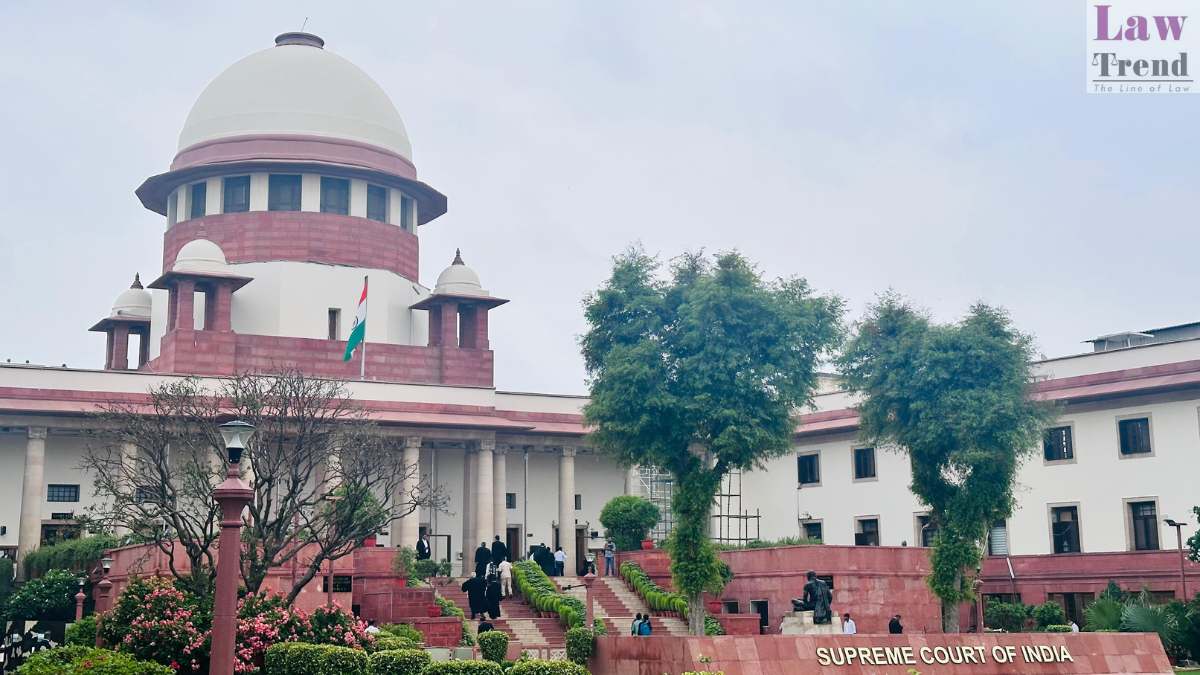

The Supreme Court of India has dismissed an appeal seeking the quashing of criminal proceedings in a dispute stemming from contractual dealings, observing that the existence of civil remedies does not preclude criminal prosecution if the allegations disclose the essential ingredients of an offence.

A Bench comprising Justice Sanjay Karol and Justice Vipul M. Pancholi upheld the decision of the High Court of Telangana, which had maintained cognizance against the appellant, Rocky, for offences under Sections 420 (Cheating), 344 (Wrongful confinement for ten or more days), and 506 (Criminal intimidation) of the Indian Penal Code (IPC).

The primary legal issue before the Apex Court was “whether the High Court was justified in declining to quash the proceedings for offences under Sections 420, 344 and 506 of the IPC, while exercising its inherent jurisdiction under Section 482 of the CrPC.”

The appellant had contended that the dispute was entirely civil in nature and relied on a ‘No Dues Certificate’. However, the Court held that the authenticity of the certificate was a matter for trial and that the allegations were supported by witness statements. Consequently, the Supreme Court dismissed the appeal, finding it “devoid of any merit.”

Background of the Case

The case originated from contractual and financial dealings between the appellant (accused no. 2) and Respondent No. 2 (complainant) regarding construction work undertaken between 2008 and 2010.

According to the appellant, a ‘No Dues Certificate’ was issued by Respondent No. 2 on June 10, 2010, acknowledging that no payments were outstanding. However, disputes subsequently arose, leading to the filing of FIR No. 240 of 2015 by Respondent No. 2 against the appellant.

READ ALSO  While Right to be Considered for Promotion is a Fundamental Right, There is No Absolute Right to Promotion Itself: Supreme Court

Following an investigation, Charge Sheet No. 07 of 2016 was filed, and the III Additional Chief Metropolitan Magistrate, Hyderabad, took cognizance of the case on October 19, 2016, issuing summons for offences under Sections 420, 406, 344, and 506 of the IPC.

The appellant approached the High Court of Telangana under Section 482 of the Code of Criminal Procedure (CrPC). The High Court partly allowed the application by quashing cognizance under Section 406 (Criminal Breach of Trust) but declined to quash the proceedings for the remaining offences.

Arguments of the Parties

The Appellant’s Contentions: Learned Senior Counsel for the appellant argued that the dispute was “entirely civil in nature and has been improperly given a criminal color.” The counsel submitted that the ‘No Dues Certificate’ dated June 10, 2010, exposed the falsity of the allegations.

The appellant contended that the criminal proceedings were initiated “solely to exert pressure and extract additional amounts under the guise of criminal law.” It was argued that the FIR was a “motivated counterblast” to an injunction order secured by the appellant in O.S. No. 98 of 2015, noting that the FIR was lodged within three days of said order.

Citing the delay of over five years in lodging the FIR, the appellant argued that the prosecution was vitiated. Reliance was placed on several judgments, including M/s Shikhar Chemicals v. State of Uttar Pradesh (2025) and Mitesh Kumar J. Sha v. State of Karnataka (2022), to argue against the misuse of criminal law for civil disputes.

READ ALSO  Allahabad HC Directs All Revenue Authorities to Take Prompt Action on Illegal Encroachments on Public Utility Land of Gaon Sabha

The Respondents’ Contentions: Learned counsel for the State (Respondent No. 1) and the Learned Amicus Curiae for the complainant (Respondent No. 2) opposed the plea. It was submitted that while the appellant’s company paid only about Rs. 52 lakhs, three bills totaling approximately Rs. 1.17 crores were raised, leaving a substantial balance unpaid.

The respondents argued that the ‘No Dues Certificate’ was “fabricated” and did not reflect the true financial position. It was submitted that the investigation had collected materials, including statements from four witnesses, which supported the allegations.

Reliance was placed on State of Haryana v. Bhajan Lal (1992) and Pradeep Kumar Kesarwani v. State of Uttar Pradesh & Anr. (2025) to contend that quashing is not warranted when factual assertions are contested and require a trial.

Court’s Analysis and Observations

The Supreme Court rejected the appellant’s core contention that the civil nature of the dispute barred criminal proceedings. Justice Vipul M. Pancholi, writing for the Bench, observed:

“Although courts must guard against giving criminal colour to civil disputes, it is equally well settled that the existence of civil remedies does not preclude criminal prosecution where the allegations disclose the essential ingredients of an offence. Civil and criminal proceedings may validly coexist if the factual matrix supports both.”

On the ‘No Dues Certificate’: The Court addressed the appellant’s reliance on the ‘No Dues Certificate’ by stating that its validity was a triable issue. The Court observed:

“Respondent No. 2 alleges that the certificate is fabricated. Its authenticity, evidentiary value and legal effect are matters that can only be adjudicated at trial. Quashing cannot be premised on disputed documents whose validity is itself a matter in issue.”

READ ALSO  Passport Renewal Can’t be Refused For Mere Pendency of Criminal Case, Rules Orissa HC

On the Test for Quashing: The Court referred to the four-step test outlined in Pradeep Kumar Kesarwani v. State of Uttar Pradesh & Anr. (2025), which requires material relied upon by the accused to be of “sterling and impeccable quality” and “uncontested.” The Bench noted:

“…in the present case, the material relied on by the appellant fails to satisfy the above-mentioned benchmarks.”

The Court further examined the case against the guidelines laid down in State of Haryana v. Bhajan Lal, concluding that the case did not fall within the “narrowly crafted circumstances” or “rarest of rare cases” where quashing is justified.

On the High Court’s Order: The Supreme Court affirmed the High Court’s approach, noting that while it correctly quashed the offence under Section 406 IPC (Criminal Breach of Trust) for lack of ingredients, it rightly retained the other charges.

“The High Court also found that the allegations prima facie disclose the elements of offences under Sections 420, 344 and 506 of the IPC, and thus, rightly refrained from quashing proceedings relating to those offences.”

Decision

The Supreme Court held that the appellant failed to demonstrate any “manifest illegality, perversity or arbitrariness” in the High Court’s order. The Court dismissed the appeal, allowing the proceedings to continue for the charges under Sections 420, 344, and 506 of the IPC.

Law Trend
Law Trendhttps://lawtrend.in/
Legal News Website Providing Latest Judgments of Supreme Court and High Court

Related Articles

Latest Articles

