

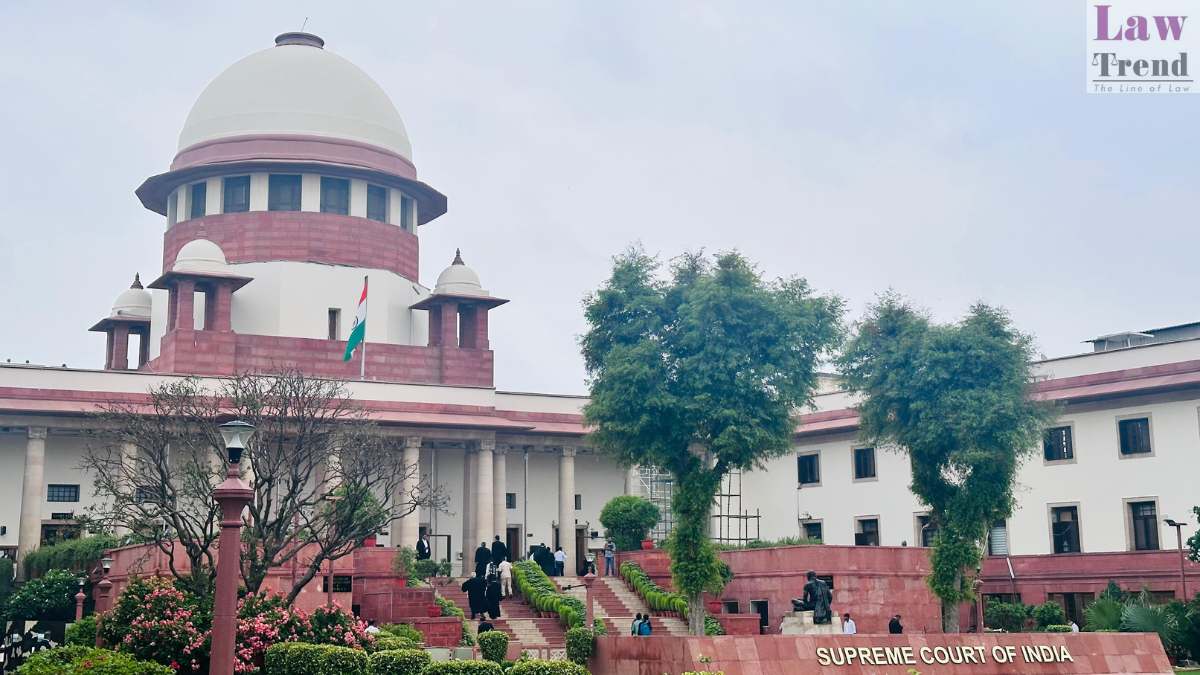
The Supreme Court on Tuesday refused to interfere with a Securities Appellate Tribunal (SAT) decision that had upheld a ₹30-lakh penalty imposed on Reliance Industries Limited (RIL) and two of its senior officials for failing to promptly clarify media reports about Facebook’s investment in Jio Platforms.
A bench of Chief Justice Surya Kant and Justice Joymalya Bagchi dismissed RIL’s appeal, effectively affirming SEBI’s findings that the company and its compliance officers did not disclose unpublished price-sensitive information (UPSI) in a timely manner during the high-profile transaction.
In June 2022, SEBI had imposed the combined penalty on RIL and two company officials—Savithri Parekh and K. Sethuraman—after concluding that they violated Principle 4 of Schedule A of the Prohibition of Insider Trading (PIT) Regulations.
SEBI found that media reports on March 24 and 25, 2020, widely discussed Facebook’s impending investment in Jio Platforms. Yet, RIL informed stock exchanges about the deal only on April 22, 2020—a delay of 28 days.
SEBI’s adjudicating officer Barnali Mukherjee had noted in her order:
“The news pertaining to the Jio-Facebook deal came out on March 24 and 25, 2020, and the information to the stock exchanges…was made on April 22, 2020, i.e. after 28 days, and this calls for an appropriate penalty.”
SEBI held that the company was obligated to maintain confidentiality of UPSI. But once it became aware that sensitive information had selectively leaked into the public domain, it was required to issue confirmations or denials on its own. Parekh and Sethuraman, as compliance officers, were also found responsible for not issuing timely clarifications.
RIL challenged SEBI’s action before the Securities Appellate Tribunal. On May 2, 2025, the SAT upheld SEBI’s order in full, ruling that the company had breached the principles of fair disclosure under the Listing Obligations and Disclosure Requirements (LODR) Regulations.
The tribunal agreed that RIL failed to promptly disseminate UPSI that had already become selectively available through media reports, as required under the LODR disclosure norms.
While dismissing the appeal, the Supreme Court said the SAT’s findings did not warrant interference. The bench also noted that no substantial question of law arose for consideration.
With this, SEBI’s penalty and its conclusions on delayed disclosure stand affirmed, bringing a final judicial closure to the dispute.




