

Compassionate Appointment Cannot Be Claimed After 18 Years; Object is to Tide Over Sudden Crisis: Patna High Court
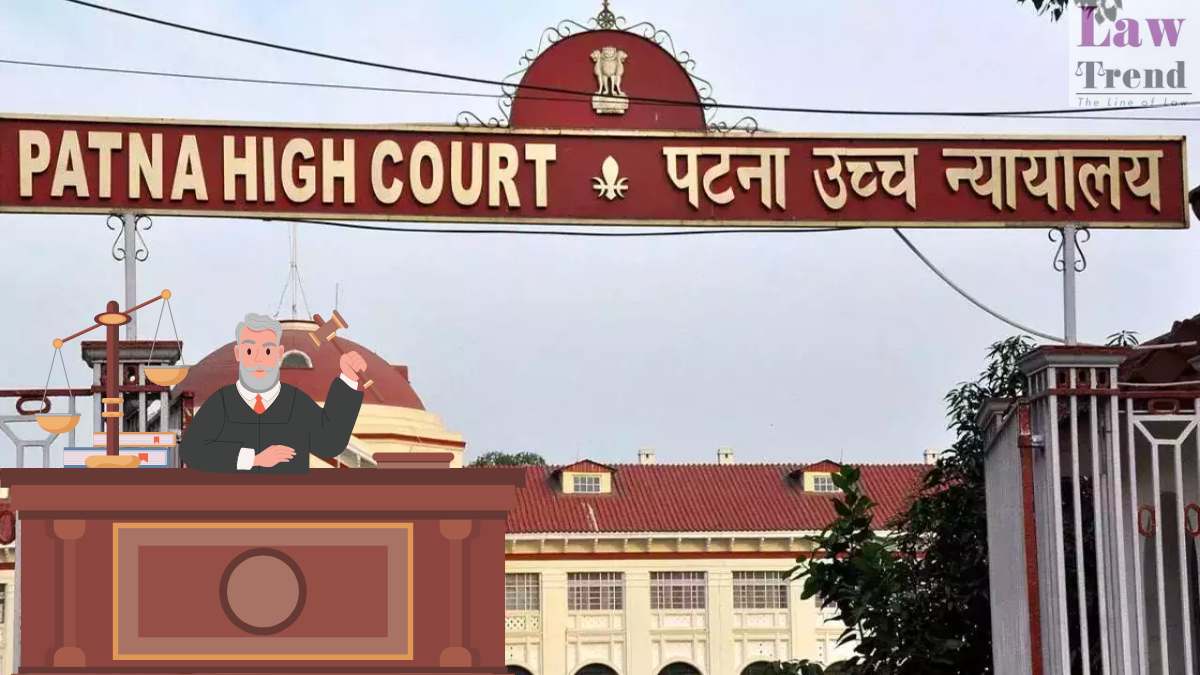

The Patna High Court has dismissed a writ petition seeking compassionate appointment, ruling that such employment is intended to enable a family to tide over the sudden crisis caused by the death of an employee and cannot be claimed years after the event. The Court upheld the decision of the District Compassionate Committee, which had rejected the petitioner’s application on the ground of it being time-barred.

Background of the Case

The petitioner, Randhir Kumar, approached the High Court seeking the quashing of an order dated December 4, 2020, issued by the District Compassionate Committee, Rohtas. The Committee had rejected his application for compassionate appointment following the death of his father, Late Bindeshwari Prasad Singh.

The petitioner’s father, who was working as an Assistant Sub-Inspector in the Bihar Police, passed away on April 30, 1990. At the time of his death, the petitioner was approximately two years old.

The petitioner’s mother, Sheo Kumari Devi, initially filed an application for compassionate appointment in 1990, which was forwarded by the authorities. However, the department directed her to produce a succession certificate from a competent court, noting that the deceased employee had married twice. According to the petitioner, his mother obtained the succession certificate and received post-retiral dues.

In a representation dated June 30, 2003, the petitioner’s mother requested the authorities to consider her son (the petitioner) for appointment, mentioning that he was 15 years old at the time. Subsequently, the petitioner filed applications in 2011 and later moved the High Court in 2012 (C.W.J.C. No. 13774 of 2012). The Court, by an order dated September 24, 2012, had directed the authorities to consider his application in accordance with the law.

READ ALSO  Supreme Court Makes Written Grounds of Arrest Mandatory For All Offences, Sets Two-Hour Pre-Remand Deadline in Exigency Cases

Ultimately, the District Compassionate Committee considered the case on December 4, 2020, and rejected it on the ground that the application was made more than five years after the death of the deceased employee.

Arguments of the Parties

Petitioner’s Submissions: Learned counsel for the petitioner, Mr. Mrigendra Kumar, argued that the petitioner’s mother had applied for appointment promptly. However, since the petitioner was a minor at the time, she later requested that he be appointed upon attaining majority. The counsel contended that the rejection was unjustified as the matter had been pending with the authorities for a long time.

Respondent’s Submissions: Appearing for the State, Mr. Government Advocate 3 opposed the petition. It was submitted that the initial application by the mother was not pursued properly, and she failed to produce the required documents at the relevant time. The State argued that the petitioner was a minor when his father died and thus ineligible. Furthermore, the application filed by the petitioner for his own appointment was considered by the District Compassionate Committee and rightly rejected as being time-barred.

READ ALSO  Justice is Not a Saleable Commodity: Rajasthan High Court Orders State to Extend Benefits of Judgment to All Similarly Situated Persons

Court’s Analysis and Observations

Justice Partha Sarthy examined the records and noted that the deceased employee died in 1990 when the petitioner was merely two years old. The Court observed that while the mother filed applications, the request for the petitioner’s appointment was specifically raised in 2003 when he was 15 years old, making him ineligible at that time as well.

The Court referred to the decision of the Hon’ble Supreme Court in the case of Umesh Kumar Nagpal vs. State of Haryana and Ors. (1994) 4 SCC 138, which laid down the principles governing compassionate appointments.

Quoting the Supreme Court, the High Court observed:

“The whole object of granting compassionate employment is thus to enable the family to tide over the sudden crisis. The object is not to give a member of such family a post much less a post for post held by the deceased… The Government or the public authority concerned has to examine the financial condition of the family of the deceased, and it is only if it is satisfied, that but for the provision of employment, the family will not be able to meet the crisis that a job is to be offered to the eligible member of the family.”

READ ALSO  Judgment Takes Effect from Commencement of the Day, Not Time of Pronouncement: Kerala High Court

The Court further emphasized that compassionate appointment is an exception to the general rule of appointment based on merit and open invitation, carved out solely to save the family from financial destitution.

Addressing the specific facts of the case, the Court noted:

“So far as the application filed on 30.6.2003 is concerned, the petitioner was aged about 15 years and was not eligible for appointment. So far as the application dated 5.9.2019 is concerned, the same having been made more than 18 years after the death of the deceased employee, the application was rightly rejected.”

Decision

Finding no error in the decision of the District Compassionate Committee, the High Court dismissed the writ application.

“The Court finds no error in the order impugned in the instant application nor any merit in the case of the petitioner,” Justice Sarthy concluded.

Case Details:

  • Case Title: Randhir Kumar vs. The State of Bihar & Ors.
  • Case Number: Civil Writ Jurisdiction Case No. 18068 of 2023
  • Coram: Justice Partha Sarthy

Law Trend
Law Trendhttps://lawtrend.in/
Legal News Website Providing Latest Judgments of Supreme Court and High Court

Related Articles

Latest Articles

