

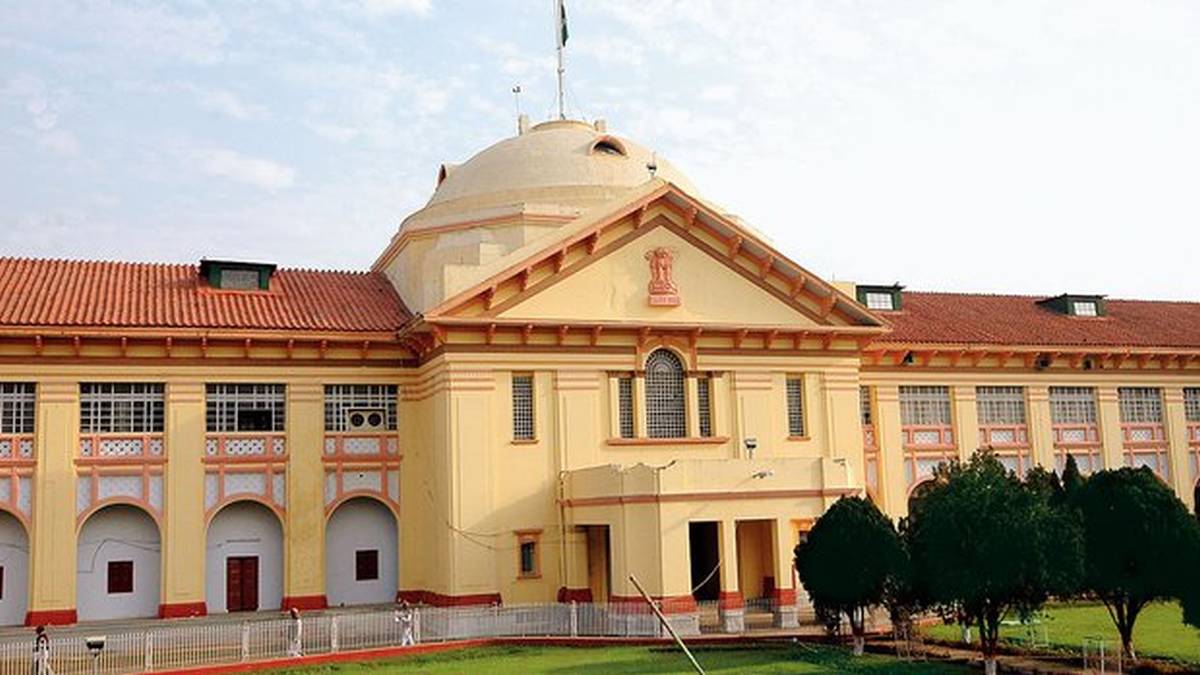
In a significant judgment safeguarding employee rights against procedural lapses, the Patna High Court has ordered the immediate reinstatement of a woman junior electrical engineer who was dismissed from her services over a decade ago. The division bench, comprising Chief Justice Sangam Kumar Sahoo and Justice Harish Kumar, ruled that initiating a fresh departmental inquiry after 13 years would be “harsh” and would practically deny the employee any meaningful justice.
Alongside reinstatement, the High Court awarded her 50 percent back wages and other admissible allowances for the 13-year period she was kept out of service. This decision modifies a June 2025 ruling by a single-judge bench, which had originally ordered her reinstatement with full consequential benefits.
The Core Dispute: Initiated by an “Incompetent Authority”
The legal battle centered on Abhinita, who joined the Bihar State Electricity Board (now known as the Bihar State Power Holding Company Limited) as a junior electrical engineer on September 10, 2011. Posted at the Patna Electricity Supply Undertaking (PESU) Control Room, her career was quickly disrupted when she was served a show-cause notice on October 30, 2012, alleging indiscipline and willful absence from duty between October 20 and October 28, 2012.
Following the allegations, she was transferred to the North Bihar Power Distribution Company Limited on administrative grounds. The power company asserted that she failed to report to her new posting—an act of defiance that was subsequently added to her chargesheet. By March 14, 2013, Abhinita was placed under suspension, and her dismissal was formally approved and communicated on June 26, 2013.
However, the High Court identified a fatal procedural flaw in how the case was handled from the very beginning: the disciplinary proceedings in 2012 were initiated by the Officer on Special Duty (Administration), whom the court declared to be an “incompetent authority” lacking the jurisdiction to do so.
Why the Court Refused a Fresh Inquiry After 13 Years
Under standard administrative law, when a departmental inquiry is found to be procedurally defective, the normal course of action is to remand the matter back to the competent authority to start a fresh inquiry from the stage where the defect occurred.
However, the division bench ruled that the extraordinary passage of time created an exception in this case. Drawing on Supreme Court precedents, the bench emphasized that a remand after 13 years would be deeply unfair to the petitioner.
“Any remand to the competent authority for initiation of a fresh proceeding, at this stage, would thus be harsh and would practically deny the petitioner any relief,” the court noted in its May 26 order.
Balancing Equities: Reinstatement vs. Back Wages
While the High Court firmly upheld Abhinita’s reinstatement, it disagreed with the single-judge bench’s decision to grant her full back wages.
The division bench emphasized that reinstatement and back wages are distinct legal remedies and that the entitlement to back wages must be determined independently by balancing the equities between both parties. While courts are justified in awarding full back wages if an employer acts in gross violation of natural justice, the bench decided that the interests of justice would be best served by awarding Abhinita 50 percent of her salary and allowances for the period she was out of service.
Battle of Arguments in Court
During the hearings, the legal representatives of both sides presented sharply contrasting arguments:
- The Power Company’s Stand: Representing the electricity board, advocate Y V Giri argued that once the dismissal orders were set aside due to procedural defects, the court should have sent the matter back for a fresh inquiry and re-framing of charges. Giri also argued that the challenge to the initiation of the proceedings was raised belatedly after 14 years through an amendment. Furthermore, he contended that Abhinita was not entitled to back wages as she had not proved she was unemployed or without income during those 13 years.
- The Engineer’s Defense: Senior Advocate Umesh Prasad Singh, appearing for Abhinita, countered that the entire disciplinary action was tainted with mala fide intentions, subjecting her to prolonged mental and physical harassment. Singh argued that because the initiation of the inquiry was completely without jurisdiction, the subsequent dismissal and appellate orders had no legal force, entitling his client to full reinstatement and complete back wages.
Ultimately, the Patna High Court’s ruling strikes a balance between correcting a severe procedural injustice and adjusting financial remedies to reflect the practical realities of a decade-long legal dispute.




